Why Your Face Shape Result May Look Like More Than One Shape
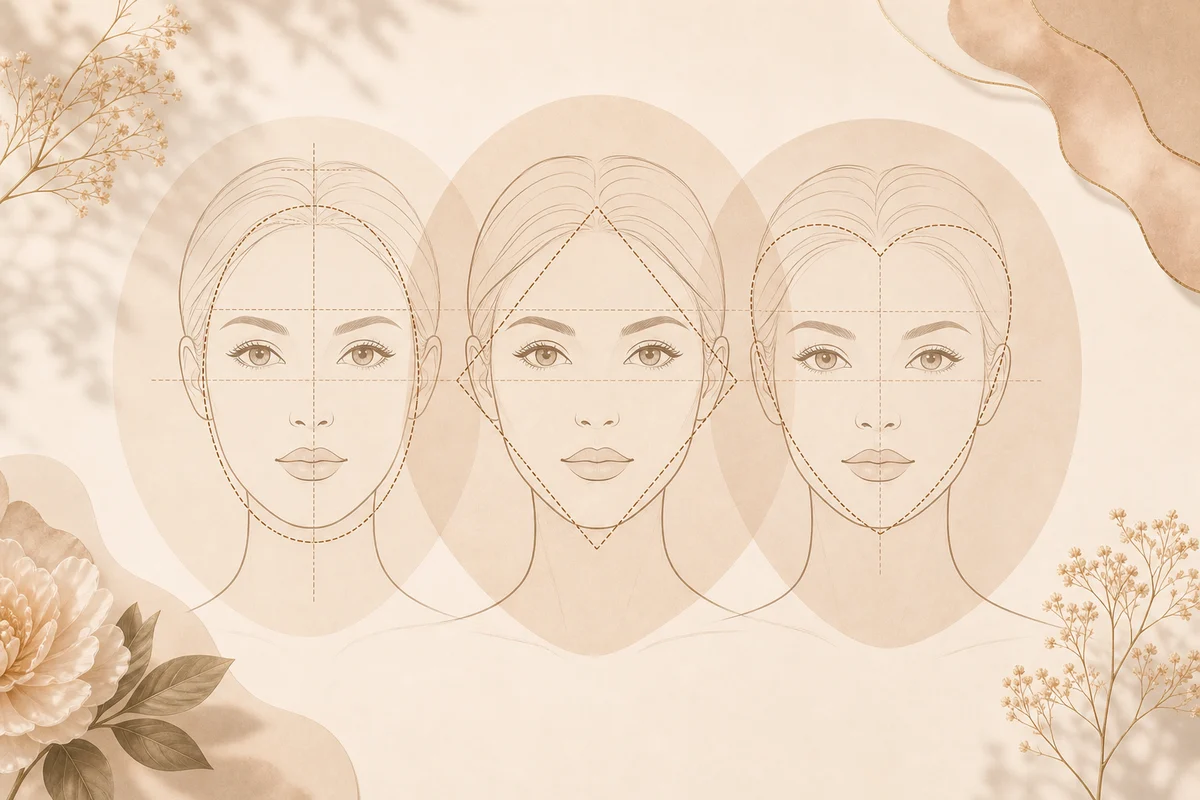
Face-shape categories are comparison tools, not perfect identity boxes. A real face can have the balanced length of an oval profile, the cheekbone presence often associated with diamond, and a chin that tapers only slightly. The useful result is not the one with the most labels. It is the one that explains the strongest overall pattern and any overlap that genuinely changes the interpretation.
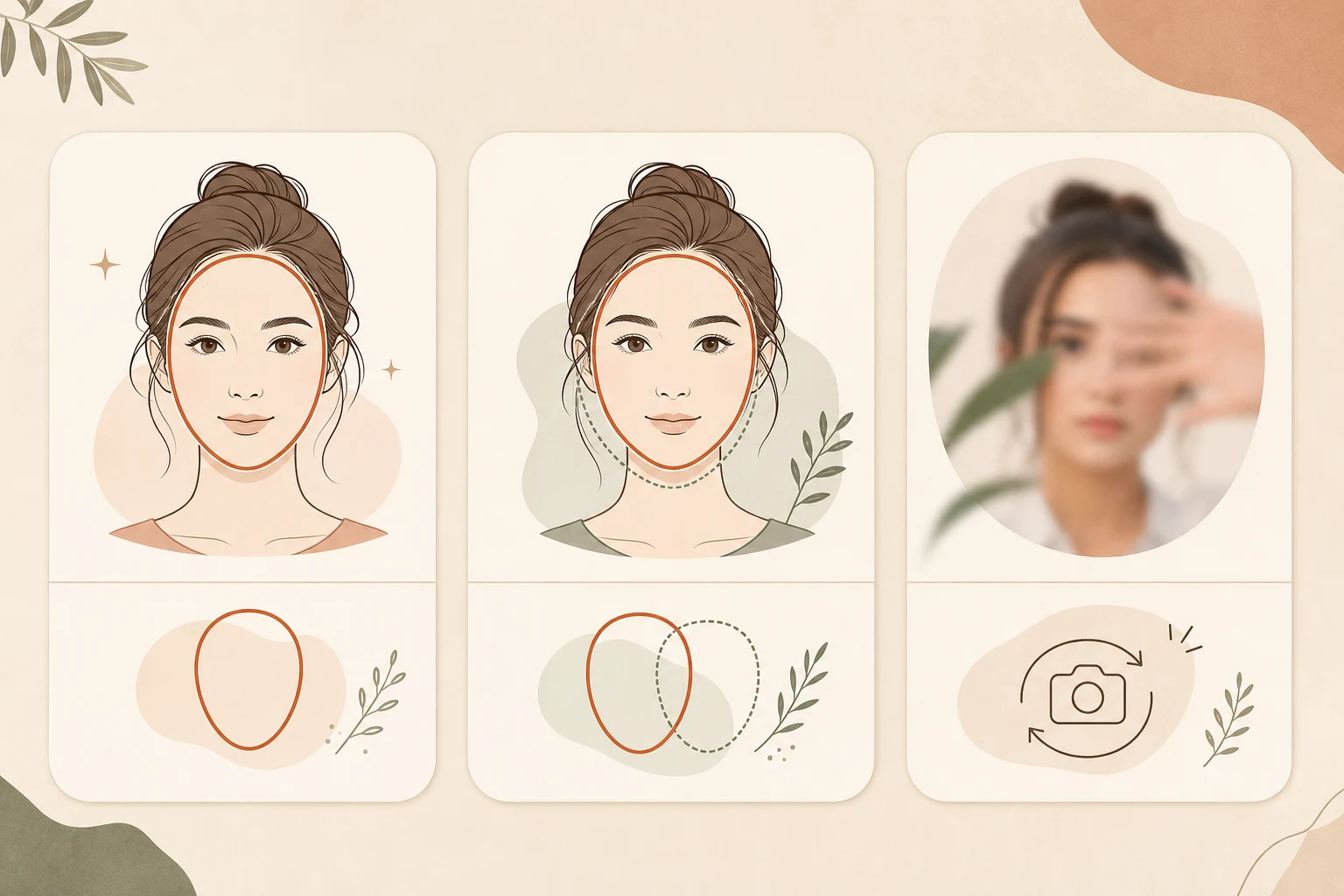
FaceFit describes that result with a primary face shape, an optional secondary tendency, and the Key Facial Features behind both. Sometimes one profile is clearly enough. Sometimes another tendency adds useful context. Sometimes the photo does not support a responsible conclusion and a clearer upload is the best result.
Quick answer
Your primary face shape is the profile that best explains the full visible pattern. A secondary tendency appears only when another profile explains a meaningful feature overlap. If the face is obscured, turned, distorted, or two interpretations remain too close, the report should say that the image needs improvement rather than pretending a mixed label is precise.
That gives three honest result modes: clear single profile, primary profile with secondary tendency, and uncertain result that needs a clearer photo.
This matters because many users assume a mixed result is automatically more advanced. In practice, a clear single result with strong reasons is often easier to trust and easier to use.
Face shape is not an absolute identity label
Terms such as oval, round, square, heart, diamond, and oblong summarize recurring visual relationships. They are useful because they make comparison possible. They are not biological categories with hard borders.
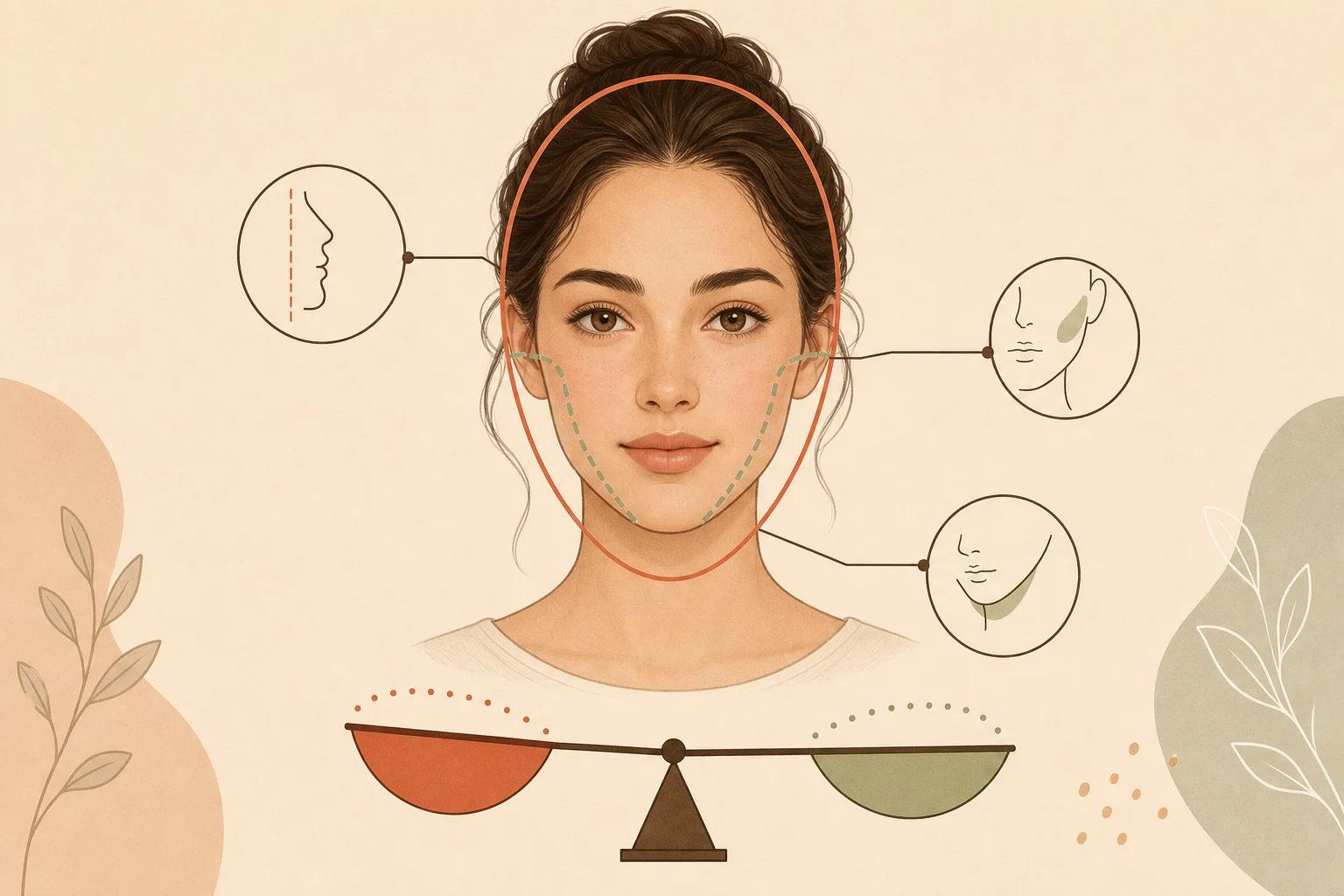
Think of a face-shape profile as a map. The primary shape identifies the most useful region of the map. Key Facial Features explain where the person sits within that region. A secondary tendency shows that one boundary is nearby; it does not split the person into two equal identities.
This is why “round with a slight oval tendency” should not be read as a 50/50 result. Round remains the main context. The oval tendency simply explains why the face has slightly more length than a very compact round example.
When one clear shape is the right answer
A single profile is appropriate when multiple features consistently support the same interpretation and competing profiles explain less.
For example, a face may show:
- face length and width that are relatively close;
- soft cheek fullness;
- a gently curved jaw;
- minimal chin taper;
- a continuous soft contour.
Together, those features can support a clear round profile. Adding an oval label only because the face is not a perfect circle would reduce clarity rather than improve it.
A single result is not less personal. The personalization comes from explaining the exact proportions and from connecting them to natural strengths and relevant style choices.
If the result feels "too simple," read the reasons before dismissing it. The feature explanation may contain the personal detail you expected from a second label.
When a secondary tendency is useful
A secondary tendency is useful when one profile clearly leads but another explains a specific, repeated part of the face.
Examples include:
- a primary oval profile with unusually prominent cheekbones and a narrower jaw, creating a diamond tendency;
- a primary square profile with more vertical length than a typical balanced square, creating an oblong tendency;
- a primary round profile with a slightly longer vertical proportion, creating an oval tendency;
- a primary heart profile whose cheekbones are nearly as wide as the forehead, creating a diamond tendency.
The secondary tendency should answer a practical question: “What does the primary label leave unexplained?” If it cannot answer that question, it probably does not need to appear.
When the result should ask for a clearer photo
Not every ambiguous result reflects real overlap. Sometimes the input has changed the features being compared.
A high-angle selfie can make the forehead appear wider and the jaw narrower. A close lens can enlarge the center of the face. Hair covering the jaw can make a structured lower face look softer. Strong side light can hide one cheek edge. A wide smile can temporarily increase cheek fullness and tighten the lower contour.
If those conditions prevent the report from comparing forehead, cheekbone, jaw, chin, and face length consistently, a clearer-photo message is more honest than a secondary tendency. Use the photo-quality guide to decide whether a new upload is worthwhile.
Retaking the photo should solve an input problem, not chase a preferred identity. If a neutral retake gives the same primary profile, treat that stability as useful evidence.
Why two photos can produce slightly different wording
Even good photos are not identical. Camera distance, expression, hairstyle, and light can shift how strongly a feature appears. Small changes are normal when the face sits near the boundary between two common profiles.
Look for stability at the right level:
- Does the same primary shape appear in both neutral photos?
- Do the same two or three Key Facial Features support it?
- Is only the secondary tendency changing?
- Does one photo have a clear quality disadvantage?
If the primary profile and main features remain stable, a small change in the secondary tendency should not be treated as a contradiction. If the primary profile changes completely, compare the inputs before comparing the labels.
How a mixed tendency changes style meaning
The secondary tendency should refine emphasis, not trigger a second generic recommendation list.
Suppose the primary profile is square with an oblong tendency. The square profile keeps jaw structure central to the explanation. The oblong tendency adds a reason to avoid excessive crown height or very shallow lenses. The result should combine those ideas into one direction rather than presenting separate “square rules” and “oblong rules.”
The same principle applies to a round profile with oval tendency. The report may preserve the soft contour while noting that the extra length reduces the need for aggressive vertical emphasis.
For more detail on how features become recommendations, read How Key Facial Features Guide Style Recommendations.
Why sharing the report can help
People become accustomed to their favorite selfie angle and hairstyle. A friend may recognize the everyday outline more easily, especially when the report shows the primary profile and the reasons separately.
Sharing is useful when the question is specific:
- Does this profile resemble me in ordinary photos?
- Does the jaw description feel accurate?
- Do the cheekbones usually look like the widest area?
- Does the secondary tendency add context or create confusion?
The goal is not to hold a popularity vote about which face shape is “better.” It is to check whether the explanation resembles the person others see across normal angles and expressions.
What not to do with a mixed result
- Do not interpret a secondary tendency as an exact percentage.
- Do not assume two labels are always more accurate than one.
- Do not combine every recommendation associated with both profiles.
- Do not keep uploading photos until a preferred label appears.
- Do not treat a warning about photo quality as a personal judgment.
Face shape is a style framework. It should increase clarity and choice, not create a new source of anxiety.
Related guides
- What Is My Face Shape? explains all three report outcomes.
- Face Shape vs Face Proportions shows which relationships support a profile.
- Round vs Oval Face Shape applies the primary-and-secondary model to a common comparison.
FAQ
Must everyone have a secondary tendency?
No. It should appear only when it explains a meaningful overlap. Many people have one clearly dominant profile.
Is an uncertain result a failure?
No. It can be the responsible response to an unsuitable photo or genuinely close interpretations. The report should explain the next useful step.
Can my face shape change over time?
The underlying bone structure is relatively stable, but age, weight change, hairline, facial hair, and soft-tissue changes can alter the visible contour. A current neutral photo is more useful than an old favorite selfie.
Should I ask friends which label they prefer?
Ask whether the explanation resembles you, not which label sounds best. The reasons behind the result are more useful than label preference.
See the profile, tendency, and reasons together
Upload a clear front-facing photo to generate a Personal Face Shape Style Report that separates the primary shape, optional secondary tendency, and Key Facial Features.
Want to know your face shape?
Upload a clear front-facing photo to see your closest match and the visible reasoning.
Find your face shape