Definition
What Is an Oblong Face Shape?
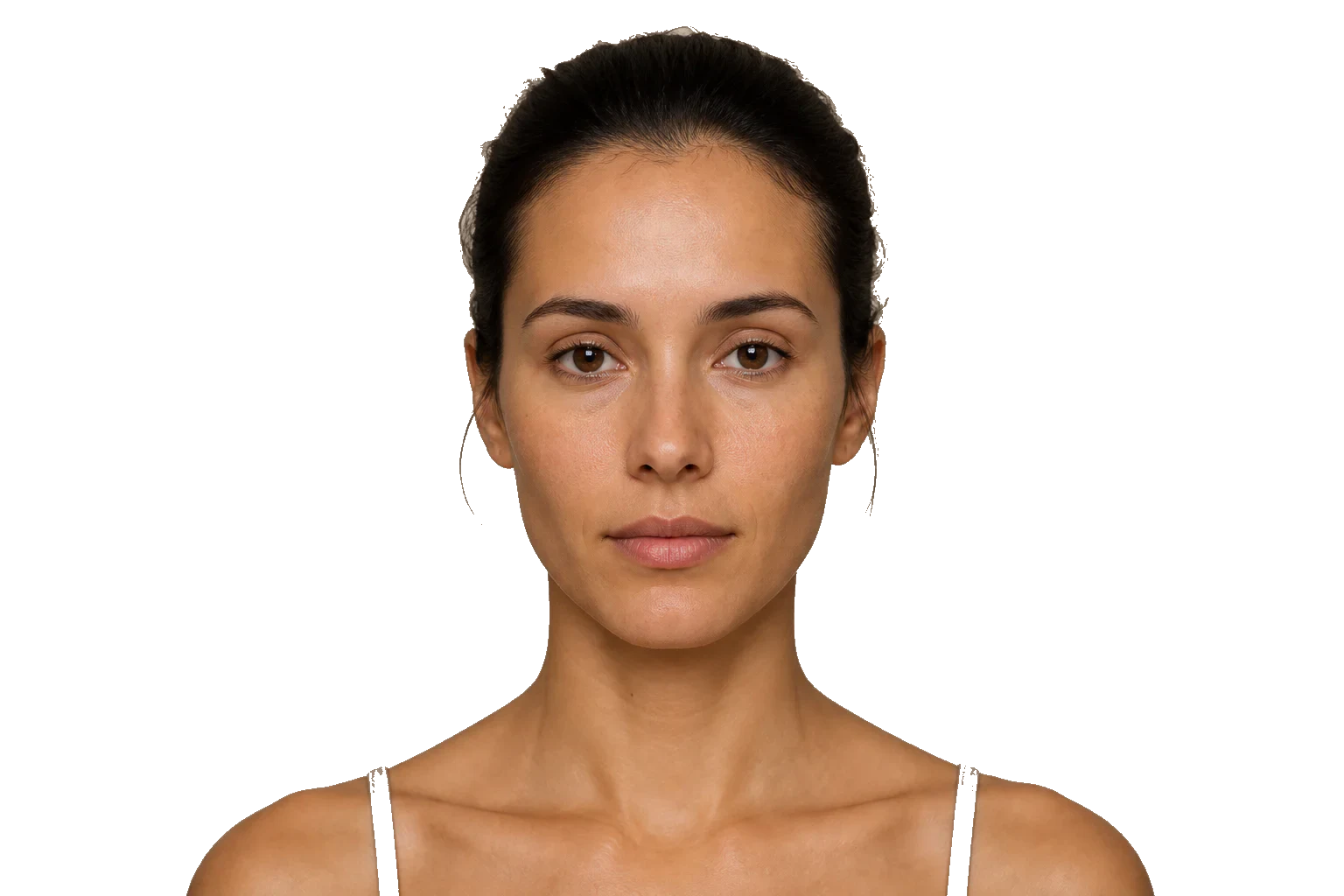
An oblong face shape is a proportion pattern: the face reads clearly longer from hairline to chin than it reads wide, while the forehead, cheekbones, and jaw usually stay close enough in width that no single zone dominates. The lower face can be soft or lightly structured; what matters is the full pattern, not one isolated feature.
Face length is the dominant proportion.
When you look straight on, the distance from visible hairline to chin is the first thing your eye registers. The face reads elongated before it reads cheekbone-led or jaw-led.
Forehead, cheekbones, and jaw are relatively aligned.
The upper face, cheekbone area, and jaw do not show one zone dramatically wider than the others. The outline feels more column-like than strongly flared.
The side contours appear straighter than an oval face.
From temple through cheek and toward the jaw, the sides look less smoothly tapered than an oval. The cheek area may not create a strong curved widest point.
No single feature confirms a face shape. Camera angle, hair, expression, and measurement points can all change the result.
Self-check
How to Tell If You Have an Oblong Face Shape
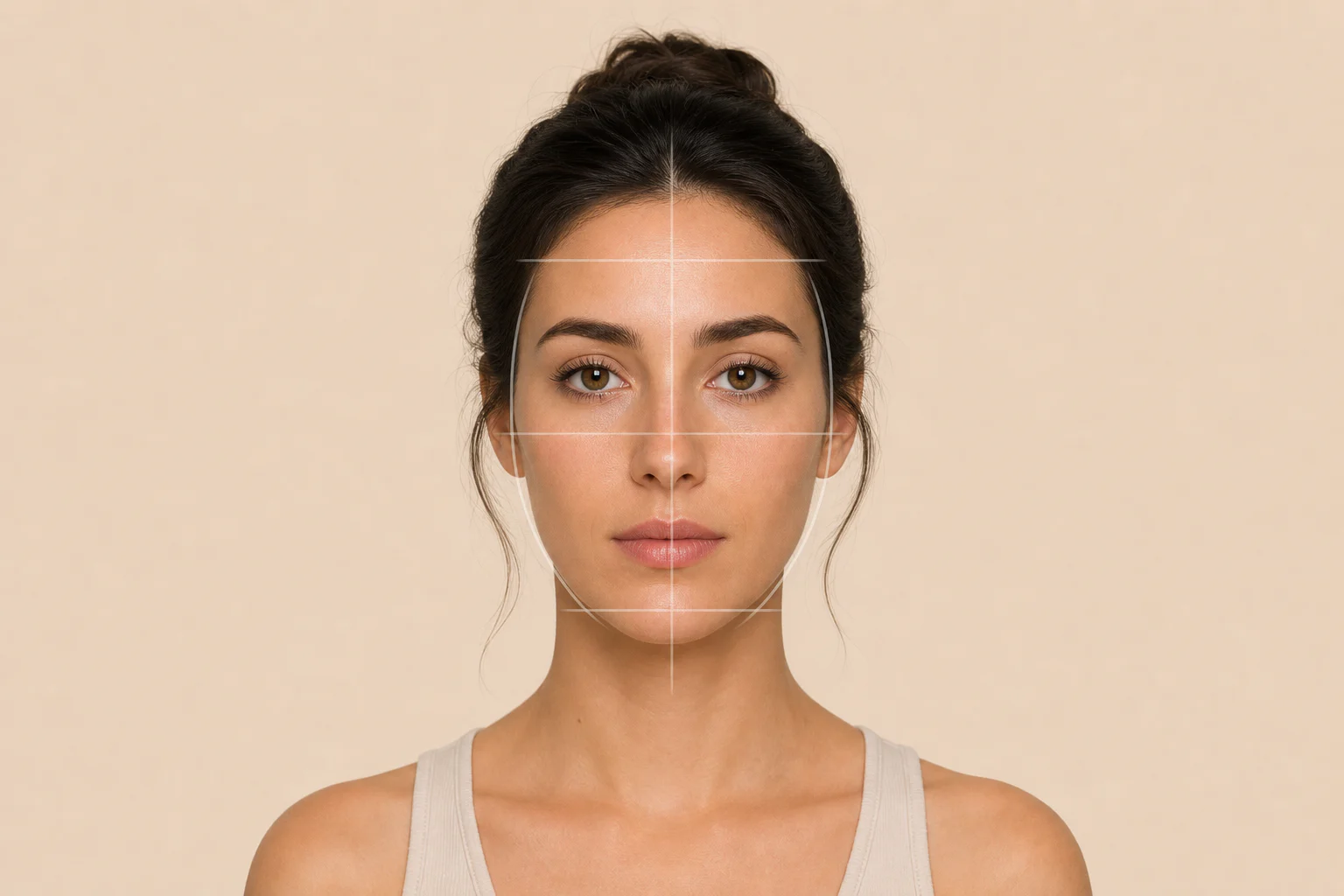
Use one clean photo, one visual pass, and measurements only when the visual result is unclear.
The Visual Observation Test
Likely oblong
Length is the first signal, widths look relatively aligned, sides look straight, and the jaw is soft or lightly structured rather than very broad and square.
Could be oval
The face is only moderately long, the cheek area flows into a smooth taper, and the chin narrows softly rather than continuing a straighter side line.
Could be rectangle
The face is clearly long, but the lower jaw is also broad, blunt, and angular enough to compete with length as the main signal.
Photo may be shifting the read
Camera distance, angle, hair, lighting, or expression may be changing the visible proportion. Try another photo only if the result feels off.
The Measurement Method
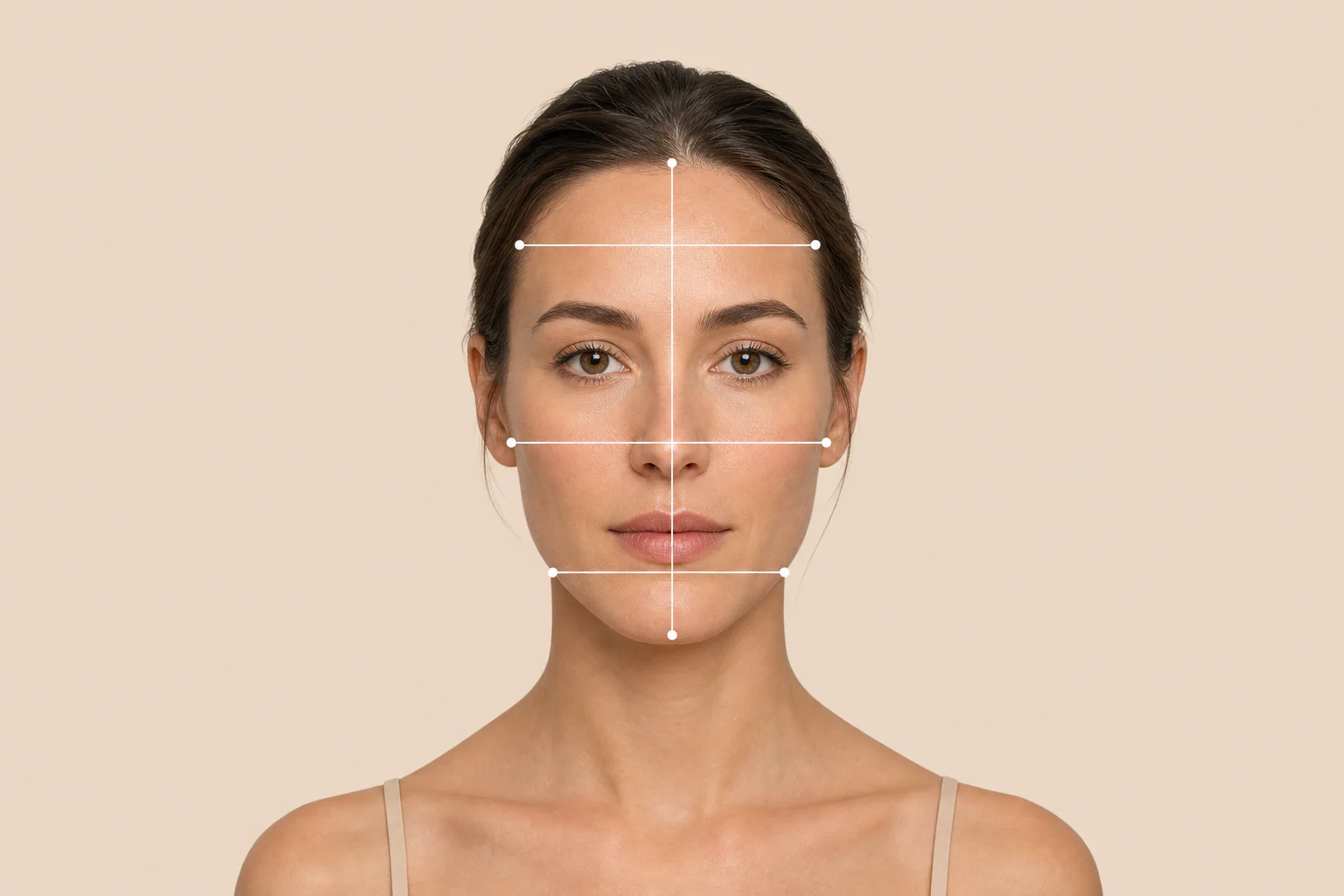
Measure only after the visual check. Use the same straight-on setup for every line, and compare proportions rather than treating one ratio as a verdict.
Face length
Measure from the center of the visible hairline to the lowest point of the chin. Do not start from hair volume above the hairline.
Forehead width
Measure across the widest visible area below the hairline, keeping the tape or pixel line level.
Cheekbone width
Measure from the widest point of one cheekbone area to the other, using the same image and scale.
Jaw width
Compare the width around the jaw angles. Some methods measure one side and double it, but the key is consistency.
How to Interpret the Result
Longest dimension plus relatively aligned widths and a softer jaw
Oblong
Moderate length plus smooth taper below cheekbones
Oval
Longest dimension plus broad, angular jaw
Rectangle-like proportions
Cheekbones clearly dominate while forehead and jaw taper
Diamond
Width and length are closer with rounded contours
Round
Still unsure?
Use FaceFit to compare your closest face-shape match and the features behind the result.
Comparison
Oblong Face Shape vs. Similar Face Shapes
Most confusion comes from oval balance, rectangle-like jaw structure, square jaw width, diamond cheekbone dominance, or round fullness. Compare the dominant signal first.
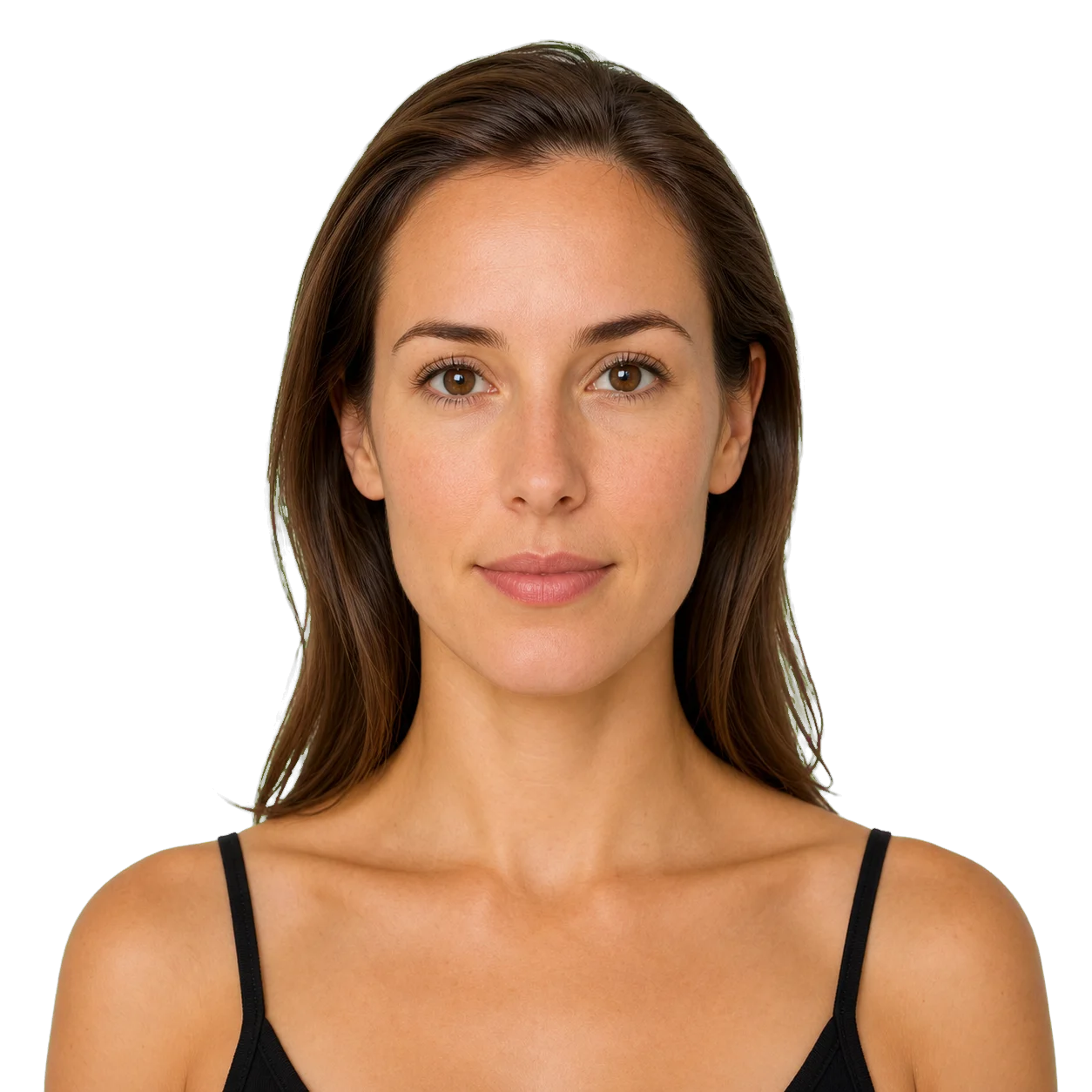
Oblong Face Shape
Clearly long
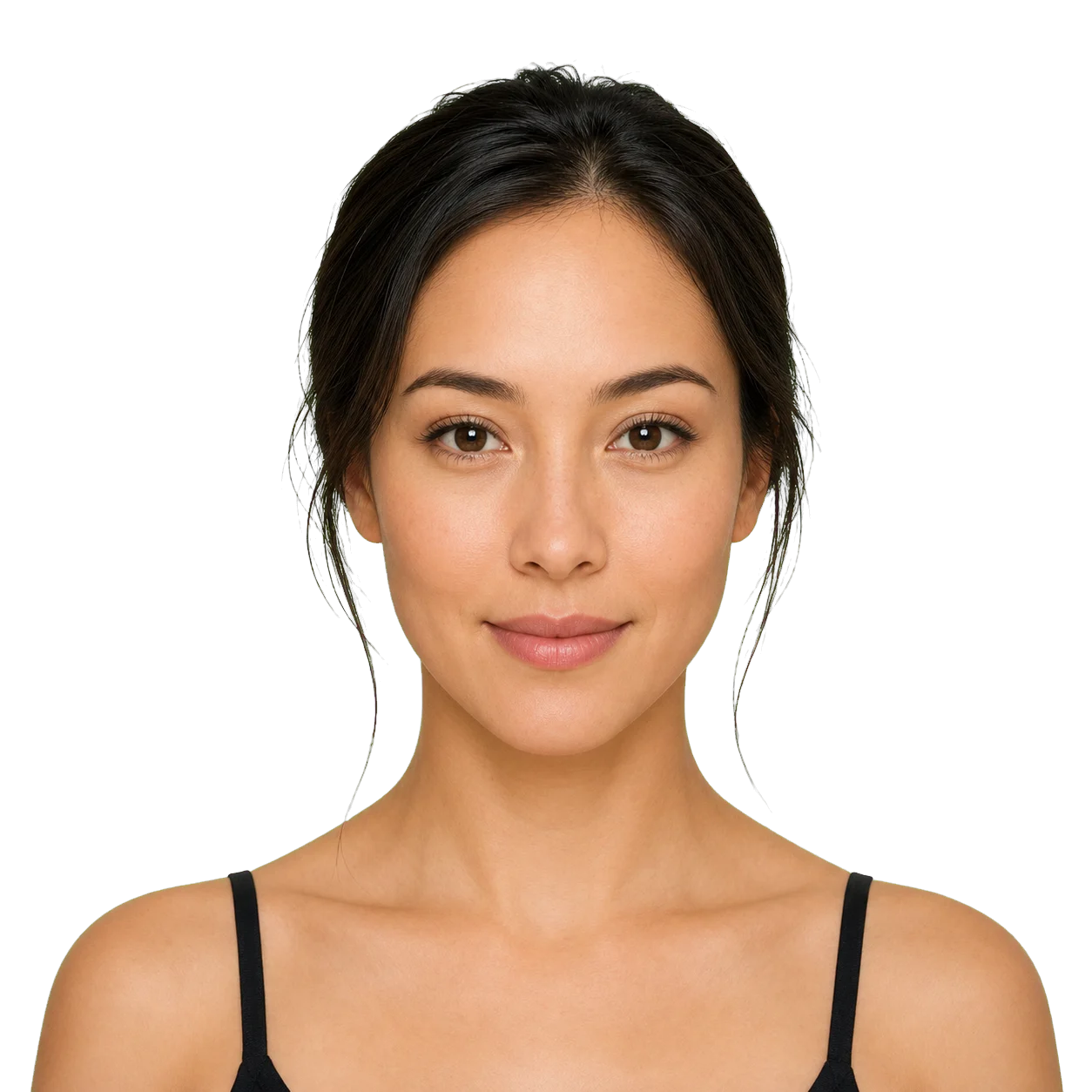
Oval Face Shape
Moderately long
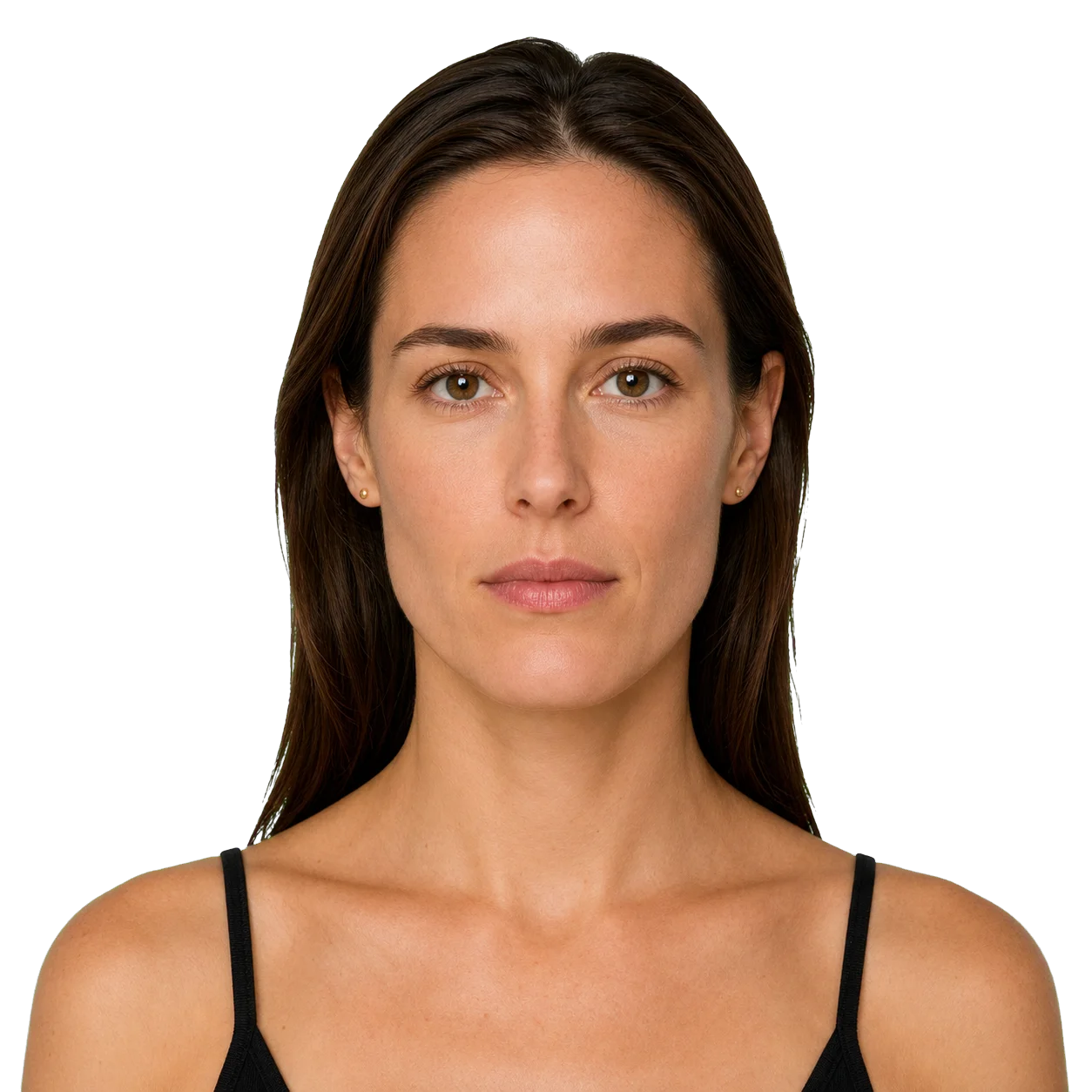
Rectangle-like
Clearly long
Overall length
Oblong Face Shape
Clearly long
Oval Face Shape
Moderately long
Rectangle-like
Clearly long
Side contours
Oblong Face Shape
Relatively straight
Oval Face Shape
Smoothly tapered
Rectangle-like
Straight and more angular
Jaw
Oblong Face Shape
Soft or lightly structured
Oval Face Shape
Rounded and narrowing
Rectangle-like
Broader and squarer
Chin
Oblong Face Shape
Rounded or gently structured
Oval Face Shape
Softly tapered
Rectangle-like
More squared
Dominant signal
Oblong Face Shape
Vertical proportion
Oval Face Shape
Overall balance
Rectangle-like
Length plus angularity
Are Oval Face Shape and Oblong Face Shape the Same?
No. They can overlap, but they are not the same pattern.
- Oblong reads clearly longer; oval reads moderately long and balanced.
- Oblong sides tend to stay straighter; oval sides curve and taper more smoothly.
Oval can look oblong in a close selfie or when hair is flat against the sides. Oblong can look oval when a soft jaw and fuller cheeks reduce the vertical impression.
Look first at whether length dominates more than overall balance.
Compare oval and oblong in detailOblong vs. Square Face Shape
Square is led by jaw strength and closer length-to-width balance; oblong is led by length.
- A square face usually has a stronger horizontal jaw base.
- Square length and width feel closer than oblong length and width.
A long face with a structured jaw may look square in cropped photos that hide the upper face. A square face can look oblong if photographed from a high angle.
Look first at whether the jaw width or the face length is the stronger signal.
Open the square face shape guideOblong vs. Diamond Face Shape
Diamond is cheekbone-led; oblong is length-led.
- Diamond faces usually have cheekbones that clearly dominate width.
- Diamond forehead and jaw often taper more than oblong forehead and jaw.
Strong cheekbone lighting or contour makeup can make an oblong face look diamond. Hair covering the jaw can also create a false taper.
Look first at whether cheekbones are the single widest feature.
Open the diamond face shape guideOblong vs. Round Face Shape
Round has closer length and width with fuller curves; oblong has more vertical length.
- Round faces usually feel wider through the cheeks relative to length.
- Round side contours are curved rather than straight.
A fuller oblong face can look rounder in a smiling selfie, and a round face can look longer when the camera is high or the crop is narrow.
Look first at whether length and width are close or clearly different.
Open the round face shape guideVariation
Oblong Face Shape Examples
These examples show variation inside the same proportion family. Use them to notice repeated signals, not to force an exact match.

Soft jaw Oblong Face Shape
Length is clear and the side widths stay close, but the chin and jaw finish softly rather than sharply.
This shows why an oblong face does not need a square jaw.

Lightly structured jaw Oblong Face Shape
The lower face has definition, but length remains the first visual signal and the jaw is not broad enough to lead the whole shape.
This version can be confused with rectangle-like proportions.

Wider Oblong Face Shape
The face still reads longer than wide, yet the overall width is not narrow. Forehead, cheeks, and jaw remain relatively aligned.
This prevents the mistake that all oblong faces must look slim.

Narrower Oblong Face Shape
The vertical line is stronger and the width zones are more compact, but the chin is not necessarily pointed or diamond-like.
This version needs careful comparison with oval and diamond.
Hair direction
Hairstyle Tips for an Oblong Face Shape
Use this section as a preview. The detailed hairstyle page covers cut names and variants; here the key is where width, height, and face-framing movement sit.
Balance the length
Use moderate width near the cheeks or jaw, controlled crown height, and breaks around the forehead so the eye does not travel only vertically.
Highlight the length
Keep a longer outline visible, but avoid flat side panels or extreme top height that can make the proportion feel accidental.

Women
Hairstyles for Women with an Oblong Face Shape
Look for cheek-to-jaw movement and a forehead break without adding extra crown height.
Textured lob with curtain bangs
Curtain bangs break the uninterrupted forehead-to-chin line, while a textured lob adds movement beside the cheeks instead of stacking all volume on top.
Use the full hairstyle guide for more cuts and length options.
Explore Hairstyles for Women with Oblong Face Shape
Men
Hairstyles for Men with an Oblong Face Shape
Keep top height controlled and preserve some side presence so the face does not read narrower.
Textured crop with fringe
Forward texture reduces exposed forehead length and creates a horizontal break. It works best when the sides are not shaved so tight that the face looks narrower.
Use the full hairstyle guide for more cuts and grooming combinations.
Explore Hairstyles for Men with Oblong Face ShapeEyewear direction
Glasses Tips for an Oblong Face Shape
Use this section as a preview. The detailed glasses page covers frame families; here the key is enough width, lens depth, and upper-frame structure.
Frame width
Enough outer width gives the face a broader visual reference without overpowering the temples.
Lens depth
Deeper lenses interrupt vertical length better than very shallow rectangles.
Bridge position
The bridge changes where the frame sits and how much mid-face space remains visible.

Women
Glasses for Women with an Oblong Face Shape
Prioritize frames with real lens depth and enough outer width to interrupt the long vertical line.
Deep square with softened corners
Lens depth helps break the vertical line, while softened corners keep the frame from becoming too severe.
Use the full glasses guide for more frame families and fit checks.
Explore Glasses for Women with Oblong Face Shape
Men
Glasses for Men with an Oblong Face Shape
Choose frames that add structure across the brow and mid-face without becoming narrow or shallow.
Deep square or soft rectangle
A deeper lens adds useful interruption, while a balanced outer width keeps the face from reading too narrow.
Use the full glasses guide for more frame families and fit checks.
Explore Glasses for Men with Oblong Face ShapeMakeup direction
Makeup Tips for an Oblong Face Shape
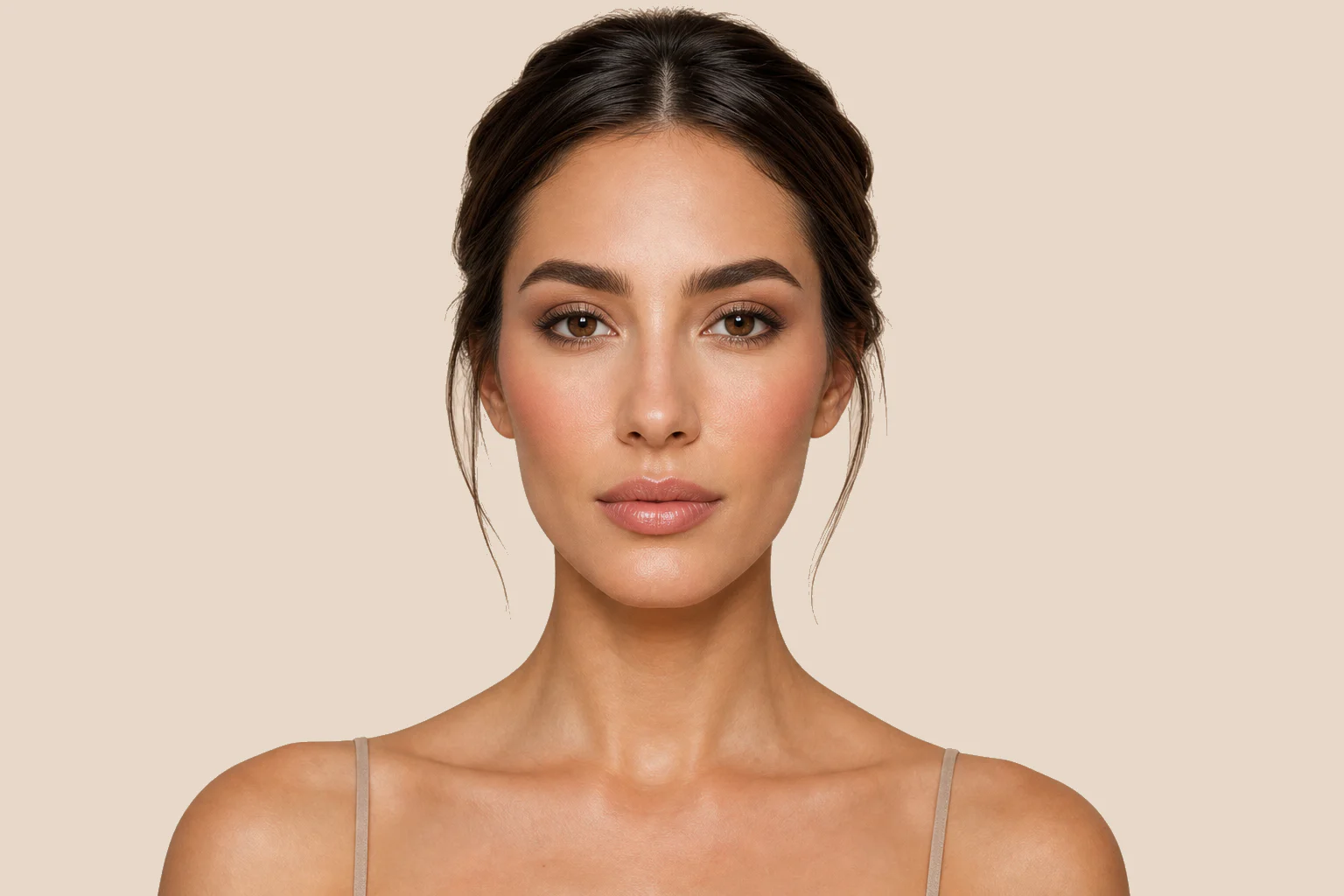
Makeup can add a horizontal cue across the mid-face or keep the longer line visible. Treat these as optional visual choices.
Blend blush outward
Place blush so it moves softly outward across the mid-face rather than only downward. This adds width around the cheeks without hiding the face shape.
Use light contour at the hairline and chin
Subtle contour can reduce the impression of extra vertical space at the top and bottom of the face. Keep it light so the result still looks natural.
Choose these techniques only if they support the look you want. Oblong faces do not need to be corrected.
Beard direction
Beard Styles for Men with an Oblong Face Shape
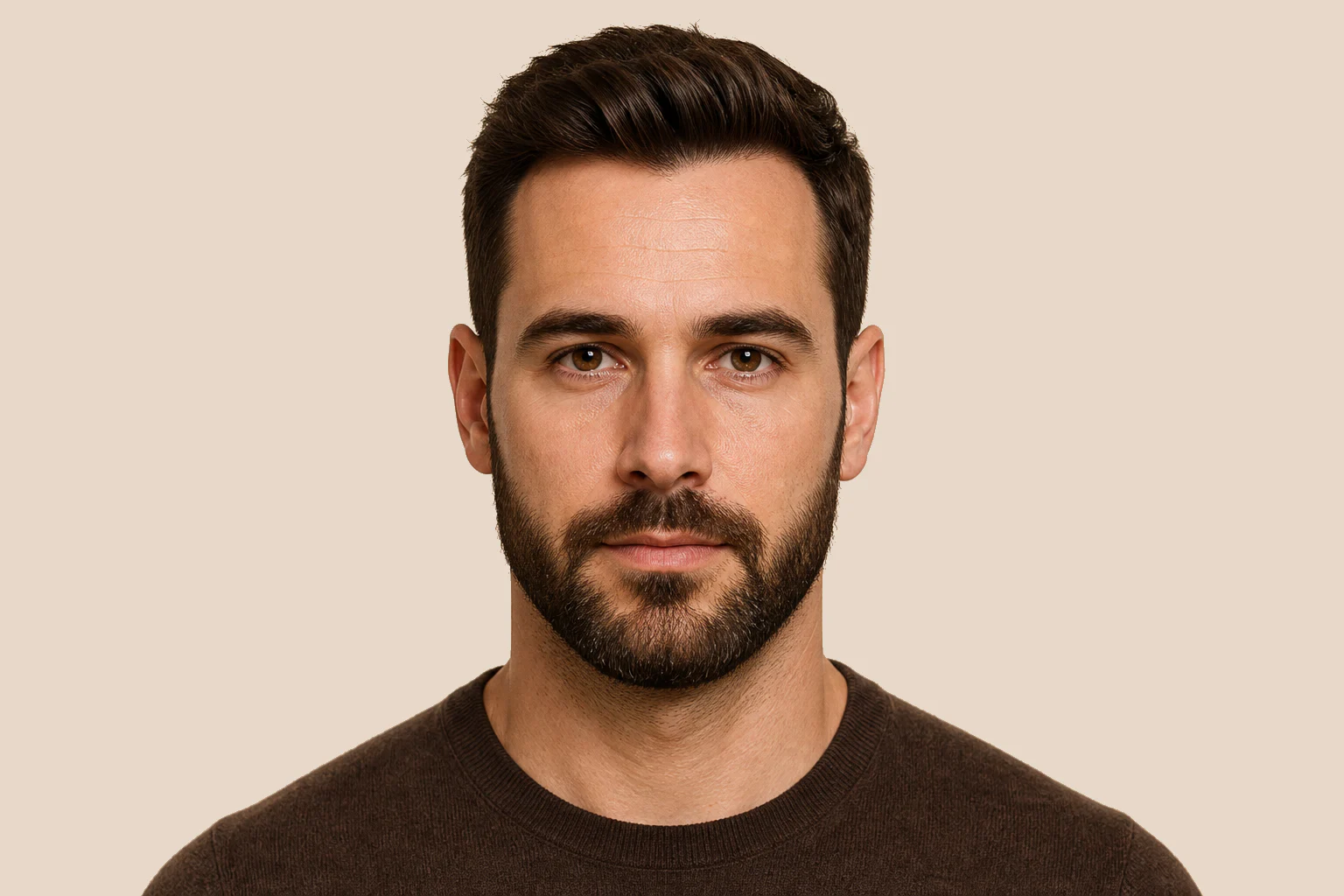
Beard shape affects how long the lower face appears. Keep chin length, side density, and haircut height in the same proportion system.
Short boxed beard
A short boxed beard adds definition while keeping chin length controlled. It is useful when you want structure without extending the face downward.
Controlled full beard
A full beard can work if it keeps modest side weight and avoids building too much length below the chin.
If the haircut already adds height, keep the beard especially controlled below the chin.
Frequently Asked Questions About Oblong Face Shapes
Is an oblong face the same as a long face?+
In everyday language, people often use long face for what a face-shape guide may call oblong. The difference is precision. Long face points mainly to vertical length. Oblong also considers whether forehead, cheekbone, and jaw widths stay relatively aligned and whether the side contours look straighter than oval.
Is an oblong face shape attractive?+
Yes. Oblong faces can look elegant, clear, dramatic, refined, or strong, but attractiveness is not decided by face shape alone. Features, expression, styling, confidence, and personal taste matter more than a single category. Styling advice helps you choose balance or emphasis; it is not a correction plan.
Can a selfie accurately show my face shape?+
A selfie can help only if it is clear, front-facing, eye-level, and not too close. Many selfies use a wide-angle lens at short distance, which can exaggerate the center of the face and alter length. Use a better photo setup, compare with a mirror, and avoid relying on one image.
What should I do if my measurements point to two face shapes?+
Treat the measurements as clues rather than a verdict. Check which visible pattern is stronger: length, taper, jaw width, cheekbone dominance, or roundness. If two shapes remain close, use FaceFit to compare the closest match and the features behind it, then choose styling based on the proportion you actually want to balance or emphasize.
Still deciding between oblong, oval, and rectangle-like proportions?
Upload a clear front-facing photo to see your closest FaceFit match and the features that influenced the result.