
DEFINITION
What Is a Square Face Shape?
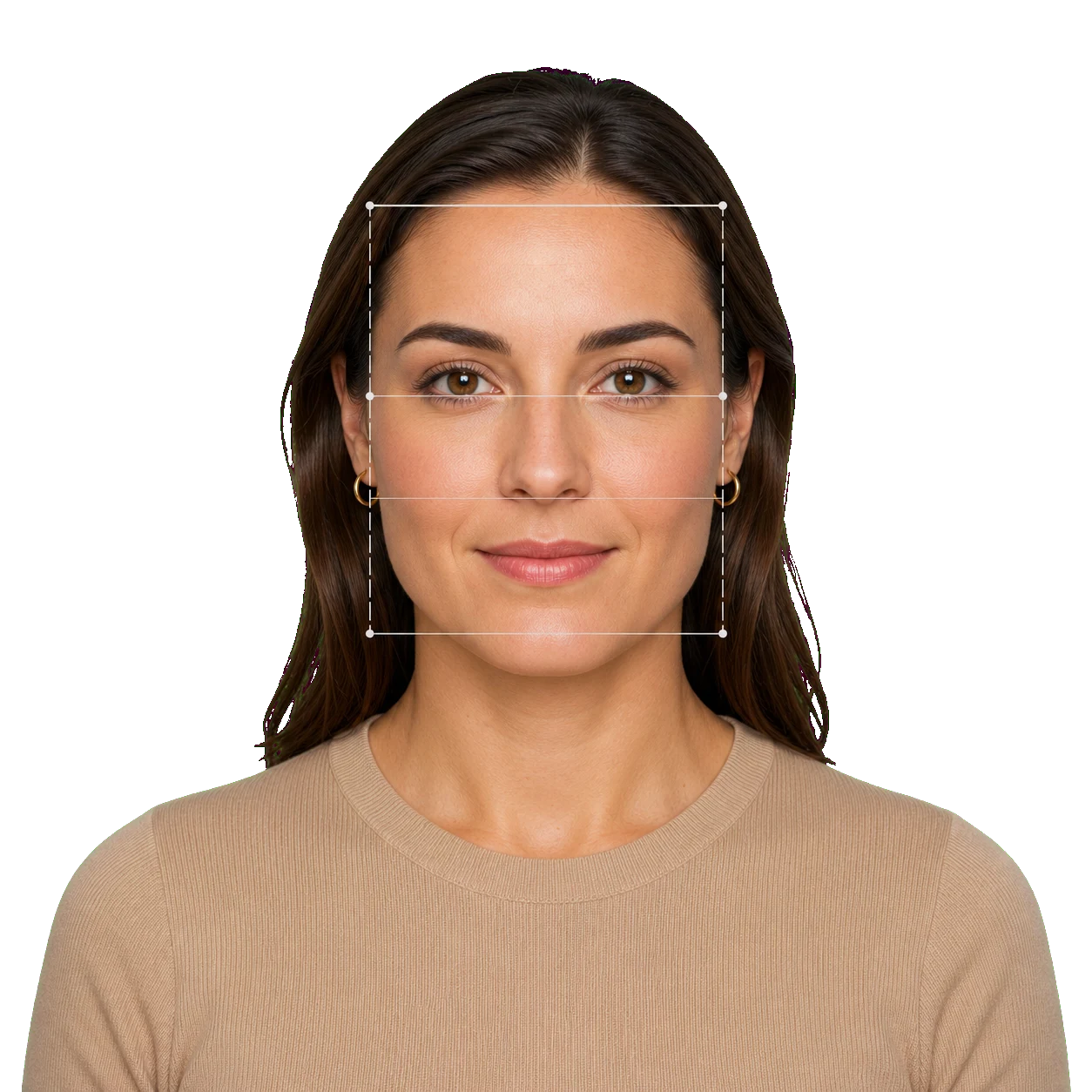
A square face shape is led by lower-face structure. The forehead, cheekbone area, and jaw often feel relatively even in width, while the jawline creates a clearer, straighter frame.
The jawline is clear.
The lower face has more structure than a soft round or oval outline.
Widths feel even.
Forehead, cheekbone, and jaw width can feel close rather than strongly tapered.
The sides look straighter.
The outline may feel more vertical or grounded than curved.
Square does not mean harsh. The goal is to recognize a clear lower-face frame, then style with or against that structure intentionally.
SELF-CHECK
How to Tell If You Have a Square Face Shape
Start with a neutral front-facing photo, then check whether lower-face structure is stronger than cheek softness, overall balance, or vertical length.
The Visual Read
Likely square
The jawline is clearer or straighter, the lower face keeps width, and the outline feels framed.
Could be round
The cheeks look softer and fuller, while the jaw corner is not the strongest signal.
Could be oval
The face is gently longer with smoother transitions and less lower-face width.
Could be oblong
Length leads first, with straighter side lines and less emphasis on jaw width.
The Measurement Method
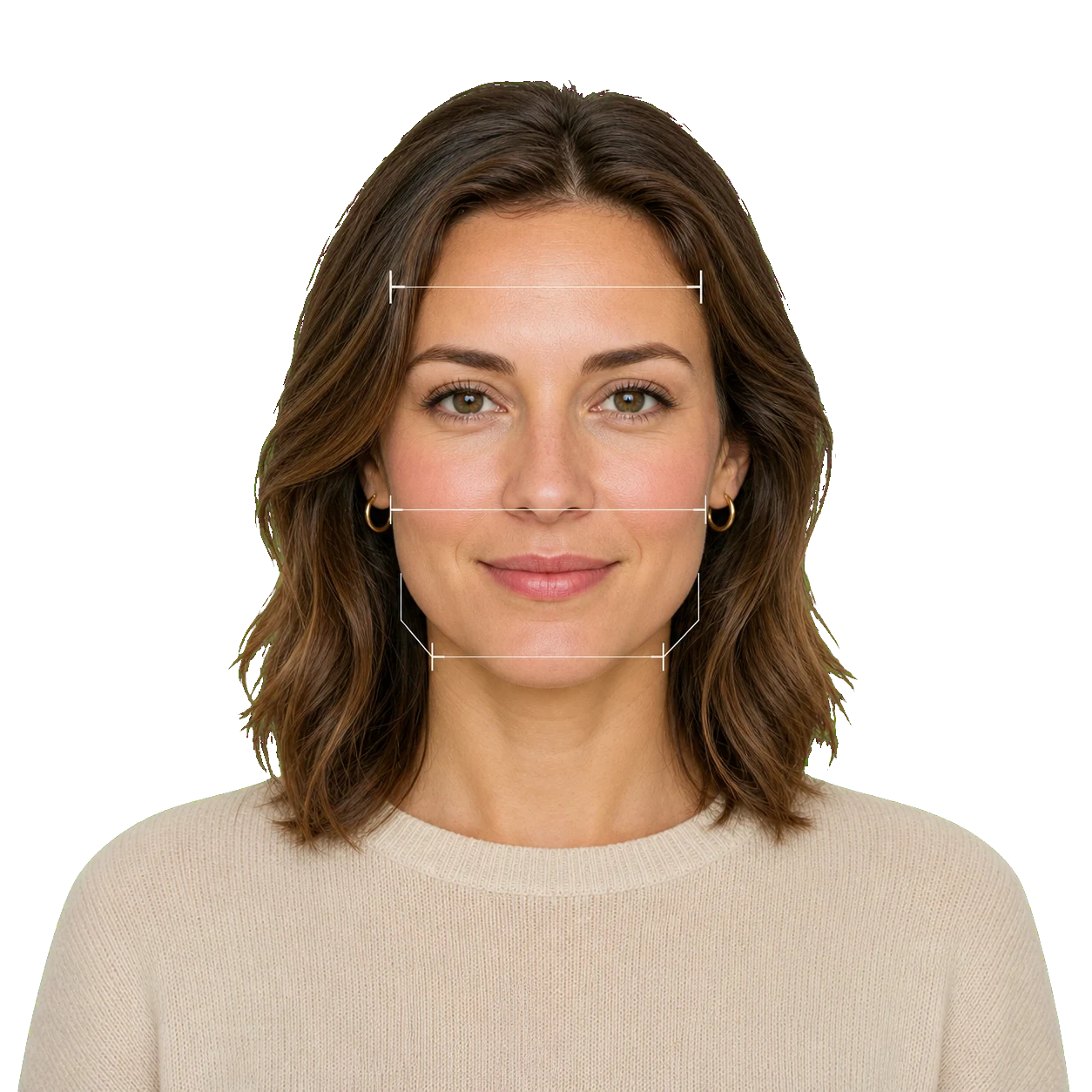
Use the same straight-on image. Compare relative widths and length; do not treat one ratio as a final verdict.
Forehead width
Check whether forehead width stays close to cheek and jaw width rather than tapering strongly.
Cheek width
Cheeks can be visible, but they should not overpower the lower-face frame.
Jaw width
The jaw often stays broad or stable, making it the strongest square signal.
Jaw angle
Look for a clearer corner or straighter lower edge instead of a soft curve.
How to Interpret the Result
Clear jawline, stable lower-face width, even upper and lower widths
Square Face Shape
Soft cheeks, curved jaw, similar length and width
Round Face Shape
Gently longer with smoother outline transitions
Oval Face Shape
Length dominates before jaw width does
Oblong Face Shape
Still unsure?
Use FaceFit to compare your closest face-shape match and the features behind the result.
COMPARISON
Square Face Shape vs. Similar Face Shapes
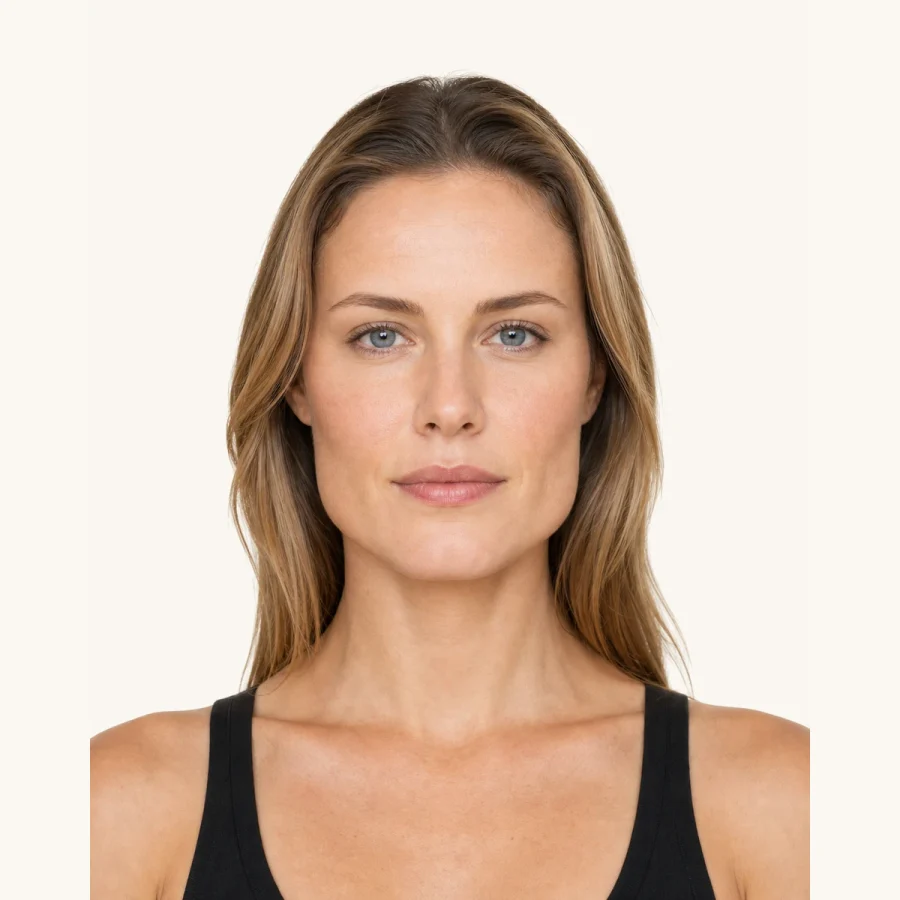
Square is most often confused with round, oval, and oblong shapes. Compare whether jaw structure, softness, balance, or length is dominant.
Square
Jaw structure

Round
Soft cheeks

Oval
Balance

Oblong
Length
Main signal
Square
Jaw structure
Round
Soft cheeks
Oval
Balance
Oblong
Length
Length
Square
Close to moderate
Round
Close to width
Oval
Gently longer
Oblong
Clearly longer
Jawline
Square
Angular or broad
Round
Soft curve
Oval
Soft taper
Oblong
Straighter sides
Common misread
Square
Soft light hides angles
Round
Width reads square
Oval
Balanced jaw reads oval
Oblong
Length hides width
Square Face Shape vs. Round Face Shape
Round is softer; square keeps a stronger lower-face frame.
- Compare the dominant signal before judging a single measurement.
- Use a clear front-facing image so hair, smile, and lens distortion do not decide the result.
Lighting, camera distance, and hair placement can make the two shapes look closer than they are.
Look for the feature that remains visible across more than one neutral photo.
Open the round face shape guideSquare Face Shape vs. Oval Face Shape
Oval narrows more softly; square keeps more lower-face width.
- Compare the dominant signal before judging a single measurement.
- Use a clear front-facing image so hair, smile, and lens distortion do not decide the result.
Lighting, camera distance, and hair placement can make the two shapes look closer than they are.
Look for the feature that remains visible across more than one neutral photo.
Open the oval face shape guideSquare Face Shape vs. Oblong Face Shape
Oblong length leads first; square jaw structure leads first.
- Compare the dominant signal before judging a single measurement.
- Use a clear front-facing image so hair, smile, and lens distortion do not decide the result.
Lighting, camera distance, and hair placement can make the two shapes look closer than they are.
Look for the feature that remains visible across more than one neutral photo.
Open the oblong face shape guideVARIATION
Square Face Shape Examples
Square faces can look soft, strong, compact, wider, feminine, masculine, or androgynous. Look for repeated lower-face structure.

Soft square face shape
The jaw is clear but not harsh.
Can be confused with round in soft lighting.

Defined square face shape
The lower-face frame is the first signal.
Compare with oblong if the face is also long.

Compact square face shape
Length is moderate while the jaw stays structured.
Do not judge from width alone.

Balanced square face shape
Upper and lower widths feel close.
Can resemble oval when the jaw is softened.
HAIR DIRECTION
Hairstyle Tips for a Square Face Shape
Use this as a preview. Square faces can lean into structure or soften it with movement around the jawline.
Soften without hiding
Movement near the jaw can ease hard stops while keeping the face open.
Avoid jaw-corner weight
Do not let the cut stop bluntly at the strongest jaw point.

WOMEN
Hairstyles for Women with a Square Face Shape
Choose movement that softens the jawline without covering the face.
Soft layers past the jaw
Layers that pass the jaw corner create movement and reduce a blunt lower edge.
Use the full hairstyle guide for more lengths, bangs, and styling variants.
Explore Hairstyles for Women with Square Face Shape
MEN
Hairstyles for Men with a Square Face Shape
Use texture and controlled edges to keep the jaw confident without making the whole cut boxy.
Textured crop with softened edges
Texture breaks rigid geometry while keeping the face strong.
Use the full hairstyle guide for more cuts and grooming combinations.
Explore Hairstyles for Men with Square Face ShapeEYEWEAR DIRECTION
Glasses Tips for a Square Face Shape
Use this as a preview. Square faces often benefit from curves, moderate weight, and frames that do not repeat every jaw angle.
Soften strong corners
Rounder or softened rectangle frames can ease jawline repetition.
Keep weight balanced
Very heavy square frames can make the lower face feel wider.

WOMEN
Glasses for Women with a Square Face Shape
Choose frames that soften angles while keeping a confident presence.
Rounded rectangle or soft oval
Curved edges reduce harsh repetition without losing definition.
Use the full glasses guide for more frame families and fit checks.
Explore Glasses for Women with Square Face Shape
MEN
Glasses for Men with a Square Face Shape
Look for frames that soften corners and keep weight moderate.
Soft angular frame with medium weight
Medium weight keeps structure without stacking more hard geometry.
Use the full glasses guide for more frame families and fit checks.
Explore Glasses for Men with Square Face ShapeSTYLING NOTES
Makeup and Beard Notes for a Square Face Shape
These are optional styling directions, not correction rules. Square faces can keep their structure and still feel soft.
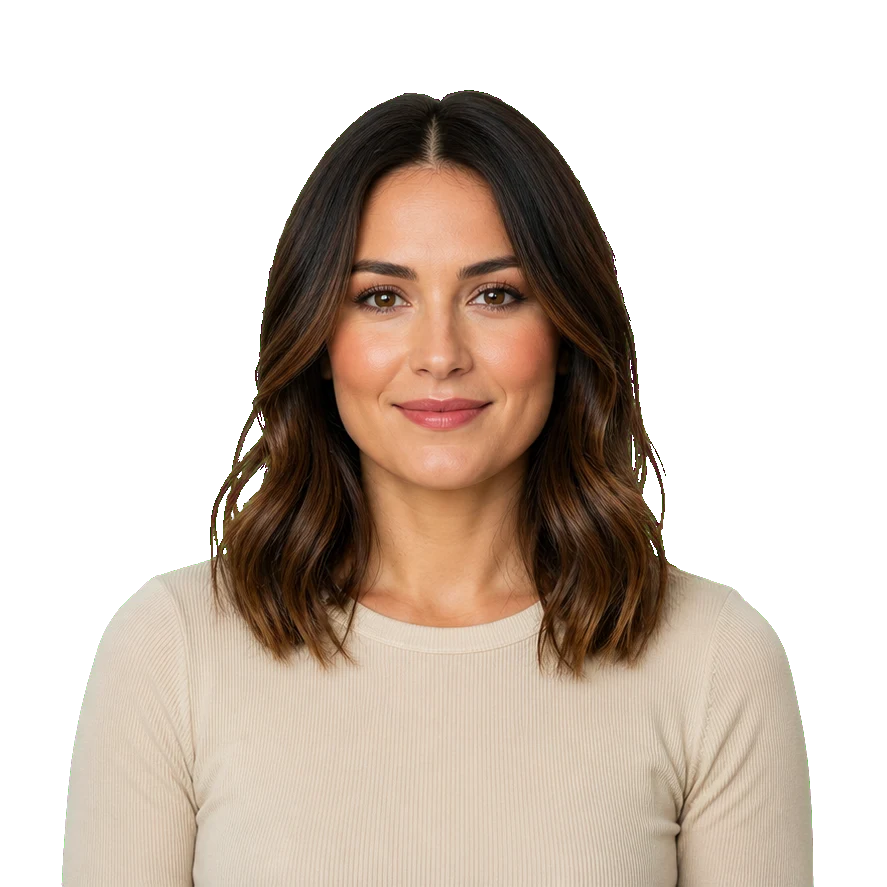
Use makeup to soften transitions
Blush and highlight can bring movement without hiding jawline structure.

Use beard shape to refine the jaw
A neat beard can keep strength while preventing the lower face from looking too blocky.
The best choice depends on the look you want, not on fixing your face shape.
Frequently Asked Questions
Is a round face shape the same as a full face?+-
No. Fullness can change with expression, camera distance, or body changes. Round refers to the dominant proportion and soft outline.
Can a round face have cheekbones?+-
Yes. Cheekbones can be visible, but the overall read is still softer and less sharply tapered than diamond.
How do I know if my face is round or square?+-
Look at the jawline. Round has a softer curve; square keeps clearer lower-face angles.
Can photos make an oval face look round?+-
Yes. Close selfies, smiles, and lens distortion can make the cheeks look wider and the face shorter.
Still deciding between square, round, and oblong proportions?
Upload a clear front-facing photo to see your closest FaceFit match and the features that influenced the result.