
Definition
What Is a Heart Face Shape?
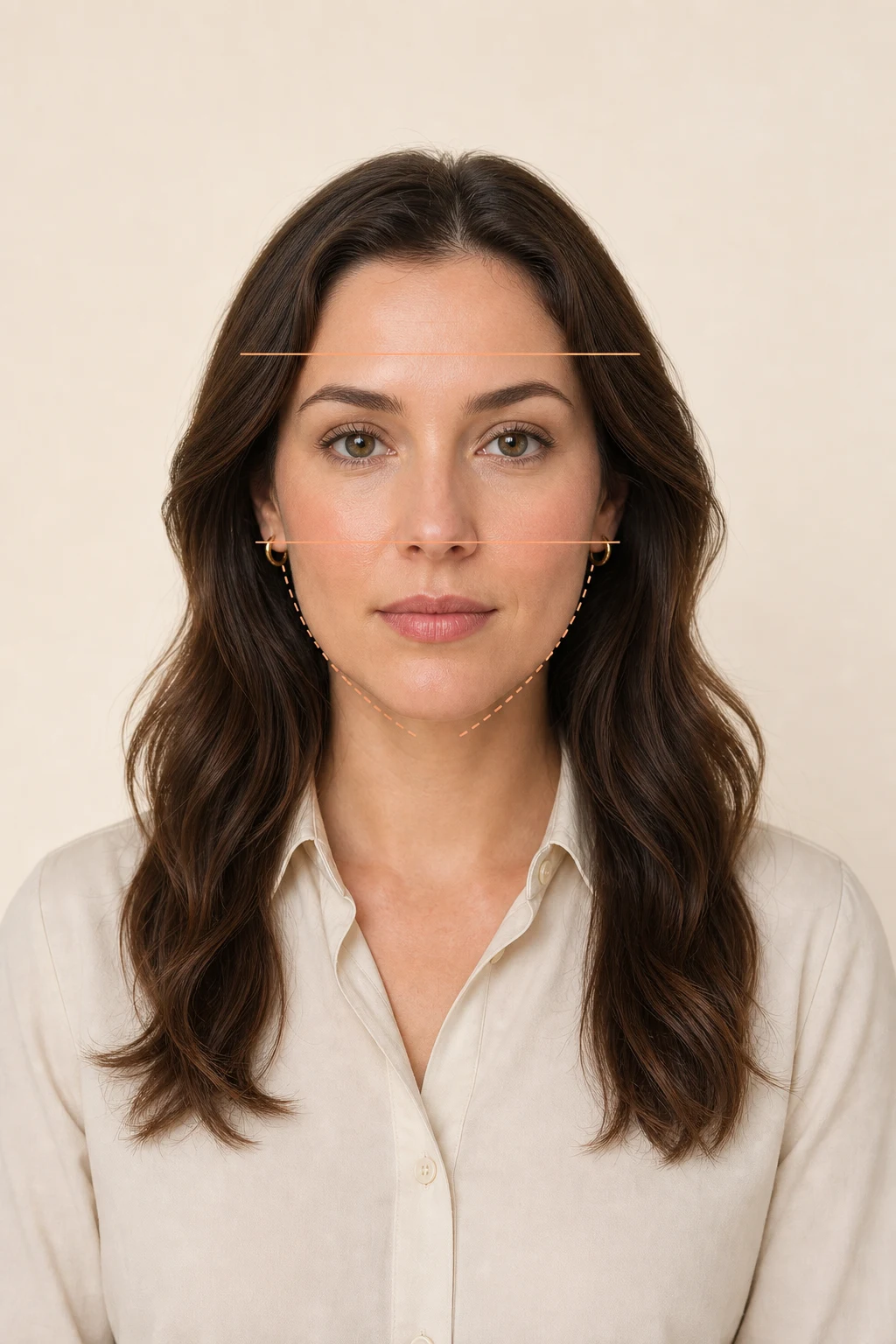
A heart face shape is a proportion pattern where the upper face carries more visual width than the lower face. The forehead or upper cheek area often reads broader, then the jawline narrows toward a more defined chin. A widow’s peak can appear with this shape, but it is not required.
Upper-face width leads.
The forehead or upper cheek area is the first width signal you notice when the face is viewed straight on.
The jawline tapers downward.
The lower face narrows from the cheek or jaw area toward the chin instead of staying square or evenly rounded.
The chin is more defined.
The chin may be softly pointed or neat and narrow, but it does not need to look sharp in every photo.
Self-check
How to Tell If You Have a Heart Face Shape
Use a clear front-facing photo first, then check the upper-to-lower width relationship. Measurements are useful only when the visual result is close.
The Visual Observation Test
Likely heart
Upper-face width leads, the jawline narrows, and the chin is the clearest lower-face point.
Could be diamond
The cheekbones are the single widest feature while the forehead and jaw both taper.
Could be oval
The face feels balanced overall, with softer width changes and no strong upper-to-lower contrast.
Photo may be shifting the read
Camera distance, angle, hair, lighting, or expression may be changing the visible proportion. Try another photo only if the result feels off.
The Measurement Method
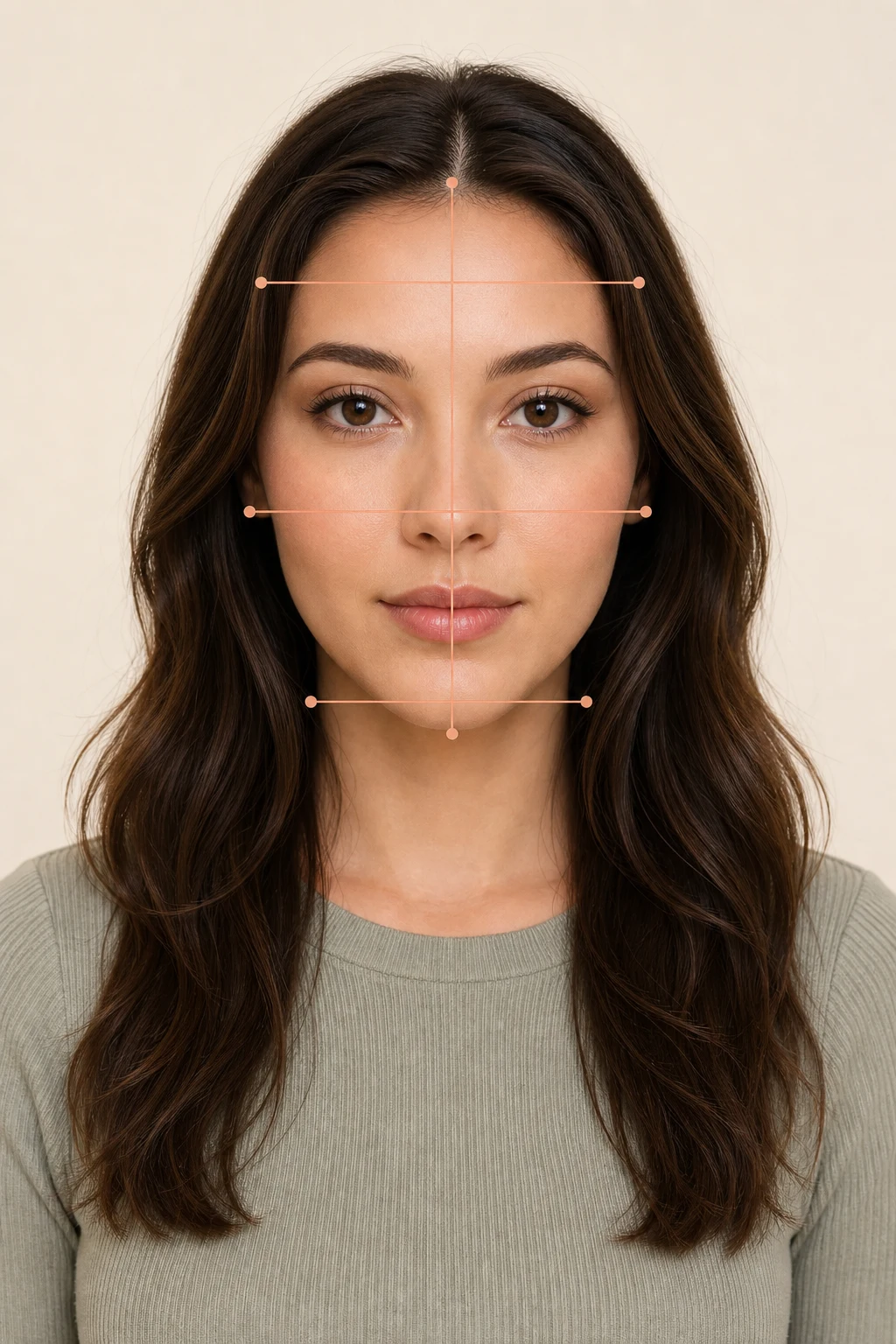
Measure from the same straight-on image. The goal is to compare relative widths, not to force one exact ratio.
Forehead width
Measure across the widest visible part of the upper face below the hairline.
Cheekbone width
Measure across the cheekbone area and see whether it or the forehead carries the strongest width.
Jaw width
Compare jaw width near the angles or lower cheeks to the upper-face width.
Chin taper
Check whether the lower face narrows toward a defined chin rather than ending in a broad jaw.
How to Interpret the Result
Upper face is wider, jaw tapers, and chin is defined
Heart Face Shape
Cheekbones are clearly widest while forehead and jaw both taper
Diamond Face Shape
Widths change gently and the outline feels balanced
Oval Face Shape
Cheeks feel full and length and width are closer
Round Face Shape
Jaw stays broad or square instead of tapering
Square-like proportions
Still unsure?
Use FaceFit to compare your closest face-shape match and the features behind the result.
Comparison
Heart Face Shape vs. Similar Face Shapes
Heart is most often confused with diamond, oval, and round shapes. Compare the widest area and the lower-face direction before choosing a label.
Widest area
Heart
Forehead or upper face
Diamond
Cheekbones
Oval
Balanced cheek-led width
Jawline
Heart
Narrows downward
Diamond
Tapers from cheekbones
Oval
Soft and balanced
Chin
Heart
Defined or narrower
Diamond
Often narrow or pointed
Oval
Softly rounded
Dominant signal
Heart
Upper-to-lower taper
Diamond
Cheekbone dominance
Oval
Overall balance
Heart Face Shape vs. Diamond Face Shape
The widest point is the main separator.
- Heart usually reads wider higher in the face.
- Diamond usually places the strongest width at the cheekbones.
Strong cheekbone lighting can make a heart face look diamond, while hair over the forehead can hide the upper-face width.
Look first at whether the forehead or cheekbones dominate.
Open the diamond face shape guideHeart Face Shape vs. Oval Face Shape
Oval is more balanced; heart has clearer taper.
- Heart narrows more noticeably toward the chin.
- Oval usually keeps a smoother, more even outline.
A soft heart face can look oval when the forehead is covered or the jawline is hidden.
Look for the upper-to-lower width contrast.
Open the oval face shape guideHeart Face Shape vs. Round Face Shape
Round is led by cheek fullness and closer length-to-width balance.
- Heart usually has a more defined chin.
- Round side contours feel fuller and less tapered.
A smiling heart face can look rounder, while a high camera angle can make a round face look tapered.
Look first at whether the lower face narrows or stays full.
Open the round face shape guideVariation
Heart Face Shape Examples
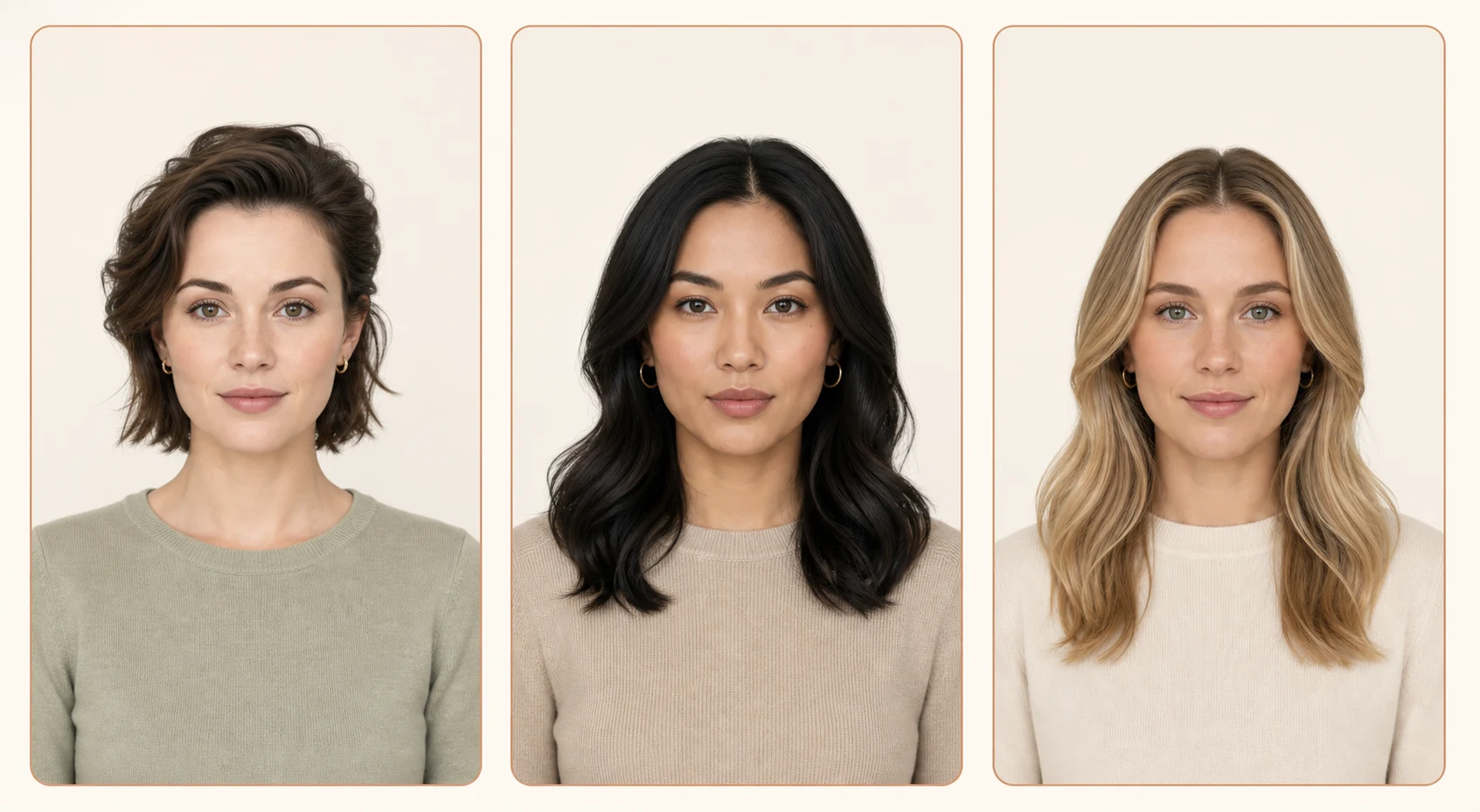
Heart Face Shape can appear soft, angular, narrow, wider, feminine, masculine, or androgynous. Examples help you notice the repeated upper-to-lower taper without forcing an exact match.

Soft Heart Face Shape
The upper face leads, but the chin and jaw finish softly rather than sharply.
This version can be confused with oval when hair covers the forehead.
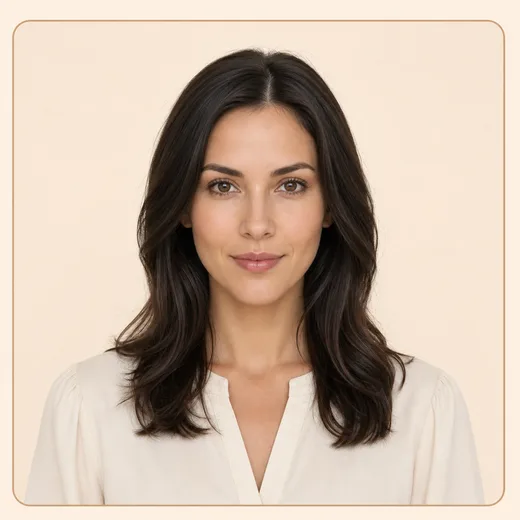
Defined-chin Heart Face Shape
The taper toward the chin is clearer, while the jaw does not become broad or square.
This version can be confused with diamond if cheekbones are strongly lit.

Wider Heart Face Shape
The face is not necessarily narrow overall; the key is that upper width remains stronger than lower width.
This prevents the mistake that every heart face must look small or delicate.

Cheekbone-visible Heart Face Shape
Cheekbones can be visible, but they do not become the single strongest width signal.
Compare carefully with diamond when cheekbones dominate the photo.
Hair direction
Hairstyle Tips for a Heart Face Shape
Use this as a preview. The detailed hairstyle page covers cut names; here the key is controlling forehead width and adding useful movement around the cheek-to-jaw area.
Soften upper width
Side movement, curtain shapes, or side-swept pieces can reduce the feeling of a heavy forehead.
Support the lower face
Movement near the jaw or collarbone can balance the taper without hiding the chin.

Hairstyles for Women with a Heart Face Shape
Look for softness around the forehead and movement that lands near the cheeks or jaw.
Side-swept fringe with soft layers
A diagonal forehead break and light side movement reduce upper-face emphasis while keeping the chin visible.
Use the full hairstyle guide for more cuts, lengths, and styling variants.
Explore Hairstyles for Women with Heart Face Shape
Hairstyles for Men with a Heart Face Shape
Keep temple width controlled and avoid building all visual weight at the forehead.
Textured fringe with balanced sides
Light forward texture reduces forehead dominance while moderate side presence keeps the face from looking top-heavy.
Use the full hairstyle guide for more cuts and grooming combinations.
Explore Hairstyles for Men with Heart Face ShapeEyewear direction
Glasses Tips for a Heart Face Shape
Use this as a preview. The detailed glasses page covers frame families; here the key is avoiding excessive upper-frame weight while keeping enough lower or outer balance.
Frame weight
Very heavy brow lines can add more emphasis to the already wider upper face.
Lower balance
Soft oval, light aviator, or rounded rectangle structures can add visual balance around the middle and lower face.
Outer width
Frames should be wide enough for fit, but not so top-heavy that they pull attention only upward.

Glasses for Women with a Heart Face Shape
Prioritize softer frame shapes, balanced depth, and lighter upper rims.
Soft oval or rounded rectangle
Curved or softened corners balance the taper without adding harsh upper-face weight.
Use the full glasses guide for more frame families and fit checks.
Explore Glasses for Women with Heart Face Shape
Glasses for Men with a Heart Face Shape
Choose structure that supports the eyes without turning the upper face into the only focal point.
Light aviator or soft rectangle
A lighter top line and enough lens depth can balance the face while keeping the jawline visible.
Use the full glasses guide for more frame families and fit checks.
Explore Glasses for Men with Heart Face ShapeStyling notes
Makeup and Beard Notes for a Heart Face Shape
These are optional previews, not correction rules. Use them only when they support the look you want.

Blend blush outward and slightly lower
A softer cheek placement can keep the upper face from carrying all the color focus.
Keep highlight balanced
A very bright center-forehead highlight can increase upper-face emphasis.

Use beard density below the cheek line
Short beard weight around the jaw and chin can add lower-face presence without hiding the taper.
Avoid a long narrow goatee as the only feature
Too much length below the chin can exaggerate the taper instead of balancing it.
Heart faces do not need to be corrected; these choices simply shift where the eye rests.
Frequently Asked Questions About Heart Face Shapes
Is a heart face shape the same as having a widow’s peak?+
No. A widow’s peak can appear with a heart face shape, but the face shape is about the wider upper face, tapering jawline, and narrower chin.
How do I know if my face is heart or diamond?+
Check the widest point. Heart usually reads wider at the forehead or upper face, while diamond is led by cheekbone width.
Can a heart face shape have round cheeks?+
Yes. Cheek softness can exist on a heart face. The deciding clue is whether the lower face still tapers toward a more defined chin.
What should I do if my measurements are mixed?+
Use the clearest repeated signals, then compare a second photo or use FaceFit for a feature-based result.
Still deciding between heart, diamond, and oval proportions?
Upload a clear front-facing photo to see your closest FaceFit match and the features that influenced the result.