Face Shape vs Face Proportions: What Is the Difference?
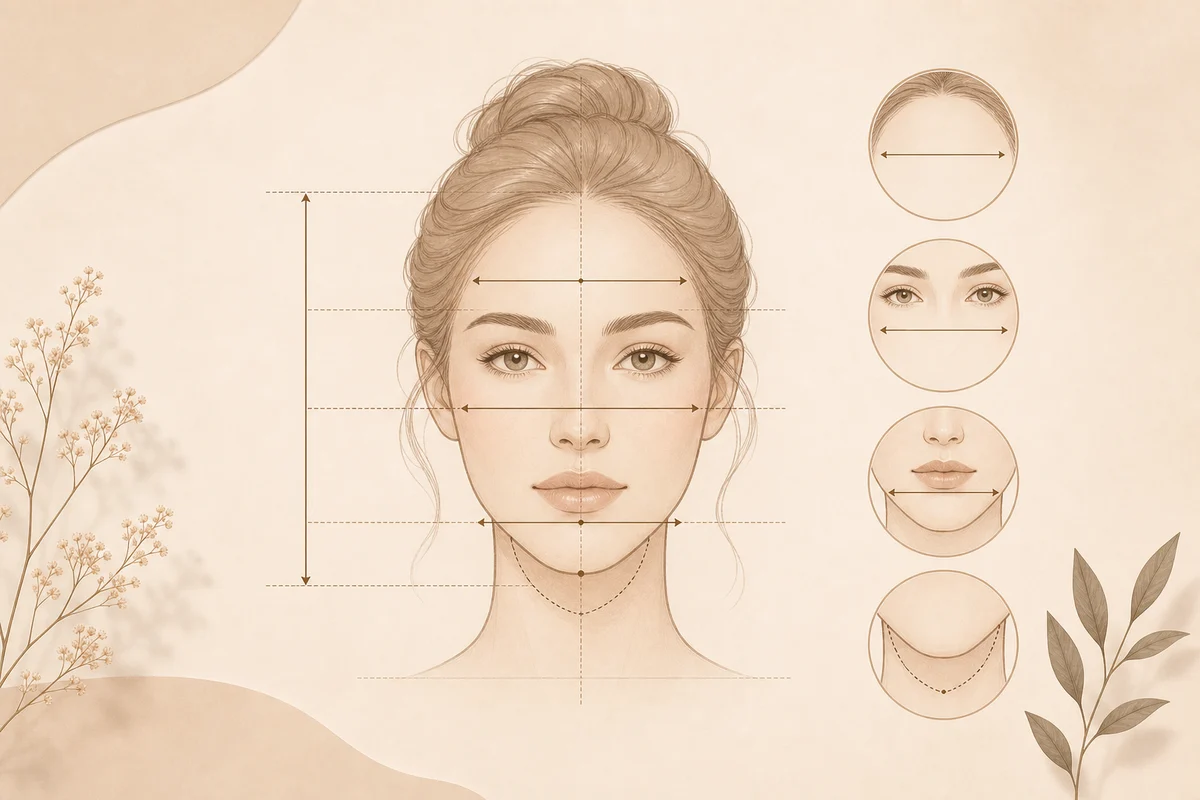
Face shape is the summary. Face proportions are the visible relationships that explain why the summary fits.
Calling a face oval, round, square, heart, diamond, or oblong is useful only when the name is connected to evidence. Face length, width distribution, cheekbone presence, jawline, chin taper, and overall contour all contribute to the result. Without those details, the label becomes too vague to guide hairstyles, glasses, or any next step.
Quick answer
Face shape answers, "Which overall profile fits best?" Face proportions answer, "Which visible features make that profile fit?" The proportions are not a separate diagnosis. They are the reasoning layer under the face-shape name.
This distinction prevents two common mistakes: deciding from one feature alone and giving everyone with the same label identical style advice.
The six features that explain a face shape
FaceFit compares a group of visible features rather than relying on one outline.
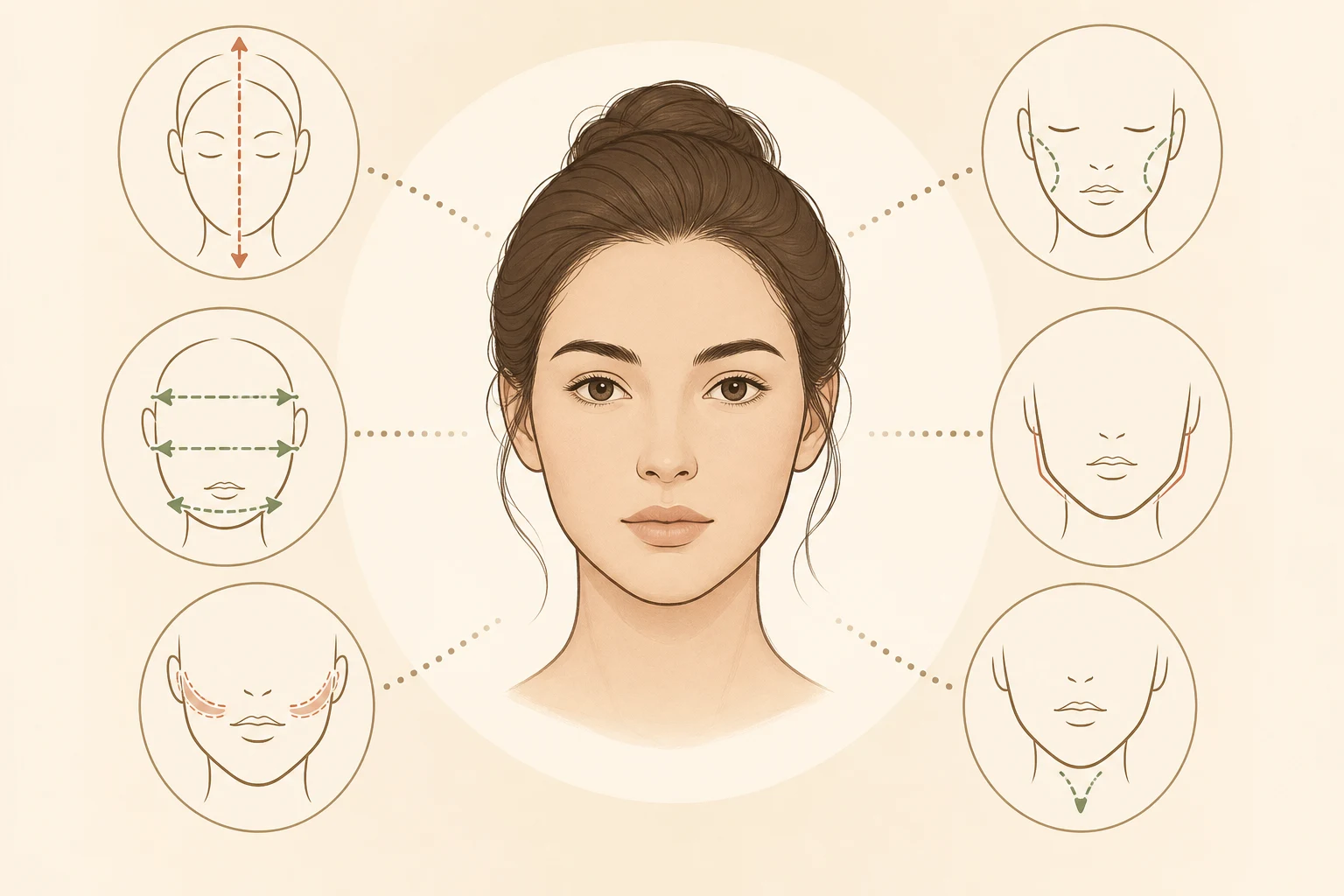
| Feature | What to compare | Why it matters |
|---|---|---|
| Face length | Compact, balanced, or clearly longer than wide | Separates round, oval, and oblong patterns |
| Width distribution | Forehead, cheekbones, jaw, or balanced widths | Helps distinguish heart, diamond, square, and oval |
| Cheekbone presence | Full, balanced, or strongly prominent cheek area | Changes how round, oval, and diamond are read |
| Jawline | Soft curve, broad structure, or angular corners | Separates softness from square structure |
| Chin taper | Minimal, gentle, or pronounced narrowing | Adds context for heart and diamond profiles |
| Overall contour | Soft, structured, tapered, or elongated full outline | Confirms whether the features form one coherent profile |
No single row should decide the result. A strong jaw does not always mean square. Full cheeks do not always mean round. The whole pattern matters.
Length and width answer different questions
Length tells you whether the face reads compact, balanced, or elongated. Width distribution tells you where the horizontal emphasis sits.
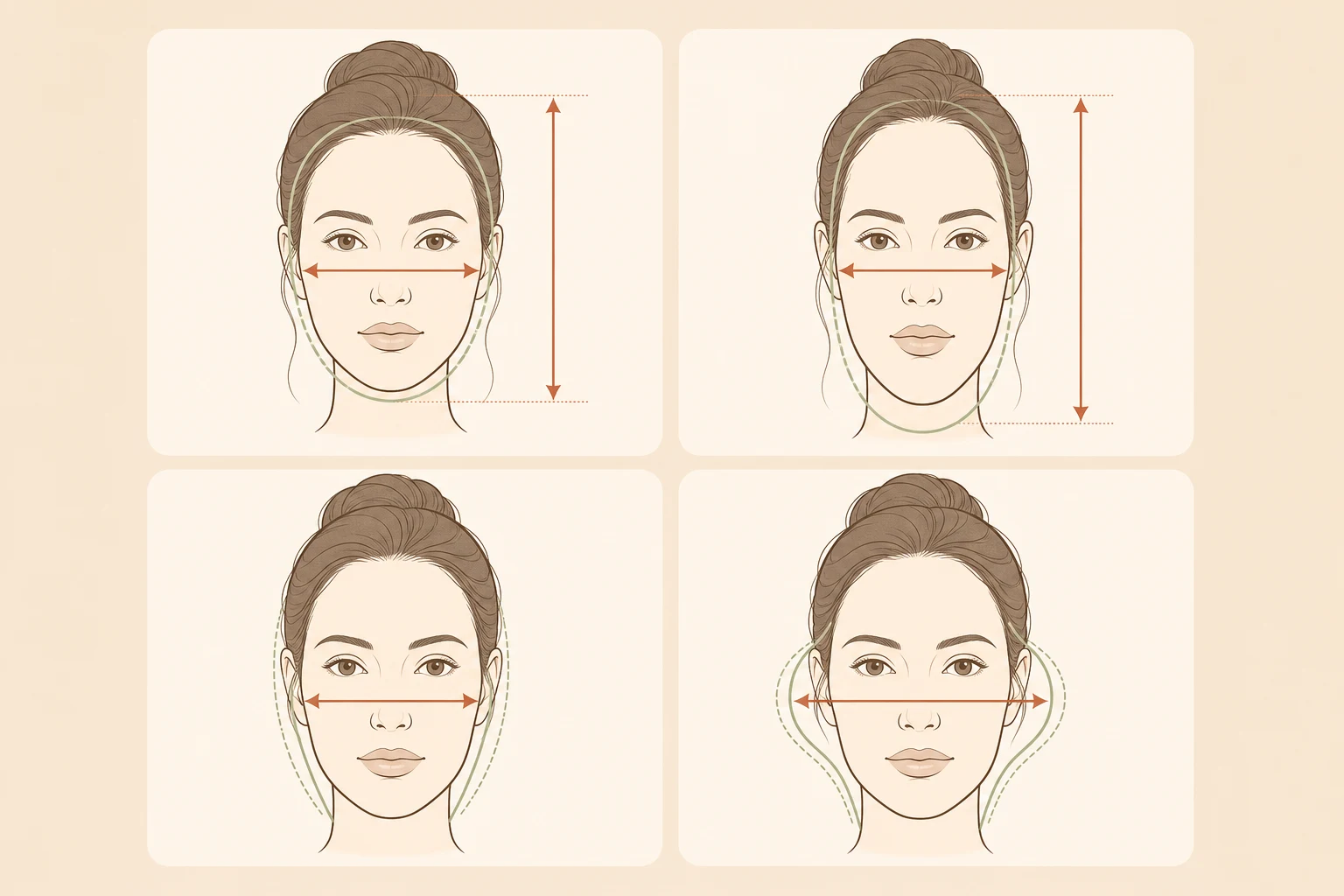
Two faces can be similarly longer than wide but still differ. If one has balanced widths and a gentle taper, it may read oval. If the other has cheekbones clearly wider than the forehead and jaw, it may read diamond.
Two faces can also share balanced widths while one is oval and the other oblong because the vertical proportion is different. That is why a useful result needs both measurements and visual context.
Why intuition alone often misleads
Most people judge their own face through familiar styling: hair volume, beard shape, makeup, glasses, camera angle, or a favorite selfie. Those choices change the outer impression. They do not always show the facial relationships underneath.
A more reliable check asks:
- Is the photo or mirror view straight and evenly lit?
- Is the face clearly longer than wide, only slightly longer, or compact?
- Which area looks widest?
- Is the jaw soft, straight, broad, or angular?
- Does the chin taper gently or strongly?
- Which profile explains the group better than the alternatives?
The answer is still interpretive, not medical measurement. The value comes from consistent comparison.
Same face shape, different proportions
Two people can both have a round primary profile and still need different style advice.
One may have compact length, full cheeks, and a very soft jaw. That person may benefit from more vertical direction in hair and frames with clearer corners.
Another may remain primarily round but have a little more face length and a softer oval tendency. That person may need less height, less angular correction, and frames that add definition without becoming severe.
Both are round. The proportions explain how strongly the round-face advice should be applied.
A manual proportion check you can do before uploading
You can make a useful first estimate without exact tools. Stand in even light, pull hair away from the sides, and take one straight photo from eye level. Then compare the face in this order:
- Length first: decide whether the face reads compact, moderately longer than wide, or clearly elongated.
- Widest point second: compare the forehead, cheekbones, and jaw without letting hair volume count as face width.
- Lower face third: look at whether the jaw stays broad, curves softly, or narrows toward the chin.
- Contour last: step back and ask which full outline explains the group best.
This order helps because it stops one memorable feature from taking over. Many people notice their cheeks first, but cheeks alone cannot decide between round, oval, heart, and diamond. Many people notice their jaw first, but jaw structure needs length context before square and oblong can be separated.
If your manual check produces two close options, write down the reason for both. For example: "round because cheeks are full, oval because length is a little greater." That sentence is more useful than simply saying "I am between round and oval," because it identifies the exact feature that needs confirmation.
It also makes the next comparison calmer. You are no longer asking for a perfect label from one glance; you are checking whether the same feature pattern stays visible across ordinary photos.
How proportions become style meaning
Proportions become useful when they translate into placement decisions.
- Face length can affect crown height, side volume, and lens depth.
- Width distribution can affect where layers, bangs, or frame weight should sit.
- Cheekbone presence can affect frame width and face-framing layer entry points.
- Jaw structure can decide whether to echo angles or introduce softer curves.
- Chin taper can affect how much visual weight is useful near the lower face.
The six-shape overview helps compare the profiles. What Is My Face Shape? explains how the report turns those comparisons into a usable result. How Key Facial Features Guide Style Recommendations explains the next step.
Common misconceptions
- "Exact measurements always produce one exact shape." Categories overlap, and photos introduce perspective.
- "The widest cheeks always mean diamond." Forehead, jaw, chin, and contour must also agree.
- "A strong jaw always means square." Greater face length can move the result toward oblong.
- "The label matters more than the reasons." The reasons are what make style advice personal.
- "Proportions are beauty scores." They describe relationships, not attractiveness.
FAQ
Do I need exact measurements?
No. Simple measurements can support a manual check, but consistent relative comparison is more useful than false precision.
Can hair or facial hair change my face shape?
They can change the visible silhouette. For analysis, move hair away from the jaw and compare the face itself. For styling, hair and facial hair become tools that can shift emphasis.
Which matters more: face shape or proportions?
They do different jobs. The face-shape name gives a practical summary. The proportions explain why it fits and how to personalize the next step.
Turn proportions into an explainable profile
Upload a clear front-facing photo to generate a Personal Face Shape Style Report with a primary shape, key features, and practical style meaning.
Ready to see your Face Shape Profile?
Use a clear front-facing photo to get a Personal Face Shape Style Report with your key features, profile, and style meaning.
Create my style report