How Key Facial Features Guide Style Recommendations
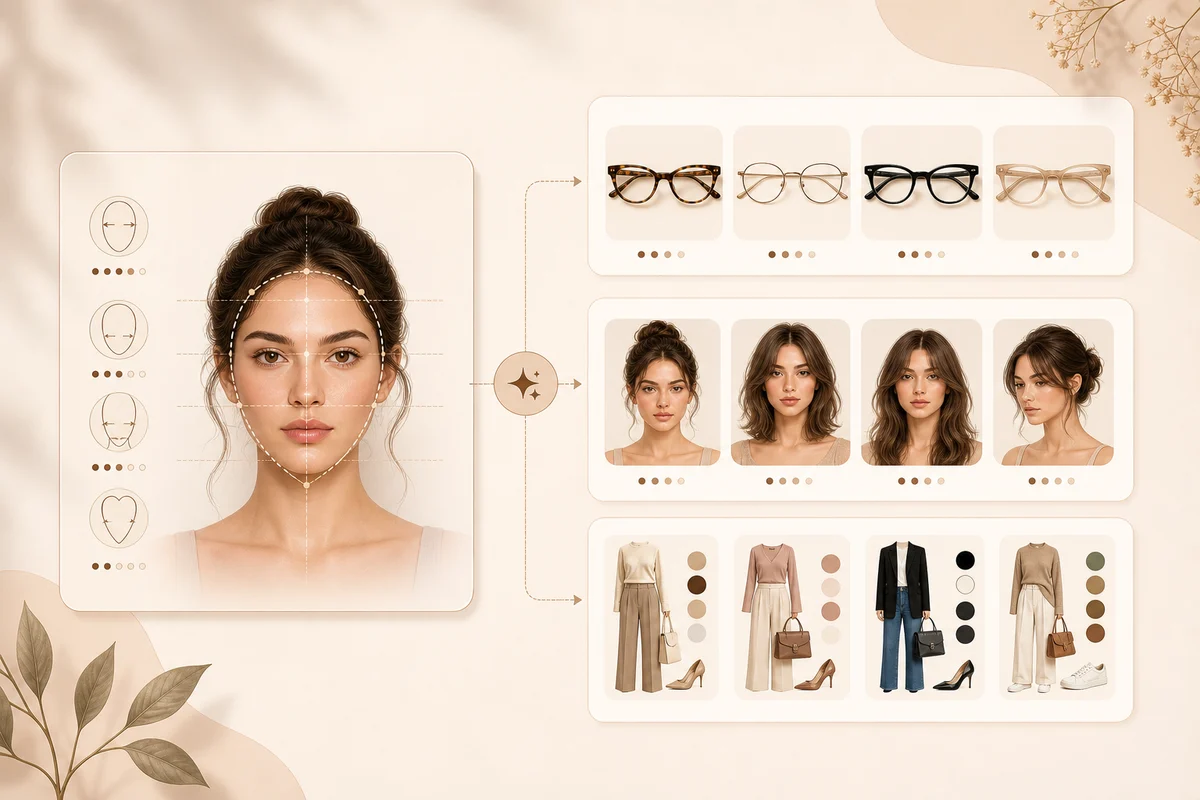
Two people can share the same face-shape name and still need different style direction. A square face with compact length and a broad jaw is not the same styling problem as a square face with more vertical length and a softer chin.
The face-shape name creates a starting point. The key facial features explain what should happen next. That is where recommendations become practical instead of generic.
Quick answer
Start with the primary face shape, then read the features behind it: face length, width distribution, cheekbone presence, jaw structure, chin taper, and overall contour. Those features translate into decisions about hair length, layer placement, bangs, frame width, lens depth, rim weight, and brow line.
The goal is not to correct a face. The goal is to preserve natural strengths and control visual emphasis.
What counts as a key facial feature?
Key facial features are visible relationships that support the result. They are not flaws, and one feature should not decide the whole profile.
| Feature | What it tells you | Style questions it can affect |
|---|---|---|
| Face length | Compact, balanced, or elongated | Crown height, side volume, lens depth |
| Width distribution | Where the face is widest | Frame width, layer entry point, bangs |
| Cheekbone presence | How strongly the middle face defines width | Face-framing, cheek-level volume, frame edge |
| Jaw structure | Soft, broad, straight, or angular lower face | Softening vs emphasizing structure |
| Chin taper | How much the lower face narrows | Jaw-level volume, lower-rim weight |
| Overall contour | Whether the features form one clear pattern | How strong or subtle the recommendation should be |
These features work together. Prominent cheekbones do not automatically mean diamond, and a strong jaw does not automatically mean square.
From features to recommendations
A useful recommendation has three steps:
- Identify the visible feature. For example, the face has visible vertical length.
- Explain the style meaning. Extra height may extend that vertical line, while side movement may balance it.
- Give a practical direction. Try controlled crown height, side volume, lens depth, or a frame with horizontal presence.
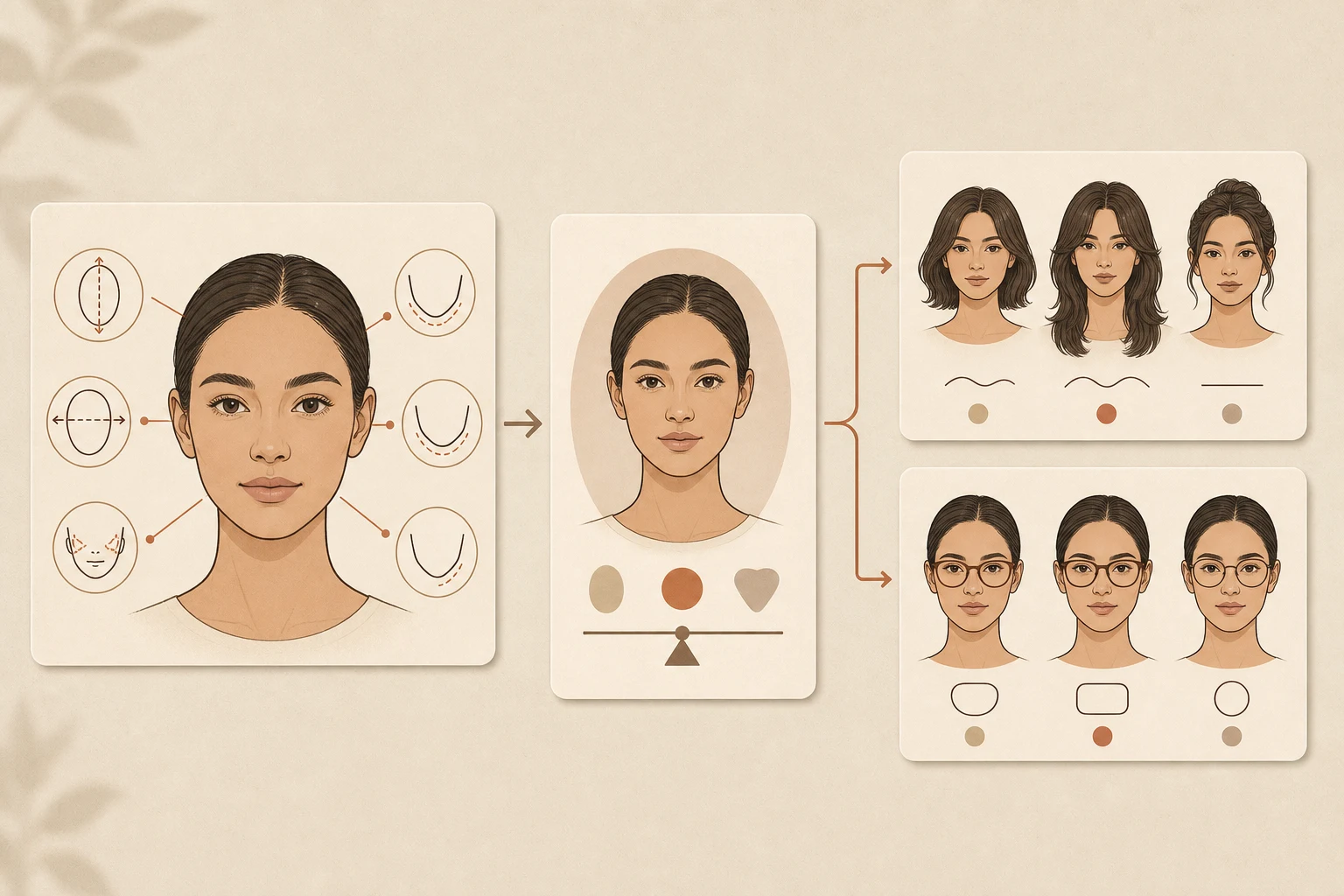
This prevents the report from jumping from "oblong" to a generic list. The recommendation should always connect back to one visible reason.
Why the primary shape is not enough
A primary face shape is a summary. It helps users understand the broad pattern, but it does not tell the whole story.
Consider two square profiles:
- Compact square: balanced length and width, broad jaw, structured contour. Hair may benefit from controlled crown height and texture; glasses may need softened corners without becoming too shallow.
- Longer square: jaw still defines the face, but the vertical line is stronger. Hair may need less height and more side movement; glasses may need lens depth as much as corner softness.
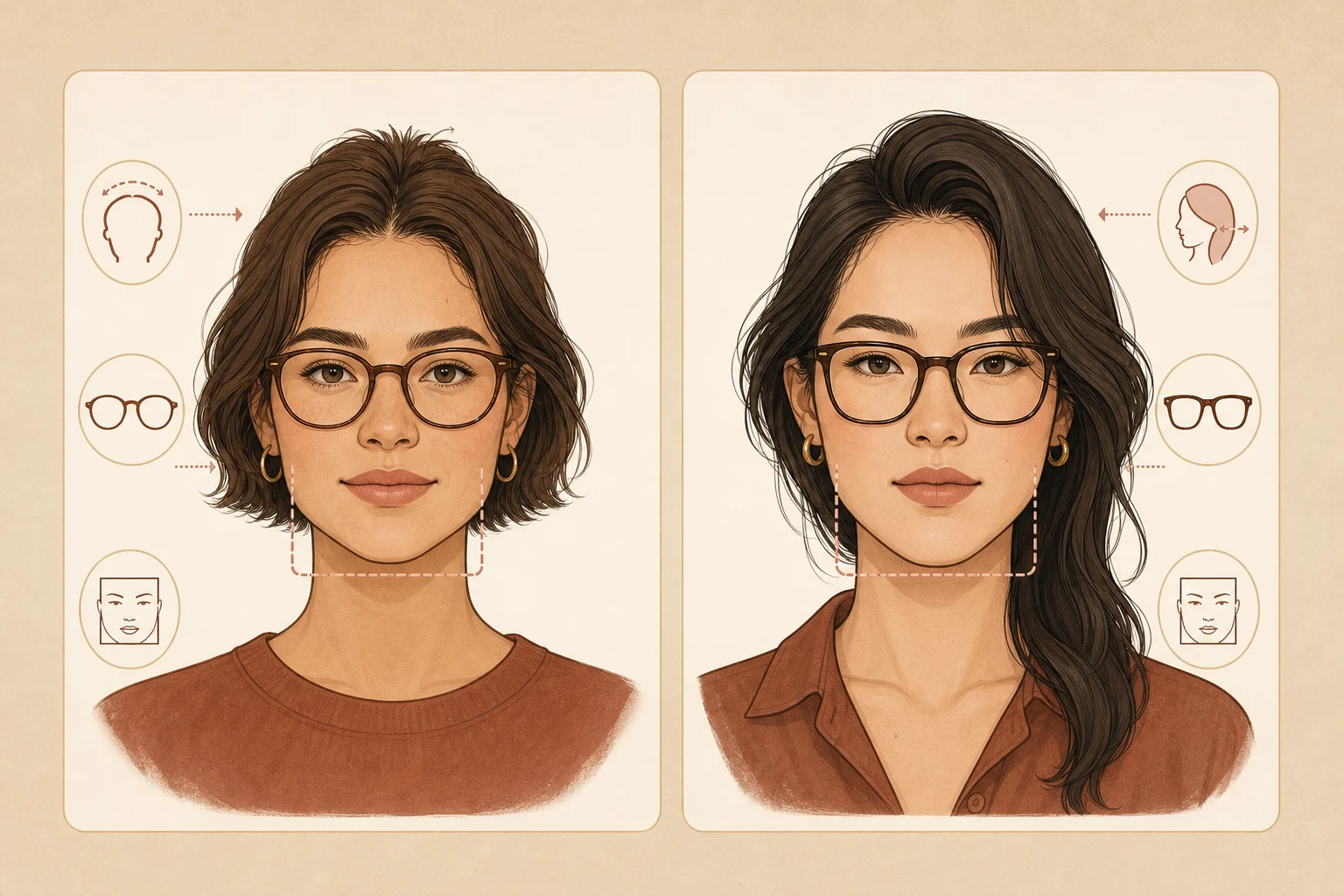
Both can be square. The recommendation changes because the strongest feature priority changes.
How secondary tendency should be used
A secondary tendency should refine the result, not compete with it. It appears only when another shape explains a meaningful overlap.
For example, a round primary profile with an oval tendency may need less added height than a very compact round profile. A heart primary profile with a diamond tendency may need extra care around cheekbone width.
If one profile clearly explains the face, forcing a second label adds noise. If the photo does not show the jaw, forehead, or chin clearly, a better photo is more useful than a mixed label.
Hairstyles and glasses use different tools
The same feature can create different instructions depending on the module.
For visible face length, hairstyles can use side volume, fringe, or layers that interrupt a vertical line. Glasses can use frame width, lens depth, and brow-line position.
For a strong jaw, hairstyles can add texture or movement around the lower face. Glasses can use curves, lighter rim weight, or softened corners.
This is why the education layer should explain the shared logic while the dedicated hairstyle guides and glasses guides handle specific options.
Examples of feature-to-style translation
The best recommendations sound specific because they name both the feature and the response.
| Visible feature | Weak recommendation | Better recommendation |
|---|---|---|
| Compact length with full cheeks | "Try styles for a round face" | "Use diagonal movement, controlled crown lift, and avoid heavy cheek-level width" |
| Strong jaw with balanced widths | "Soften square features" | "Use texture, rounded frame corners, or layers that pass the jaw instead of stopping on it" |
| Narrower chin with wider upper face | "Balance a heart face" | "Keep upper volume light and place movement or lower-rim weight closer to the jaw" |
| Clear vertical length | "Avoid long styles" | "Avoid extra height without side balance; use lens depth, fringe, waves, or side movement" |
This format matters because it gives the user something to test. A vague recommendation can sound pleasant while leaving the user unsure what to ask for. A feature-based recommendation can be brought to a stylist, barber, or optician and adjusted to real texture, fit, prescription, and taste.
That is the practical difference between content and advice.
How to read your report
Do not stop at the face-shape name. Read the explanation and ask:
- Which feature is strongest?
- Which feature is close to another shape?
- Which style area did I request: hair, glasses, or both?
- Does the recommendation explain the intended visual effect?
- Is there a caution with a reason?
If the explanation does not resemble you, review the photo first. A high camera angle, hidden jawline, or strong filter can change what the report can compare. The photo guide explains when to retake the image.
Common misconceptions
- "More labels mean more accuracy." A clear single result is often stronger.
- "One feature decides everything." Features need to form a coherent pattern.
- "Recommendations should correct my face." Good guidance creates choice, not shame.
- "The same label should get the same list." Shared labels can have different feature priorities.
- "A recommendation replaces a stylist or optician." Real-world fit, texture, prescription, and comfort still matter.
FAQ
Can two people with the same face shape receive different guidance?
Yes. Face length, cheekbone presence, jaw structure, chin taper, and personal goals can change the right emphasis.
Does FaceFit recommend products from facial features alone?
No. It suggests style directions. Real choices still depend on fit, hair texture, prescription needs, maintenance, comfort, and taste.
What if I only want to know my face shape?
Then use the result as a profile, not a shopping instruction. Style modules should be requested only when they match your next decision.
See your own feature-to-style path
Upload one clear front-facing photo to generate a Personal Face Shape Style Report with your primary shape, relevant secondary tendency, key facial features, and optional requested recommendations.
Ready to see your Face Shape Profile?
Use a clear front-facing photo to get a Personal Face Shape Style Report with your key features, profile, and style meaning.
Create my style report