What Is My Face Shape? How to Find Yours
If you search “what is my face shape?”, the useful answer is not a quiz result with no explanation. You need a way to compare your own face, understand why one shape fits better than another, and know what to do when two shapes look close.
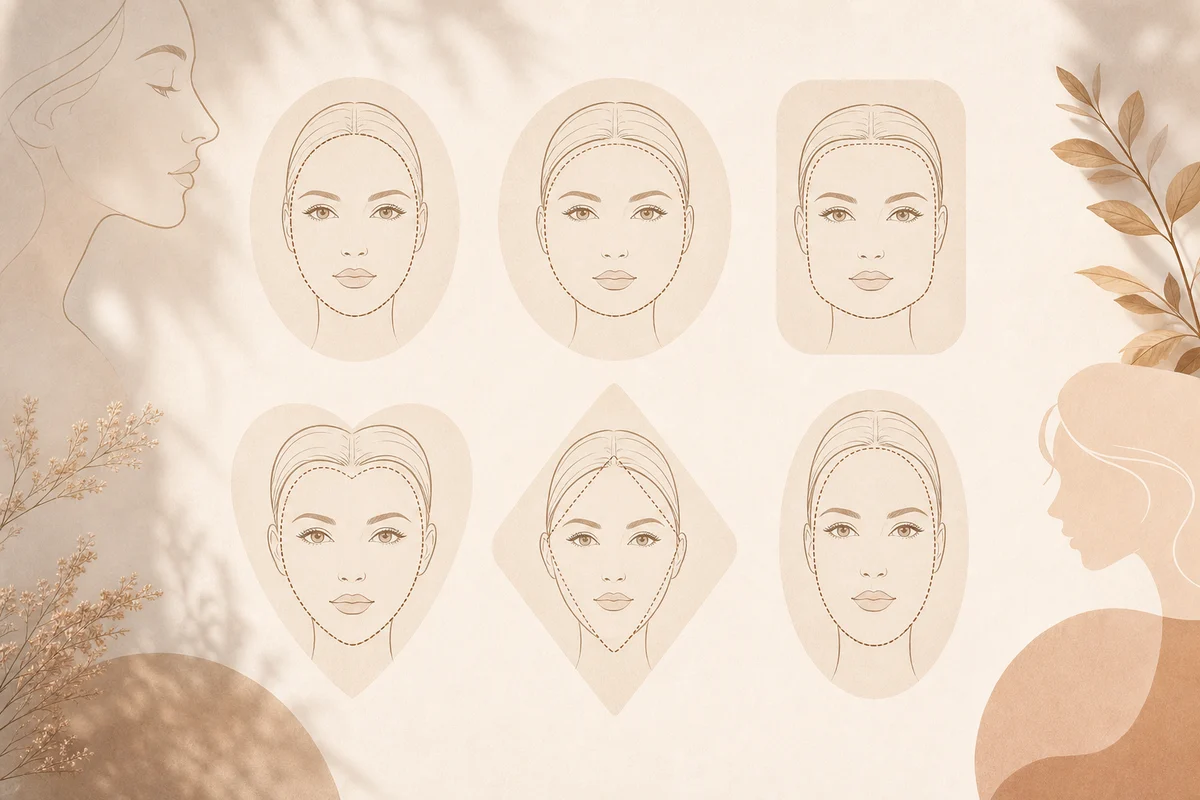
FaceFit supports six practical face-shape profiles: oval, round, square, heart, diamond, and oblong. A good result looks at the whole face, not one isolated feature. Face length, width distribution, cheekbone presence, jaw structure, chin taper, and overall contour all work together.
You can start with a mirror check, but a clear front-facing photo makes the comparison easier to repeat. The goal is a useful Personal Face Shape Style Report, not a rigid identity label.
Quick answer
Your face shape is the closest overall profile created by visible proportions. Start by asking five questions:
- Is the face clearly longer than wide, only slightly longer, or closer to equal?
- Which area looks widest: forehead, cheekbones, jaw, or a balanced combination?
- Does the jawline look soft, straight, angular, or gently tapered?
- Is the chin rounded, broad, narrow, or pointed?
- Does the full outline read compact, balanced, structured, tapered, or elongated?
One clear profile is often enough. A secondary tendency is useful only when it explains a real overlap, such as an oval profile with stronger cheekbones or a round profile with a little extra length.
Start with the six supported profiles
Use the shape names as comparison tools, not as beauty rankings.
| Face shape | What usually stands out | Common confusion |
|---|---|---|
| Oval | Slightly longer than wide, balanced widths, gentle taper | Oblong or diamond |
| Round | Compact length-to-width balance, fuller cheeks, soft jaw | Oval or square |
| Square | Similar forehead, cheek, and jaw width with a stronger jawline | Round or oblong |
| Heart | Upper face reads wider, lower face narrows toward the chin | Diamond or oval |
| Diamond | Cheekbones are the strongest width point, forehead and jaw are narrower | Heart or oval |
| Oblong | Face is clearly longer than wide, with a more extended side line | Oval or square |
This comparison should narrow the options. It should not force a final answer before you check the actual features.
What to compare on your own face
Look at a straight mirror view or a front-facing photo where the hair is pulled away from the sides. Avoid judging from a tilted selfie, strong smile, or heavy hair coverage.
| Feature | What to look for | Why it matters |
|---|---|---|
| Face length | Compare forehead-to-chin length with overall width | Separates compact round profiles from oval and oblong profiles |
| Width distribution | Notice whether the forehead, cheeks, or jaw dominate | Helps distinguish heart, diamond, square, and balanced profiles |
| Cheekbones | Check whether cheeks are full, balanced, or clearly sculptural | Changes how round, oval, and diamond profiles read |
| Jawline | Look for soft curve, straight width, or angular corners | Separates round or oval softness from square structure |
| Chin | Compare rounded, broad, gently tapered, or pointed endings | Adds context for heart and diamond tendencies |
| Overall contour | Step back and read the full outline | Confirms whether the features form one coherent profile |
Do not decide from one feature. A narrow chin alone does not prove heart. Full cheeks alone do not prove round. A soft jawline can appear in both round and oval profiles.
How a clear photo becomes a report
FaceFit first checks whether the photo is usable. It then compares visible facial relationships, chooses the closest supported profile, explains the key reasons, and translates the result into practical style meaning.
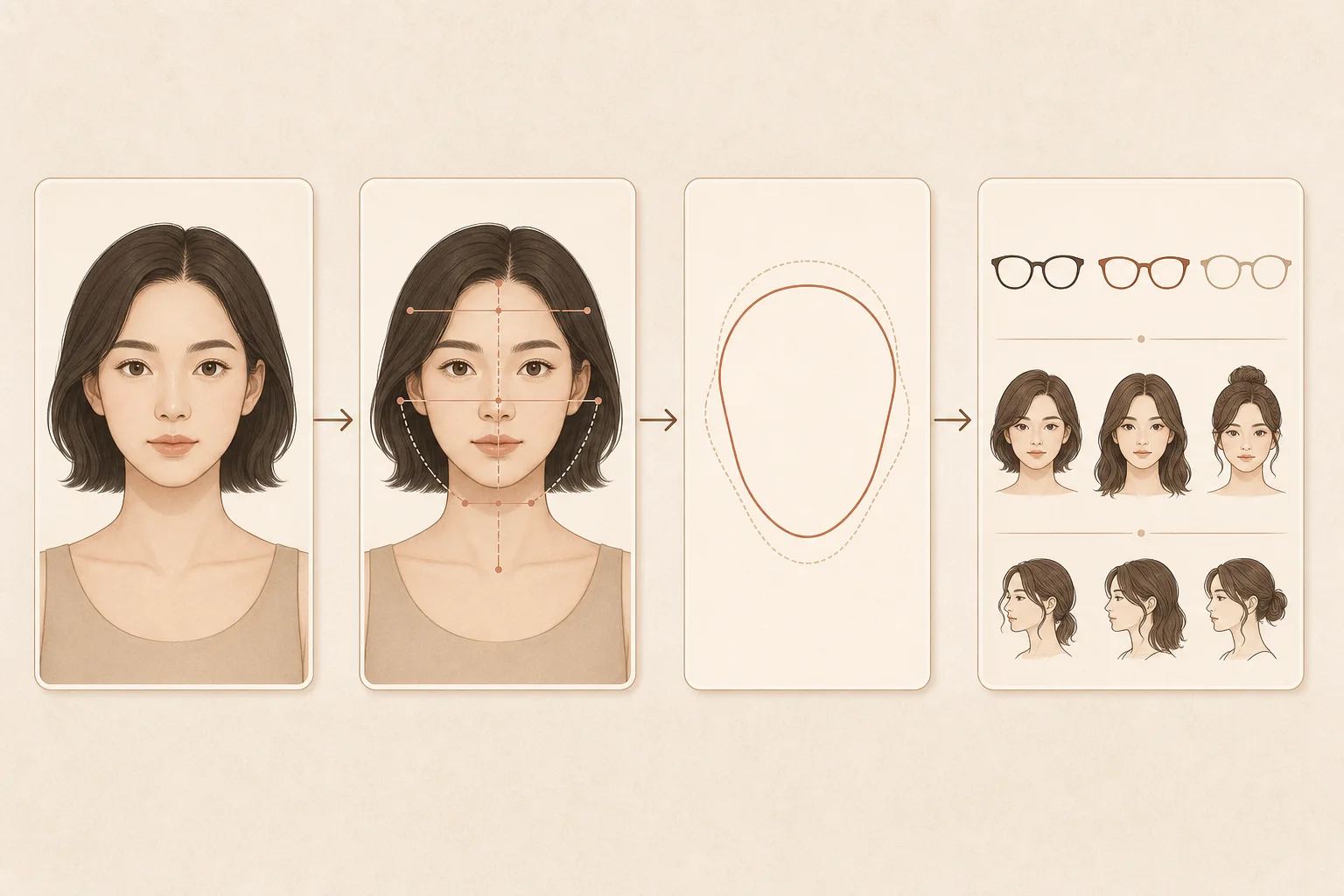
The report is directional, not medical measurement. Its value is that it separates the conclusion from the evidence, so you can compare the result with what you see in normal photos and in the mirror.
Three result patterns you may see
One clear primary shape
Most visible features point to one profile. In this case, adding a second label would make the result less clear. For example, a face with compact proportions, full cheeks, and a soft lower face can be simply round.
A primary shape with a secondary tendency
One profile still explains the face best, but another profile explains a smaller overlap. For example, an oval primary profile may show a diamond tendency when the cheekbones are more prominent than the forehead and jaw.
A request for a better photo
Sometimes the input blocks the answer. A high camera angle can lengthen the face. A close wide-angle selfie can widen the center. Hair can hide the jaw. In that case, a clearer photo is more honest than a forced mixed result.
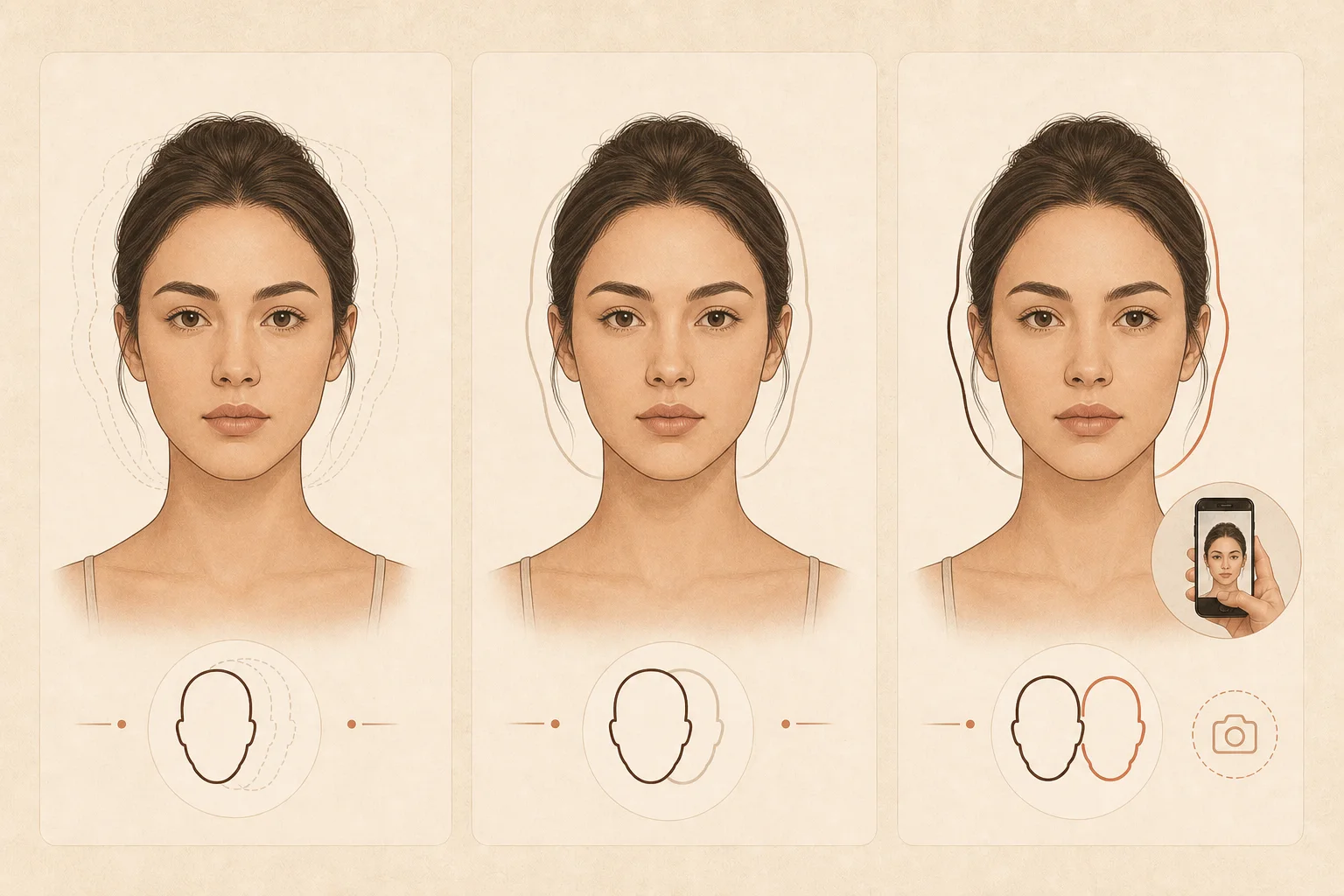
Mixed wording is not automatically more accurate. A precise single-shape result is better than a complicated result that does not reflect visible features.
Manual check vs photo report
Manual checking is useful when you want to learn the differences between shapes. A photo report is useful when you want one consistent frame with visible reasoning.
| Method | Best for | Watch out for |
|---|---|---|
| Mirror check | Learning the feature pattern and forming a first hypothesis | Familiar angles, hair volume, and expression can bias the answer |
| Simple measurements | Comparing length, forehead width, cheekbone width, and jaw width | Tape placement and head position can change the ratios |
| Photo report | Reviewing several features in one clear image | The result depends on photo quality, angle, lighting, and visibility |
Use the methods together when the answer feels close. If the mirror says round but measurements suggest oval, check whether vertical length or cheek fullness is driving the difference.
What your face shape changes next
Face shape should guide style decisions, not limit them.
For hairstyles, it helps decide where to place length, layers, bangs, parting, and volume. A round profile often benefits from more vertical direction, while a diamond profile may need balance around the forehead and jaw.
For glasses, it helps compare frame width, lens depth, rim weight, bridge position, and brow line. A square profile may prefer softer curves or lighter edge weight, while an oblong profile may need enough lens depth to balance length.
The best advice still depends on your exact features. Two people with oval profiles can need different styling if one has stronger cheekbones and the other has extra vertical length.
Common mistakes
- Trying to be exactly one textbook drawing: real faces sit within ranges, not perfect diagrams.
- Using only cheek fullness: cheeks can look fuller because of expression, camera distance, or hair placement.
- Ignoring the jaw and chin: lower-face structure often separates similar profiles.
- Comparing different photos: lens distance and head angle can change apparent length and width.
- Assuming oval is the goal: no face shape is the best one. The useful question is which profile explains your proportions.
- Forcing a mixed label: use a secondary tendency only when it clarifies a specific overlap.
Related guides
- Compare all six profiles in the Face Shapes Guide.
- Improve your input with How to Take a Good Photo for Face Shape Analysis.
- Understand close results in Why Your Face Shape Result May Look Like More Than One Shape.
FAQ
What is the fastest way to find my face shape?
Start with face length, then check the widest area and lower-face shape. Length separates round, oval, and oblong. Width distribution and jawline help separate square, heart, and diamond.
Can I find my face shape without uploading a photo?
Yes. Use a straight mirror view, pull hair away from the face, and compare length, cheek width, jawline, and chin. A photo report makes the same comparison easier to repeat and review.
Why do two photos make my face look different?
Camera distance, selfie angle, lighting, expression, and hair can all change the visible outline. Use a level, front-facing photo taken from a little distance with the full jaw and chin visible.
Do I need a secondary face shape?
Not always. A secondary tendency is helpful only when it explains a real feature overlap. If one profile clearly explains the face, a single result is stronger.
What should I do after I know my face shape?
Use the report to choose the next decision: hairstyle direction, glasses frames, or a full shape guide. Focus on the features behind the result, not just the name.
Ready to see your Face Shape Profile?
Use a clear front-facing photo to get a Personal Face Shape Style Report with your key features, profile, and style meaning.
Create my style report