Round vs Oval Face Shape: How to Tell the Difference
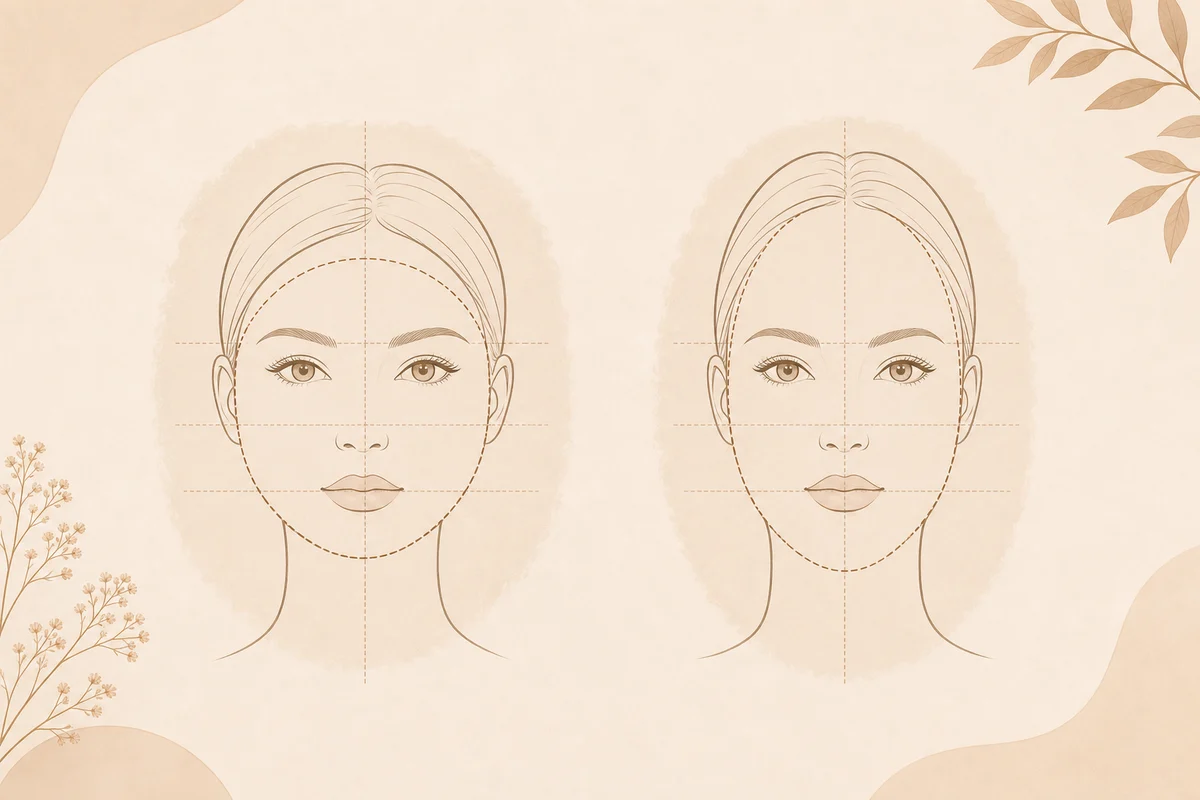
Round and oval face shapes are easy to confuse because both can look soft, balanced, and friendly. The difference is not whether the jawline is sharp. The difference is how face length, cheek fullness, side contour, and lower-face taper combine.
If your face looks round in one photo and oval in another, start with the comparison points below before deciding. Many close results are caused by camera angle, expression, or hair placement rather than a truly mixed shape.
Quick answer
A round face usually has a more compact length-to-width balance, fuller cheeks, and a soft curve through the jaw and chin. An oval face usually reads longer than wide, with balanced width and a gentle taper below the cheekbones.
| Checkpoint | Round face | Oval face |
|---|---|---|
| Length | Face length and width feel closer | Face is clearly but not extremely longer than wide |
| Cheeks | Cheeks often create the widest, fullest area | Cheeks may be widest but feel balanced |
| Sides | Outline looks compact and softly curved | Outline has more vertical flow |
| Jawline | Soft curve with limited lower-face taper | Soft jaw with a clearer taper toward the chin |
| Overall impression | Fuller, shorter, more compact | Balanced, longer, gently tapered |
One checkpoint is not enough. Full cheeks can appear on oval faces, and a soft jawline can appear on both.
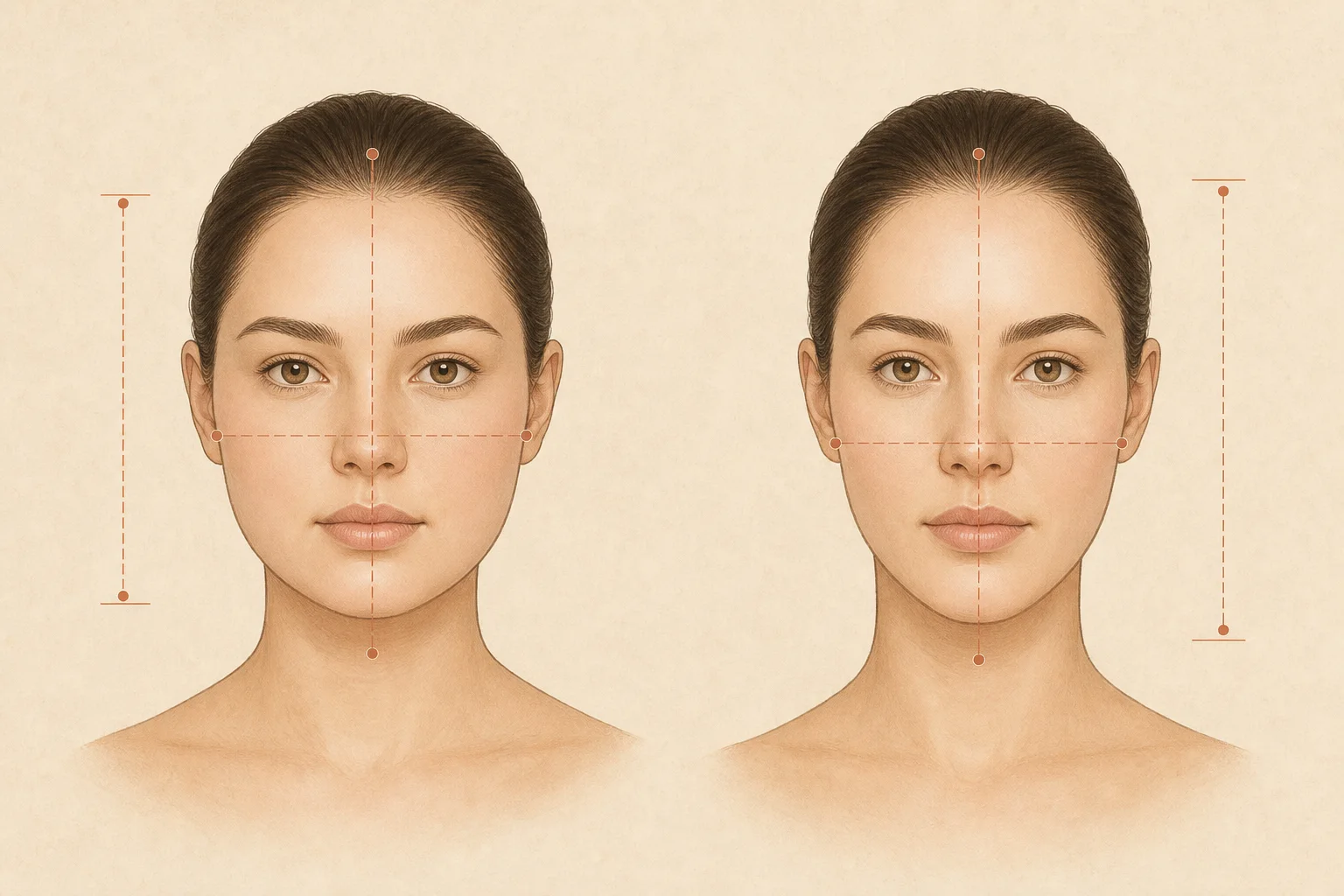
Use this three-step mirror check
First, pull the hair away from the sides and look straight ahead. A center-part selfie or a mirror view is better than a high-angle phone photo.
- Check length first. If the face does not read much longer than wide, round becomes more likely. If the face has clear vertical length without looking very long, oval becomes more likely.
- Check the cheek area. If the cheeks carry the widest side width and create a fuller middle outline, round becomes stronger. If the cheekbones are visible but the face still tapers smoothly, oval becomes stronger.
- Check the lower face. If the jaw and chin continue a soft curve, round is more likely. If the area below the cheeks narrows gently toward the chin, oval is more likely.
This order matters because many people start with cheeks and stop too early. Cheek fullness is useful only after you compare length and taper.
When round is the better primary profile
Round is usually the better match when several features point in the same direction:
- the visible face length is close to the width;
- the cheek area creates strong side presence;
- the jawline and chin feel soft rather than tapered;
- the outline stays compact when hair is pulled away;
- added side volume makes the face look wider very quickly.
Example: someone can have a slightly longer face than the exact width and still be round if the cheeks and lower face keep the overall contour compact.
When oval is the better primary profile
Oval is usually the better match when softness is present but vertical balance is clearer:
- the face is visibly longer than wide;
- forehead, cheekbone, and jaw widths feel balanced;
- the lower face tapers gently rather than staying equally full;
- no single width point dominates the outline;
- the face still looks oval when expression and hair volume change.
Example: someone can have full cheeks and still be oval if the face length and lower-face taper create the stronger overall reading.
When the result is round with an oval tendency
A secondary tendency is useful when one profile explains the face best and another explains a smaller overlap. A round primary profile with an oval tendency may have full cheeks and a soft compact jaw, plus enough extra vertical length to move it away from a very compact round profile.
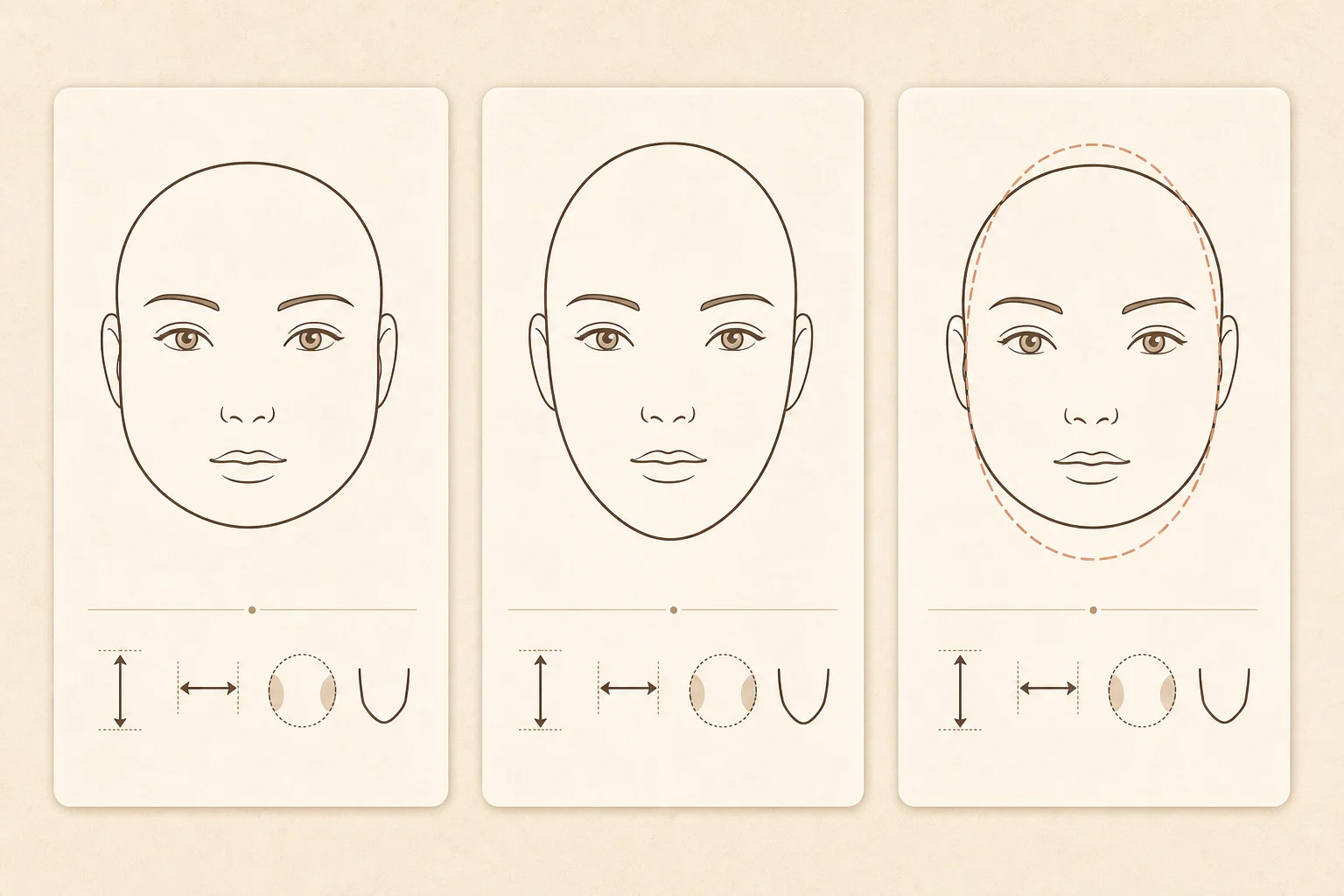
The order matters. “Round with an oval tendency” does not mean a perfect 50/50 split. Round remains the main profile. Oval explains the length detail.
If the face clearly fits one profile, do not force a secondary label. A simple result is often more accurate.
Why photos can make round look oval
Photo setup can change the apparent outline:
- High camera angle: makes the lower face look narrower and the full face look longer.
- Close wide-angle selfie: enlarges the center of the face and can make cheeks look fuller.
- Head tilted down: shortens the lower face and hides taper.
- Strong smile: widens and lifts the cheek area temporarily.
- Hair covering the sides: makes either shape look narrower.
Use one neutral, level, front-facing photo with the full forehead, cheeks, jawline, and chin visible. Compare from that image before choosing style advice.
What the difference means for hairstyles
Round profiles usually benefit from vertical direction, diagonal lines, and controlled side volume. Long layers below the cheeks, side parts, and moderate crown height can add definition without trying to erase softness.
Oval profiles often have more styling flexibility, but scale still matters. Too much crown height can over-elongate, while too much side volume can compete with natural balance.
If the result is round with an oval tendency, use round advice as the base and soften the amount of added height or structure.
What the difference means for glasses
Round profiles often work well with frames that add definition: softly angular rectangles, slight upswept lines, or frames with enough width to avoid squeezing the cheeks.
Oval profiles can wear a wider range, but the frame still needs to match face scale. Very tall, very heavy, or very wide frames can overwhelm balanced proportions.
For close round-oval results, test frame width and lens depth together. A frame that adds light structure may be better than one that tries to create a dramatic angle.
Common mistakes
- Deciding from cheek fullness alone.
- Treating a soft jawline as proof of either shape.
- Comparing a mirror view with a high-angle selfie.
- Assuming oval is the better result and round needs correction.
- Using hairstyle or glasses advice before confirming the primary profile.
- Calling every close result mixed when one profile explains the face clearly.
Related guides
- Review the full Round Face Shape Guide.
- Compare the Oval Face Shape Guide.
- Learn how close results work in Why Your Face Shape Result May Look Like More Than One Shape.
FAQ
Can a round face be slightly longer than wide?
Yes. The question is whether length clearly drives the whole profile. A little extra length can create an oval tendency without replacing a round primary profile.
Are full cheeks always a round face sign?
No. Cheek fullness needs context. Oval, heart, and other profiles can also have visible cheeks. Compare the cheeks with face length and lower-face taper.
Is oval just a slimmer round face?
No. Oval is not a better or slimmer version of round. It is a different proportion pattern, usually with more vertical length and a gentler taper below the cheeks.
What is the fastest check?
Start with length-to-width balance, then check whether the cheek area keeps the outline compact or whether the face continues into a longer, gently tapered lower section.
Should I use round or oval style advice?
Use the primary Face Shape Profile first. Use any secondary tendency only to adjust emphasis, such as how much height, side volume, or frame structure feels balanced.
Ready to see your Face Shape Profile?
Use a clear front-facing photo to get a Personal Face Shape Style Report with your key features, profile, and style meaning.
Create my style report