Why Face Shape Matters When Choosing Hairstyles
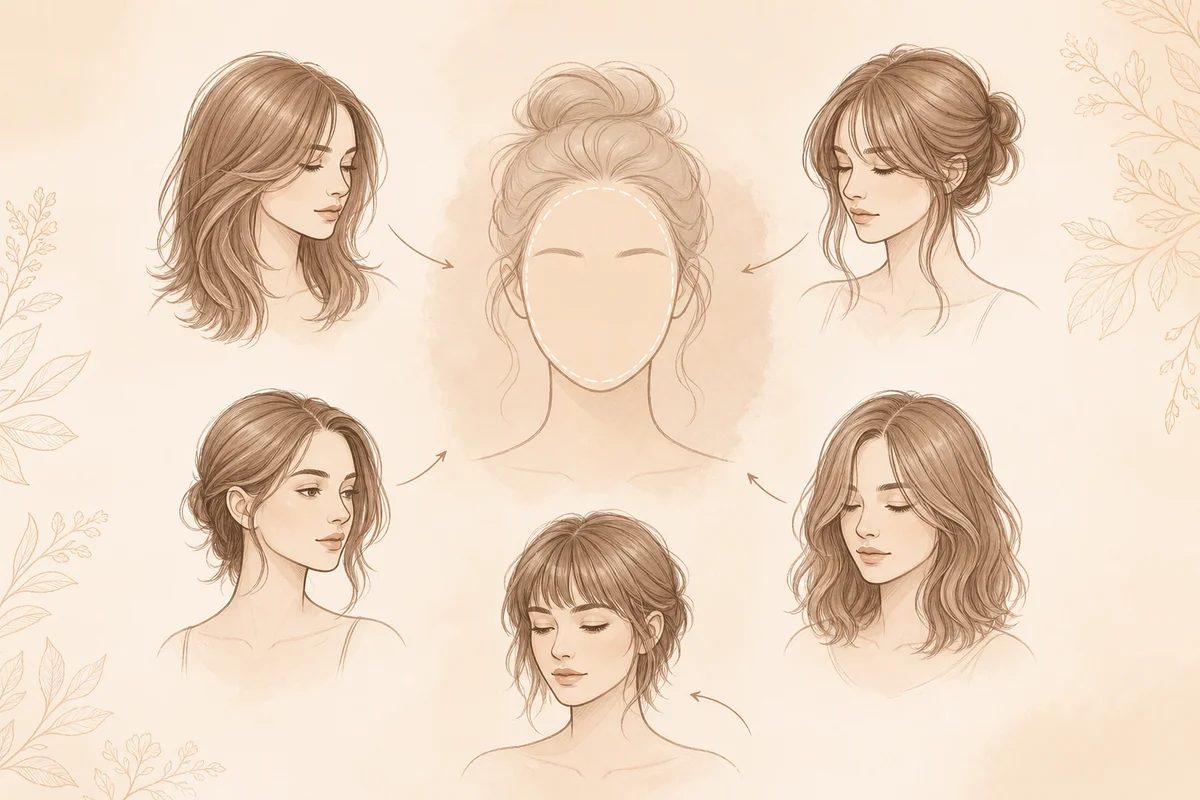
Face shape matters because hair changes the visible frame around the face. Length can extend a vertical line. Layers can move attention toward or away from the cheekbones and jaw. Crown height adds vertical emphasis, while side volume adds horizontal emphasis.
That does not mean a haircut should hide your face shape or “correct” it. A useful hairstyle direction preserves natural strengths and gives you control over visual balance. The final choice still depends on hair texture, density, growth pattern, maintenance, lifestyle, and personal taste.
Quick answer
Start with your Face Shape Profile, then look at the Key Facial Features that matter for hair: face length, width distribution, cheekbone presence, jaw structure, and chin taper. Translate those features into placement decisions—where length ends, where layers begin, and where volume sits.
The face-shape label gives context. The feature explanation tells a stylist what to do.
Hair changes the frame, not the face
The most practical hairstyle variables are:
- Length: where the hair ends and how far it extends the vertical outline.
- Layer entry point: where movement and volume begin around the face.
- Crown height: how much visual height appears above the forehead.
- Side volume: how much width appears around the temples, cheeks, or jaw.
- Parting and fringe: which diagonal, horizontal, or vertical lines cross the upper face.
- Texture: whether the outline feels soft, structured, airy, or compact.
These variables change what the eye notices first. They do not change the underlying face, and they should not be framed as a way to erase it.
Volume placement matters more than volume alone
Saying “add volume” is incomplete. Volume at the crown, temples, cheek area, and jaw produces different effects.
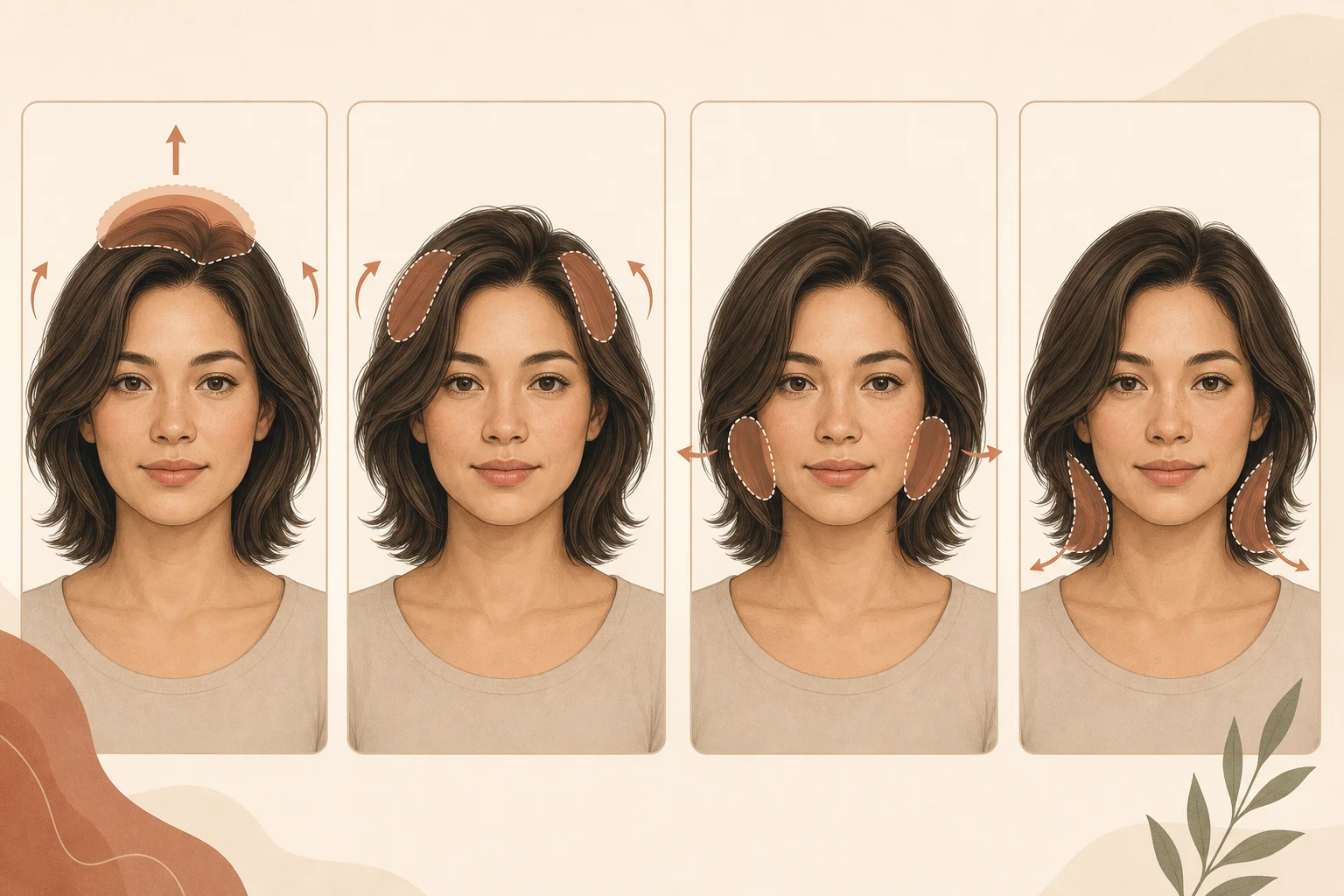
For a face with visible vertical length, high crown volume can extend the line further while moderate side volume may create balance. For a compact face, controlled crown height can add lift, while heavy width at the cheek area may make the outline feel wider.
For a heart profile, volume concentrated only at the temples can strengthen an already wider upper face. Movement near the jaw can support the narrower lower face. For a diamond profile, volume at both the forehead and jaw can balance prominent cheekbones more effectively than adding bulk at the cheek area itself.
The same amount of hair can therefore help or hinder depending on where it sits.
How Key Facial Features affect hairstyle direction
Face length
Face length influences the balance between crown height and side volume. A clearly elongated profile may benefit from controlled height, fringe, waves, or layers that create horizontal movement. A compact profile can often carry more lift if the sides remain controlled.
Width distribution
Width distribution helps decide where face-framing layers begin. If the cheekbones are the widest area, layers that expand directly at that point can exaggerate the width. Starting above or below it may create a smoother transition.
Jaw structure
A structured jaw can be echoed with a blunt, graphic cut or contrasted with movement, texture, and curved ends. Neither direction is forbidden. The choice depends on whether the user wants to emphasize strength or introduce softness.
Chin taper
A narrow chin can carry some visual weight near the jaw through ends, waves, or a chin-to-collarbone length. Very heavy volume high on the head may make the lower face appear smaller by comparison.
Cheekbone presence
Prominent cheekbones can be highlighted with tucked hair and clean lines or balanced with layers that begin away from the widest point. The profile should tell the stylist which effect the user wants.
Same face shape, different haircut brief
Two people may both have an oval primary shape. One has balanced widths, a soft jaw, and moderate length. The other has stronger cheekbone presence and a narrower jaw, creating a subtle diamond tendency.
The first may need only to preserve balance and avoid extremes. The second may benefit from face-framing that adds softness near the forehead and jaw without placing maximum volume at the cheekbones. A generic “oval faces can wear anything” list misses that difference.
This is why a Personal Face Shape Style Report should connect the primary shape to feature-specific meaning before presenting hairstyle options.
For a stylist, the second version is the useful one. "Oval face" is a category. "Oval with stronger cheekbones, keep volume away from the widest cheek point, add movement below it" is a haircut brief.
A hairstyle is not a rule for gender
Hair length, texture, and styling preference matter more than assigning a haircut to a gender category. The same balance principle can be expressed through a pixie, crop, bob, long layers, curls, braids, or facial hair.
For example, side volume for an elongated profile might come from waves in longer hair, a textured fringe in short hair, or fullness through the sides of a curly cut. The visual objective remains consistent even when the haircut changes completely.
How to use your FaceFit report with a stylist
Do not hand a stylist only the face-shape label. Show the section that explains Why This Result and the relevant Key Facial Features. Then connect those observations to your preferences and maintenance limits.
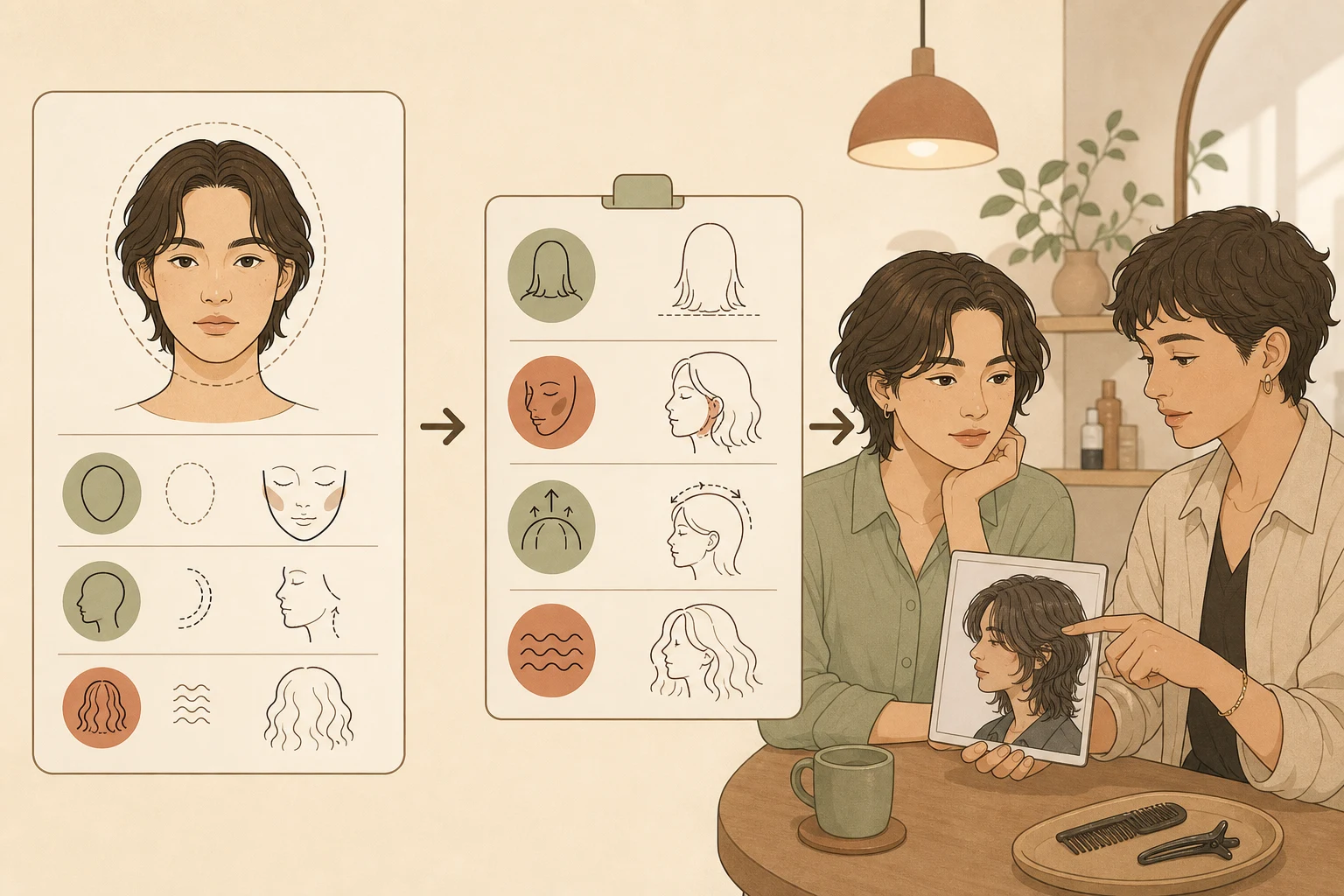
A useful stylist note sounds like this:
My profile shows more vertical length and a balanced jaw. I want to keep my current overall length, add movement below the cheekbones, and avoid extra crown height. I prefer a cut that can air-dry with my natural wave.
That note gives the stylist an objective, placement details, and practical constraints. “Give me the best haircut for an oblong face” does not.
What to check before choosing a reference image
Reference photos are useful when you compare structure, not just appearance.
Check:
- Is the model's hair texture similar to yours?
- Is the density and natural volume comparable?
- Where do the shortest face-framing layers begin?
- Is the visible fullness at the crown, sides, cheeks, or jaw?
- How much daily styling created the result?
- Would the haircut still support your profile when air-dried?
The dedicated hairstyle guides provide face-shape-specific directions and reference options. This article explains the logic behind those choices rather than duplicating every cut.
Before your appointment, reduce your goal to one sentence: what you want to preserve, what you want to balance, and how much daily styling you will actually do. That sentence will be more useful than ten unrelated screenshots.
Common mistakes
- Choosing a haircut name without checking where its layers and volume sit.
- Treating “avoid” as a permanent ban instead of a caution about proportion.
- Copying a reference with a completely different texture or density.
- Adding crown height and side width at the same time without a clear objective.
- Using the face-shape label to ignore comfort, identity, or maintenance.
- Asking the haircut to hide the face instead of deciding what to emphasize.
Related guides
- What Is My Face Shape? explains the profile and Key Facial Features.
- Face Shape vs Face Proportions shows which relationships matter before choosing a cut.
- How Key Facial Features Guide Recommendations connects the report to optional style modules.
FAQ
Is there one best haircut for each face shape?
No. There are useful placement directions, but texture, density, maintenance, and preference determine which haircut expresses them well.
Should a strong jaw always be softened?
No. You can emphasize it with a graphic cut or contrast it with softer movement. The report should describe the effect, not prescribe one beauty ideal.
Can bangs work for every face shape?
Potentially. Fringe length, weight, opening, and direction matter more than the word “bangs.” A light side-swept fringe and a dense straight fringe create very different proportions.
What if my stylist disagrees with the report?
Use the report as a conversation starter. A stylist can assess texture, growth patterns, and technique in person. The best decision combines both sources.
Bring a clearer brief to your next haircut
Generate a Personal Face Shape Style Report, review the Key Facial Features, and use the optional hairstyle module to build a practical stylist note.
Ready to see your Face Shape Profile?
Use a clear front-facing photo to get a Personal Face Shape Style Report with your key features, profile, and style meaning.
Create my style report