Why Face Shape Matters When Choosing Glasses
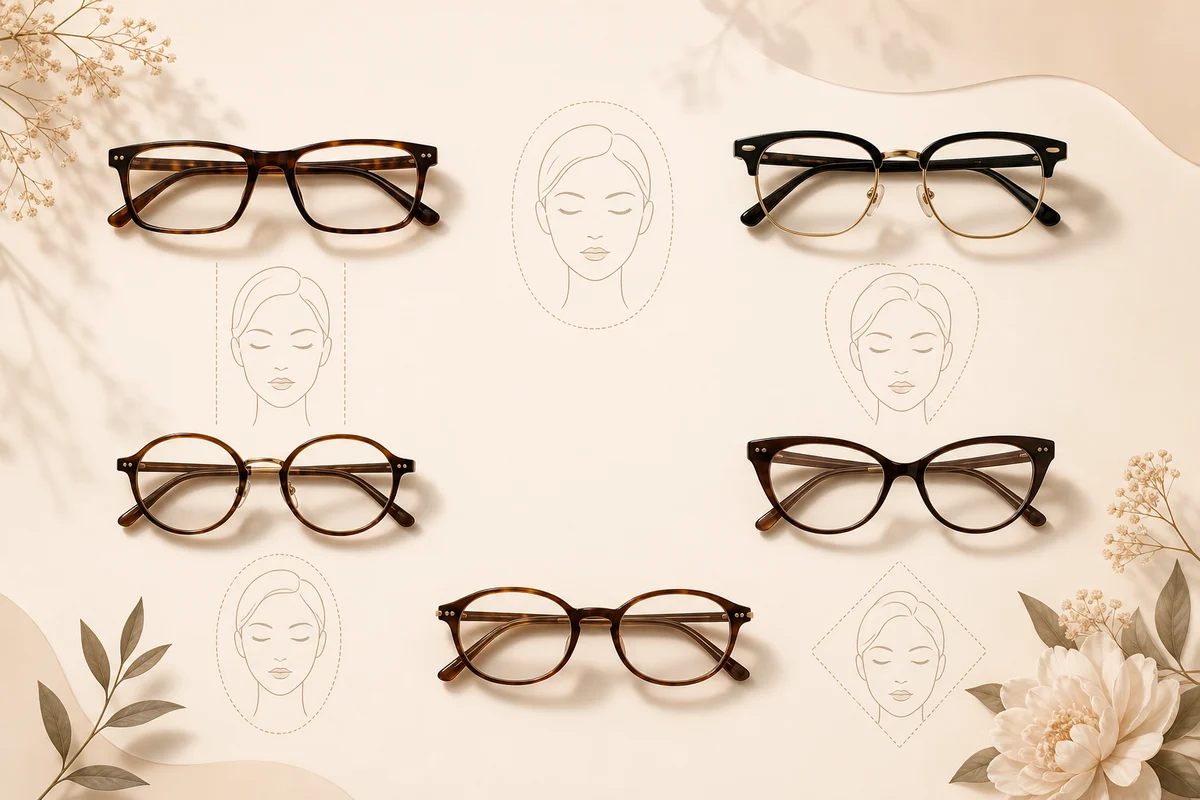
Face shape matters for glasses because a frame adds a new outline directly across the face. But “square faces wear round glasses” is too simple to guide a real purchase. The effect also depends on frame width, lens depth, rim weight, brow line, bridge fit, prescription, and how the frame sits on your individual features.
A Face Shape Profile gives context. The Key Facial Features explain which frame variables deserve attention. The final decision happens in the mirror, where fit and comfort are as important as shape.
Quick answer
Use your primary face shape to understand the overall balance, then check face length, width distribution, cheekbone presence, jaw structure, and chin taper. Translate those features into four visible frame decisions: width, lens depth, rim weight, and brow-line relationship.
Do not choose a frame only because its product name appears on a face-shape list. Two frames called “cat-eye” or “rectangle” can have completely different width, depth, corner angle, and visual weight.
The four frame variables that change balance
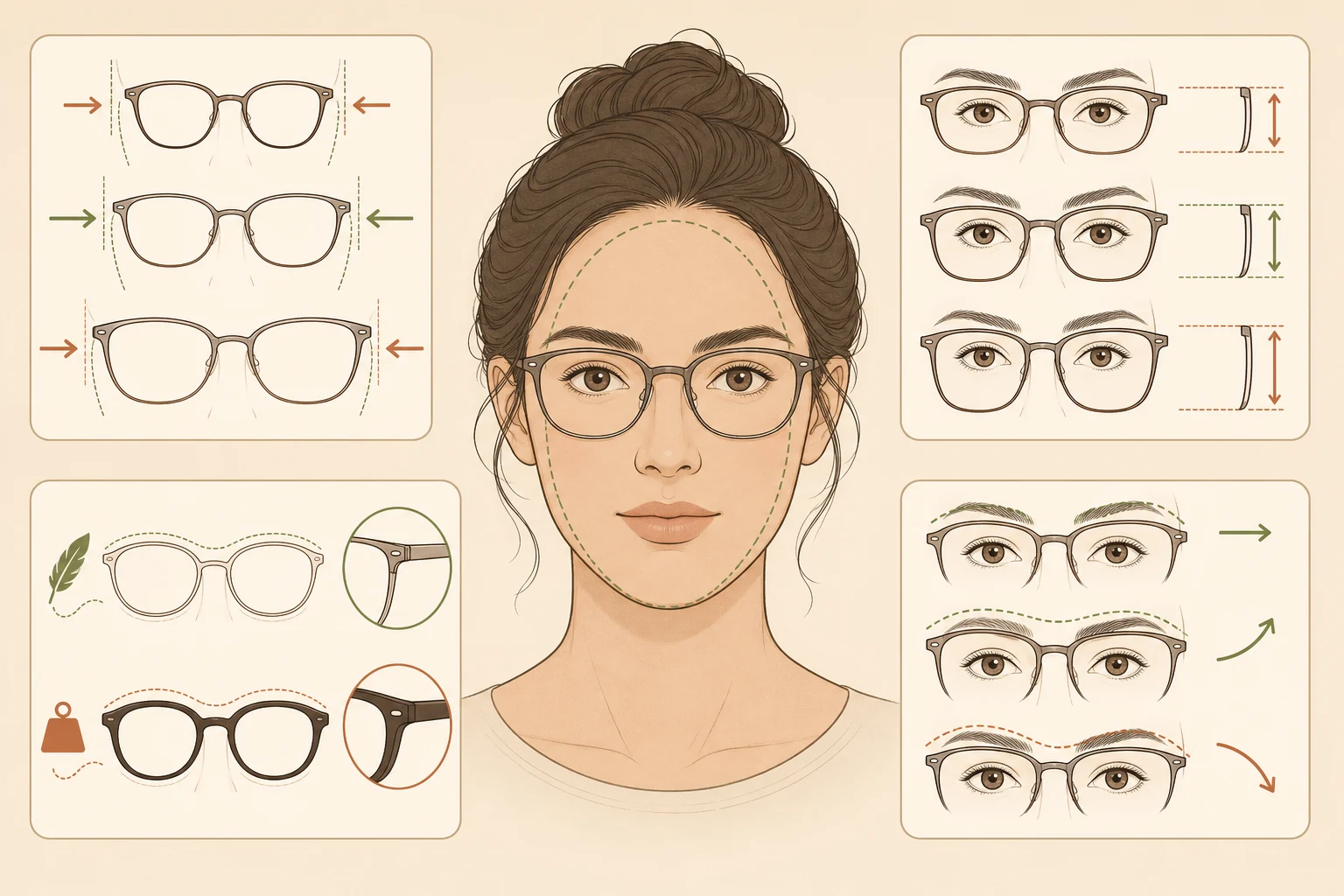
Frame width
Total frame width determines whether the glasses feel compressed, balanced, or overly dominant. The outer edges should usually sit near the visual width of the face without pinching the temples or extending so far that the frame appears detached.
Width also changes style meaning. A slightly wider frame can add horizontal emphasis to a longer face. A frame that is too narrow may make the cheeks appear wider by comparison. Width is therefore both a fit requirement and a visual variable.
Lens depth
Lens depth is the vertical height of the lens area. Deeper lenses occupy more vertical space and can interrupt a long, continuous facial line. Shallow lenses can feel light and compact, but on an elongated profile they may leave most of the vertical length visually untouched.
Depth also affects prescription suitability and eye position, so it cannot be chosen from face shape alone.
Rim weight
Rim weight describes how visually heavy the frame appears. Thick dark acetate creates more contrast than thin metal or translucent material. A heavy top rim draws attention toward the brow; a heavier lower rim can bring more presence to the lower half of the frame.
The same shape can therefore feel bold, soft, structured, or nearly invisible depending on material and color.
Brow line
The top edge of the frame interacts with the natural eyebrow line. A frame that follows the brow can feel integrated. A strongly raised outer corner adds lift. A flat heavy brow bar creates a strong horizontal emphasis. A frame sitting too high may cover the brows, while one sitting too low can make the eyes appear misplaced inside the lenses.
Why Key Facial Features matter more than a label alone
Consider two people with a heart primary profile. One has a very broad forehead and pronounced chin taper. The other has only a slight upper-face emphasis and fuller cheeks.
The first may need more caution with very wide, top-heavy browline frames because they repeat the dominant upper width. The second may carry a modest cat-eye more easily if the frame width remains balanced and the lower rim has enough presence.
Both can honestly be described as heart-shaped. The relevant frame decision comes from degree and placement, not the label alone.
Frame names are not shopping decisions
“Round,” “rectangle,” “aviator,” “cat-eye,” and “browline” describe broad families. Inside each family, the variables can change dramatically.
A cat-eye may be narrow and lightly lifted, or extremely wide with a thick upper rim. A rectangle may have sharp corners and shallow lenses, or rounded corners with generous depth. An aviator may be delicate and balanced, or oversized and top-heavy.
Instead of asking whether a frame name is allowed, ask:
- Is the total width right for my face?
- Is the lens depth helping or exaggerating the vertical proportion?
- Where is the visual weight concentrated?
- Does the brow line follow, lift, or compete with my natural brow?
- Do the corners echo or contrast with my jaw structure?
This is the question users actually face in a store. A recommendation can point you toward rectangles, ovals, browlines, or aviators, but the purchase should be made from the frame's real proportions on your face.
How to use your FaceFit report while shopping
Open Why This Result and note the two or three Key Facial Features that matter most. Then convert them into a short shopping brief.
For example:
My profile has visible vertical length, balanced widths, and a structured jaw. I want enough lens depth to interrupt the length, moderate total width, and corners that soften rather than repeat the jaw.
That brief is more useful than “I need glasses for an oblong face.” It gives an optician several variables to compare across brands and prescriptions.
The dedicated glasses guides show frame directions for each profile. This article explains how to test those directions in the real world.
A five-step in-store check
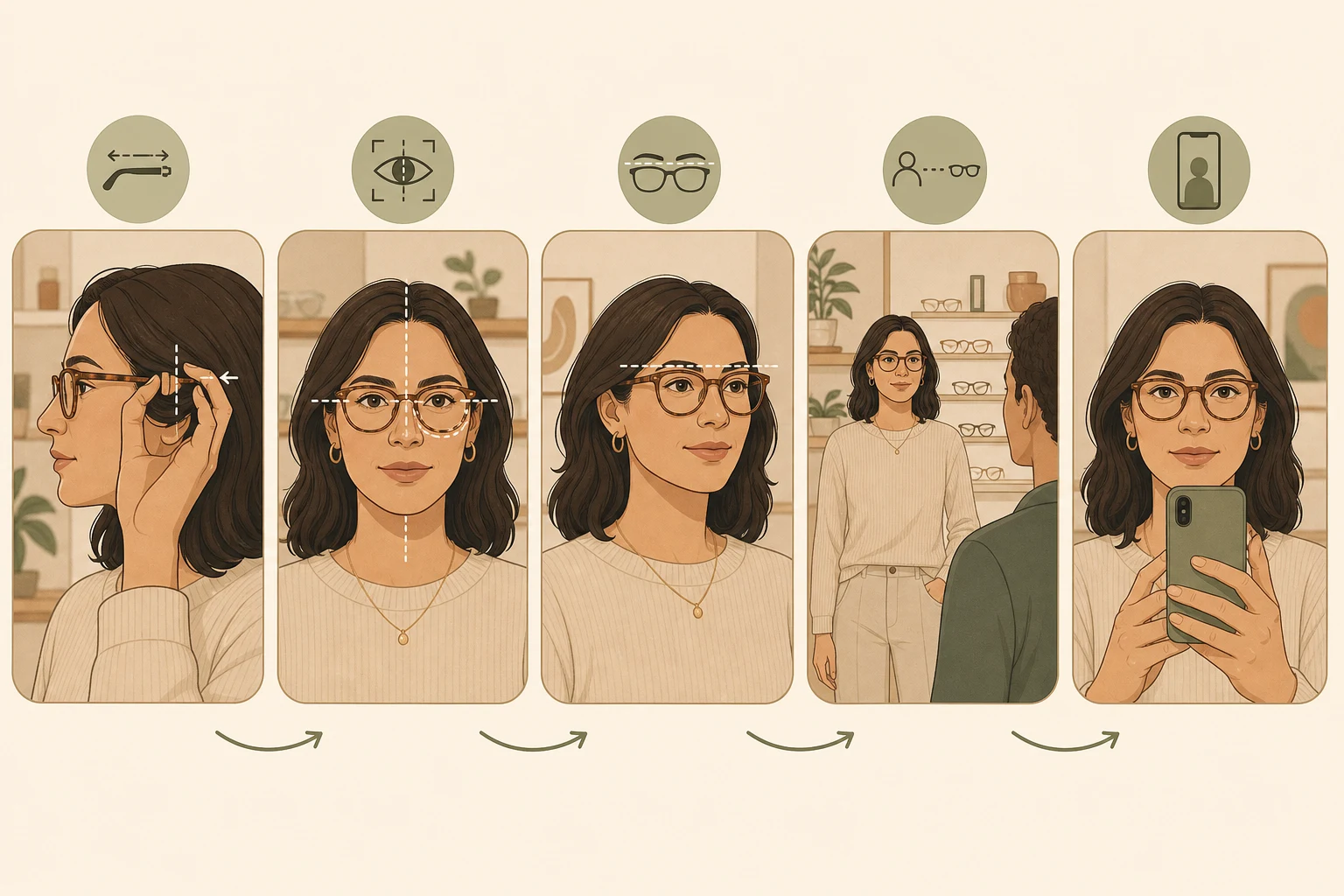
1. Check physical width
Look for temple pressure, large gaps, or outer edges extending far beyond the face. Style balance cannot compensate for poor fit.
2. Check eye position and lens depth
Your eyes should sit comfortably within the lens area. Compare a shallow and a deeper option to see how each changes the vertical balance.
3. Check the brow line
Relax your expression. Make sure the frame does not awkwardly cut through or completely hide the brows unless that is an intentional statement.
4. Check rim weight from conversation distance
Step back from the close mirror. At normal distance, do you see your face first, the frame first, or a balanced combination? A bold frame is valid, but the effect should be intentional.
5. Take neutral photos
Take front-facing and slight three-quarter photos at eye level. Store lighting and close mirrors can be misleading. Compare the photos after a few minutes rather than making the decision from one close-up view.
If you are shopping online, recreate the same logic with measurements. Compare lens width, bridge width, temple length, total frame width, and lens height. Virtual try-on can help with direction, but it should not replace fit measurements or an adjustment plan.
Frame direction is not the same as fit
A frame can be visually appropriate and physically wrong. Bridge width, temple length, nose support, optical center, and prescription requirements may rule out a style that looks good in a product photo.
An optician should verify fit and lens suitability. FaceFit provides a style direction and a vocabulary for comparison; it does not replace professional dispensing.
Common mistakes
- Choosing by face-shape label before checking total width.
- Treating all frames with the same name as identical.
- Ignoring lens depth on a long or compact face.
- Assuming thin frames are always subtle; bright metal can still have high contrast.
- Judging only in a close mirror under store lighting.
- Buying an uncomfortable frame because the shape appears on a recommendation list.
- Trying to hide the face instead of choosing a deliberate visual effect.
Related guides
- What Is My Face Shape? explains the report structure.
- Face Shape vs Face Proportions shows which features affect width and depth choices.
- How Key Facial Features Guide Recommendations connects the profile to optional style modules.
FAQ
Must square faces avoid square frames?
No. Angular frames can intentionally emphasize structure. Softer corners and lighter rims create contrast. The choice depends on the effect you want.
Are oversized frames good for long faces?
Only when “oversized” includes useful lens depth and a wearable total width. A frame can be wide but too shallow, or large enough to overwhelm narrow features.
Should the top of the frame match my eyebrows exactly?
No exact match is required. The lines should feel related rather than accidentally competing. Fit and eye position remain more important.
Can I use an online product photo to judge fit?
Use it for direction, not final judgment. Measurements, virtual try-on, and an in-person adjustment provide better evidence.
Take a practical frame brief with you
Generate a Personal Face Shape Style Report, review the Key Facial Features, and use the optional glasses module to create an in-store comparison brief.
Ready to see your Face Shape Profile?
Use a clear front-facing photo to get a Personal Face Shape Style Report with your key features, profile, and style meaning.
Create my style report