Best Hairstyles for Square Face Shapes: Soften the Jaw Without Hiding It
Quick Answer
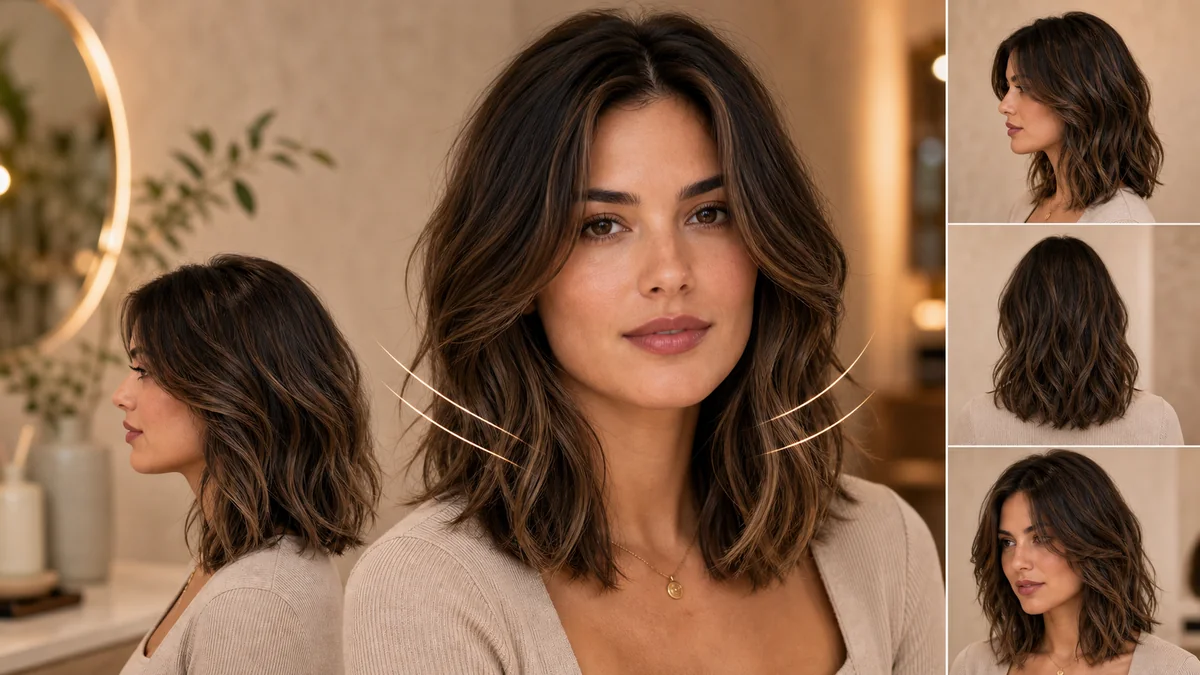
The best hairstyles for square face shapes soften strong jaw angles without trying to hide them. Medium-to-long layers, waves that pass the jaw, off-center parts, textured ends, soft fringe, and rounded short cuts are strong starting points.
A square face usually has similar width across the forehead, cheekbones, and jaw, with a more defined lower face. The haircut should introduce movement, curve, or diagonal direction so the jaw remains a strength rather than the only thing the eye sees.
What a square jaw changes about haircut choice
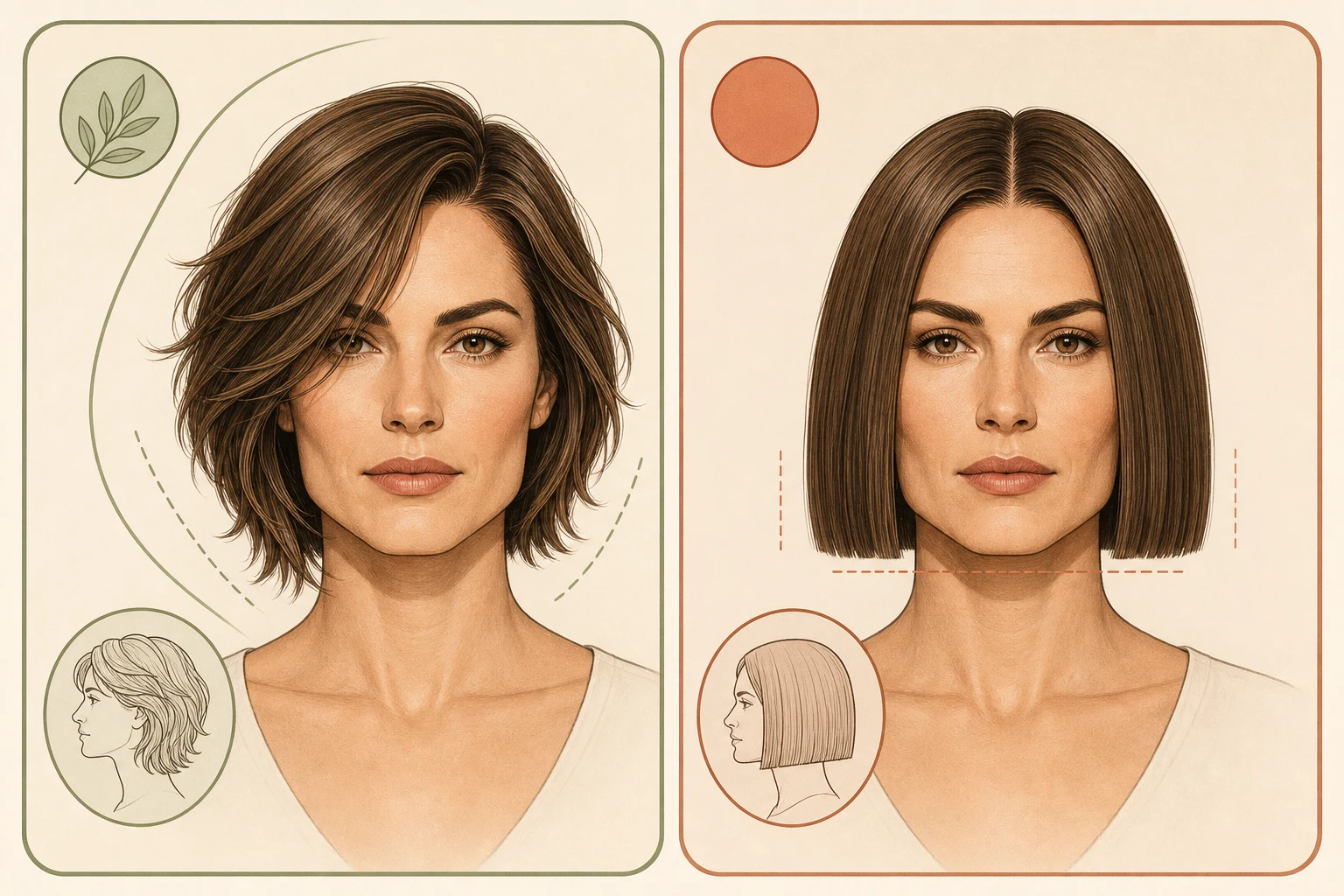
Square faces often look best when the haircut avoids repeating the same hard horizontal line at the jaw. A blunt cut ending exactly at the jaw corner can frame the strongest angle. A strict center part with straight, flat hair can repeat facial symmetry. A boxy short cut can echo the jaw instead of balancing it.
That does not mean every square face needs curls or long hair. The goal is controlled softness. Length that passes the jaw, layers that break up the outer line, texture that creates movement, and parting that adds asymmetry can all work.
If you are still comparing square with round or oblong, check the square face shape guide before choosing a cut.
Best hairstyle directions for square faces
| Direction | Why it works | Avoid |
|---|---|---|
| Layers below the jaw | Move the eye past the strongest angle | Blunt ends stopping exactly at the jaw corner |
| Soft waves or curls | Add curve against angular structure | Wide, heavy volume only at the jaw |
| Collarbone lob | Sits below the jaw while staying manageable | A rigid chin-length bob with no texture |
| Off-center or side part | Breaks symmetry and adds diagonal movement | Severe center part with flat straight hair |
| Textured short crop | Creates softness without long hair | Boxy top with very tight sides |
| Soft fringe | Adds movement near the forehead | Heavy blunt bangs that create another hard line |
For square faces, small placement changes matter. Moving the end point a little above or below the jaw can change whether the cut emphasizes or softens the angle.
Layer, texture, and parting rules
Do not land the main line on the jaw corner. If hair ends exactly where the jaw turns, the eye stops there. Passing the jaw or sitting intentionally above it usually looks softer.
Use texture as a softening tool. Waves, bends, piece-y ends, and natural curls create curves that reduce a rigid outline. Straight hair can still work, but it usually needs layers or a softer part.
Add asymmetry. Side parts, diagonal bangs, and uneven face-framing pieces interrupt the strong left-right symmetry common in square profiles.
Keep structure in the haircut. Softening does not mean making the hair shapeless. The jaw is part of the face's character; the haircut should support it with movement.
For women: what to ask for
For long hair, ask for soft layers that begin below the jaw and continue downward. If you want waves, keep them loose and moving past the jawline rather than expanding into a heavy triangle.
For medium hair, a collarbone lob with texture is a reliable option. Ask for ends that do not sit as one rigid block. An off-center part or side-swept front section can make the whole shape feel less severe.
For short hair, ask for a rounded or textured silhouette instead of a geometric one. A pixie, bixie, or short bob can work when the edges are softened and the cut does not create another square frame.
For men: what to ask for
Square faces often work well with textured crops, classic scissor cuts, side parts, and low to mid tapers. Keep some softness at the sides instead of shaving everything into a hard box.
Avoid a very squared-off top paired with very tight sides if you do not want to emphasize the jaw. Ask for texture, a rounded outline, and a side transition that does not look blocky.
Facial hair can support the shape when it is trimmed cleanly. A beard that becomes too wide at the jaw may double the square effect; a short shaped beard can keep definition without adding heaviness.
How to talk to your stylist or barber
Use placement-based instructions:
- "I want movement around the jaw, not a blunt line ending exactly at it."
- "Keep the layers soft and let the length pass the jawline."
- "Use an off-center part or diagonal front section to break symmetry."
- "For a short cut, keep the shape textured or rounded rather than boxy."
If you bring a reference photo, point out whether you like the texture, parting, end length, or overall softness. That matters more than the haircut name.
Common mistakes
- Choosing a blunt bob that stops at the jaw corner.
- Pairing a strict center part with very straight, flat hair.
- Adding heavy blunt bangs that create another horizontal line.
- Asking to hide the jaw rather than soften the frame around it.
- Choosing a boxy men's cut that repeats the jaw geometry.
- Ignoring maintenance; square-friendly texture can turn blocky as it grows.
Frequently Asked Questions
Can square faces wear short hair?
Yes. Short hair works when it has texture, softness, or rounded edges. The risky version is a hard geometric shape that repeats the jawline.
Do square faces need curls?
No. Curls and waves are useful, but layers, parting, and softened ends can also balance a square profile.
Is a bob bad for square faces?
No. A bob can work if the end point and texture are right. A collarbone lob or soft bob below the jaw is usually easier than a blunt bob ending directly at the jaw corner.
Should I hide my jawline?
No. A square jawline is a defining feature. The goal is to frame it with movement so it looks intentional, not severe.
How this connects to your Face Shape Profile
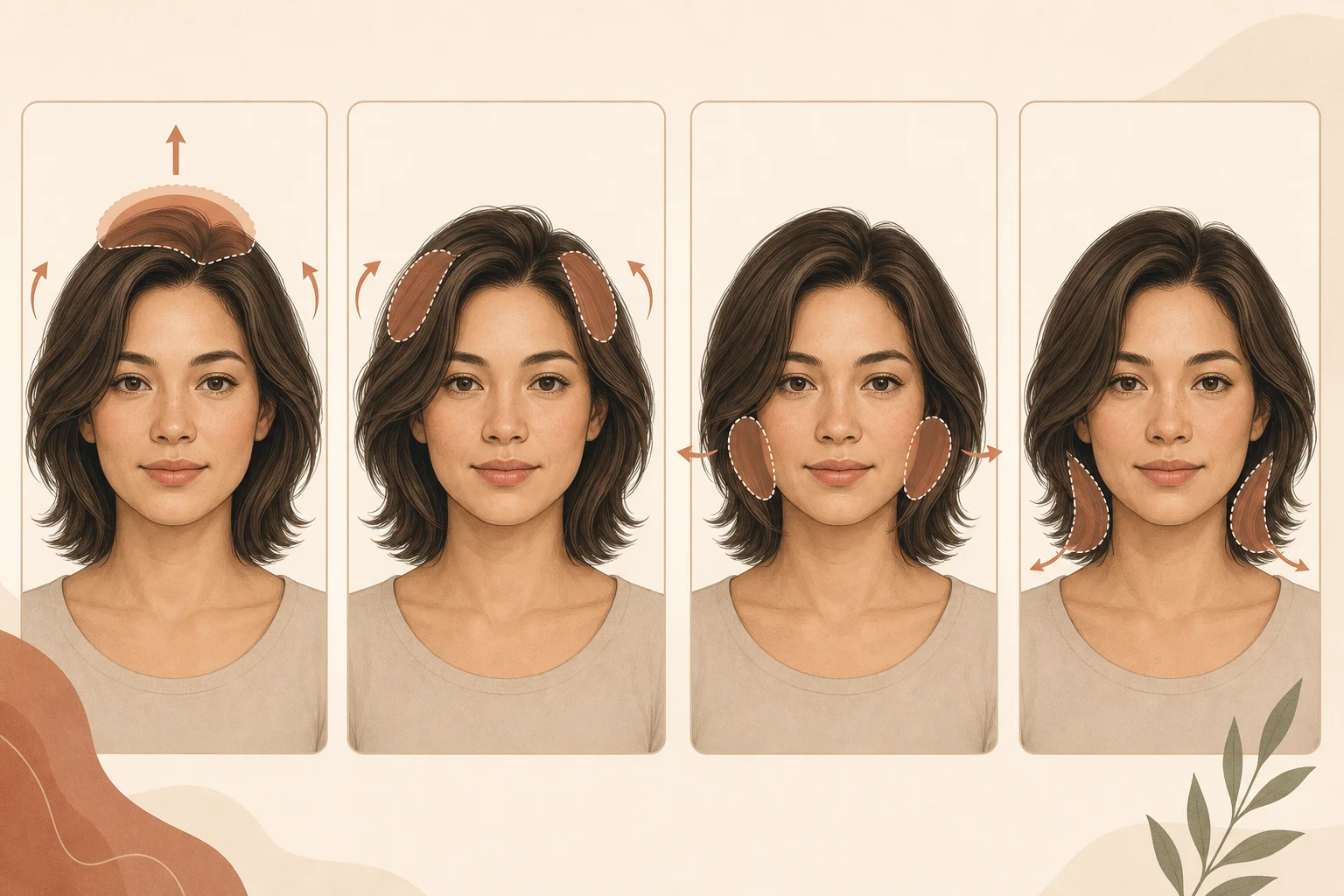
A square primary profile is defined by visible jaw structure and relatively balanced forehead, cheekbone, and jaw widths. Your report can show whether the face is compact or longer, which affects how much crown height or side softness you need.
Build your haircut brief
Use the report to identify whether jaw width, face length, or overall angularity is strongest. Then take one note to your stylist:
My profile has a clearly structured square jaw. I want movement and texture around it rather than a blunt line ending exactly at the jaw. Please use a diagonal part and adapt the layer lengths to my density and maintenance level.
Review the full square hairstyle guide, compare the face shape hairstyle principles, or create a report before your appointment.
Want hairstyle guidance for your face shape?
Start with your face-shape result, then explore length, layers, bangs, volume, and maintenance notes.
Open the hairstyle guide