Best Hairstyles for Round Face Shapes: Add Definition Without Overcorrecting
Quick Answer
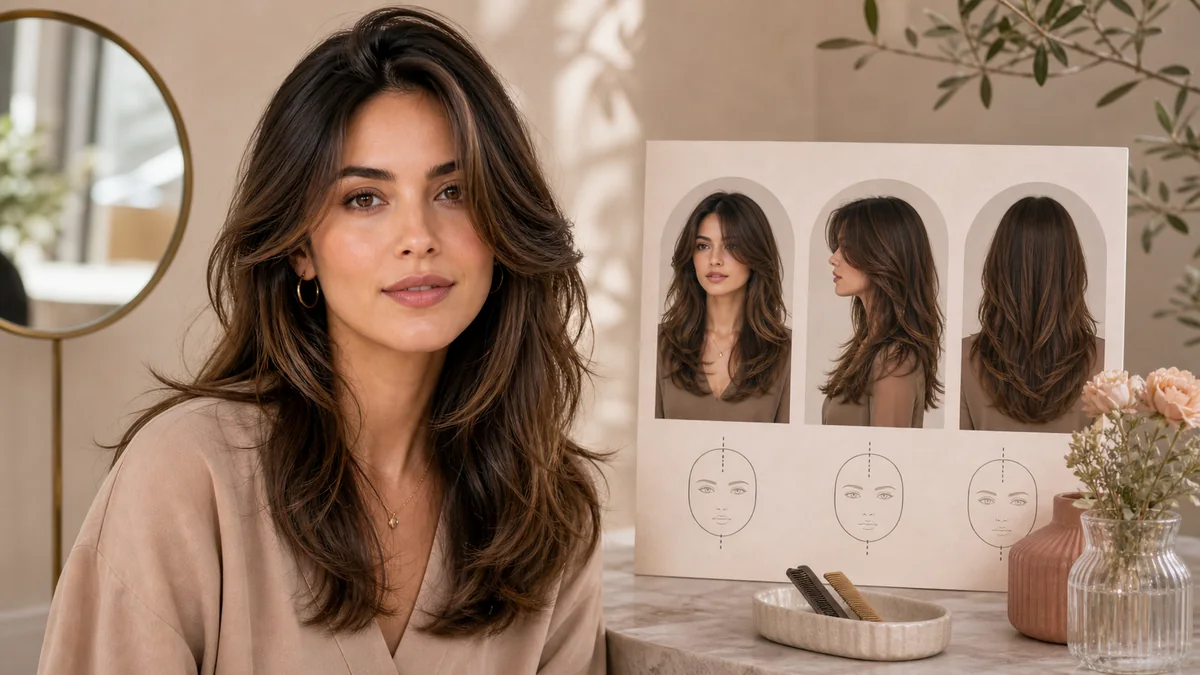
The best hairstyles for round face shapes add vertical direction and gentle structure without trying to erase softness. Longer layers, side parts, controlled crown lift, diagonal fringe, textured crops, and waves that move downward are useful starting points.
A round face usually has a compact length-to-width balance, fuller cheeks, and a soft jawline. The styling goal is to avoid adding maximum width at the cheek line. Good cuts create movement above or below that area so the face reads more defined.
Why round faces need placement, not just length
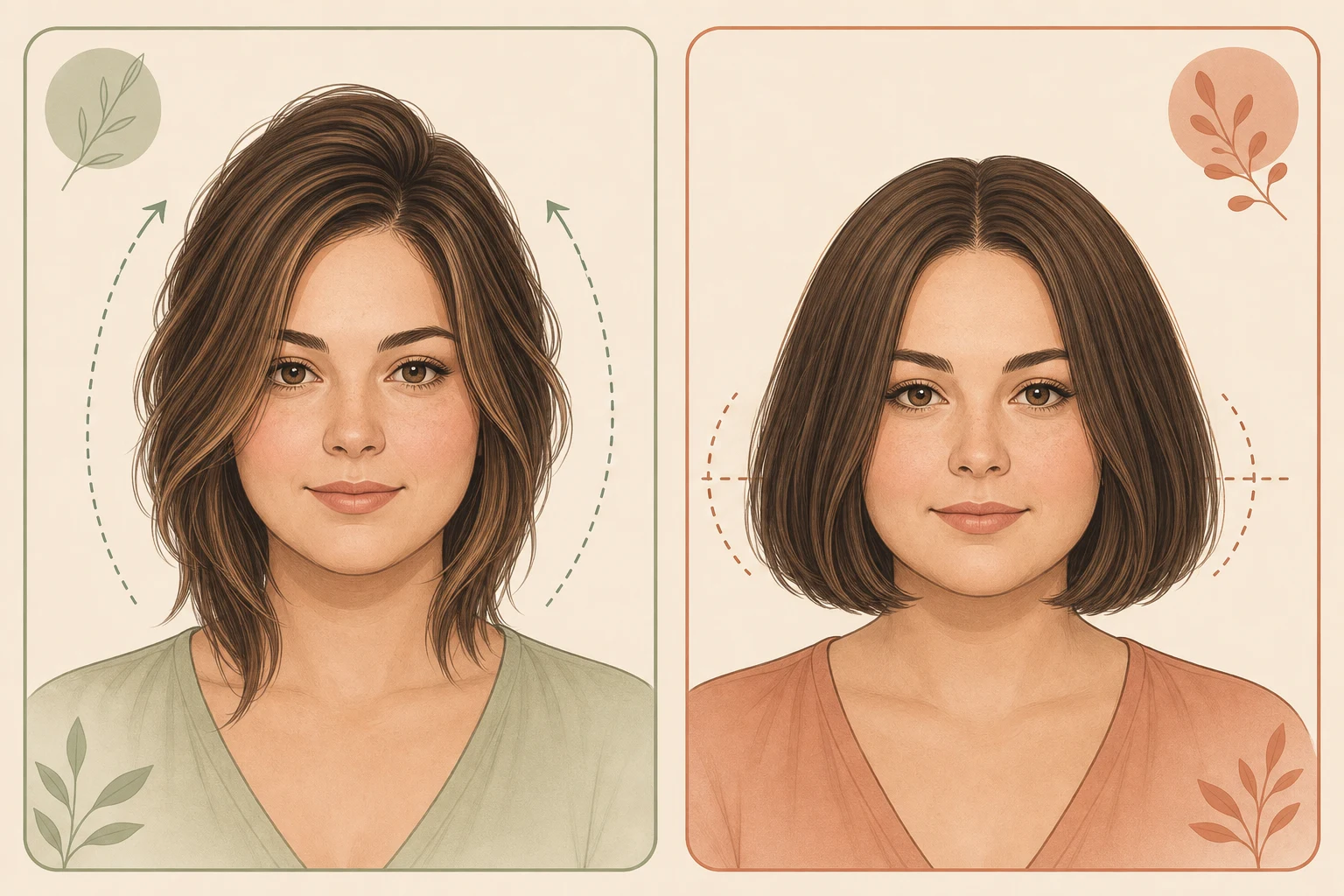
Long hair is often recommended for round faces, but length alone is not enough. Long, flat, unlayered hair can hang beside the face like two vertical panels. Chin-length blunt hair can create a horizontal line exactly where the face is already soft and full.
The important question is where the layers and volume begin. Layers below the cheekbones draw the eye downward. Moderate crown lift adds height. A side part or diagonal fringe breaks perfect symmetry. Together, these choices add direction without making the haircut look forced.
If you are unsure whether your profile is round or oval, compare the round face shape guide before choosing a haircut. Round and oval can look close when the photo angle changes.
Best hairstyle directions for round faces
| Direction | Why it works | Avoid |
|---|---|---|
| Long layers below the cheekbones | Adds vertical movement without widening the cheeks | Layers that start at the widest cheek point |
| Collarbone or longer length | Extends the frame below the face | Blunt chin-length ends with no movement |
| Side part or diagonal fringe | Breaks round symmetry and creates direction | Heavy straight-across bangs |
| Controlled crown lift | Adds height in a useful place | Tall, stiff volume with bulky sides |
| Textured crop with tight sides | Adds structure for short-hair preferences | Round, helmet-like short cuts |
| Downward waves | Adds movement while keeping side width controlled | Wide waves that expand at cheek level |
These are not rules against short hair, bangs, or curls. They are placement rules. The same style name can work or fail depending on where the weight sits.
Layer and volume rules that matter most
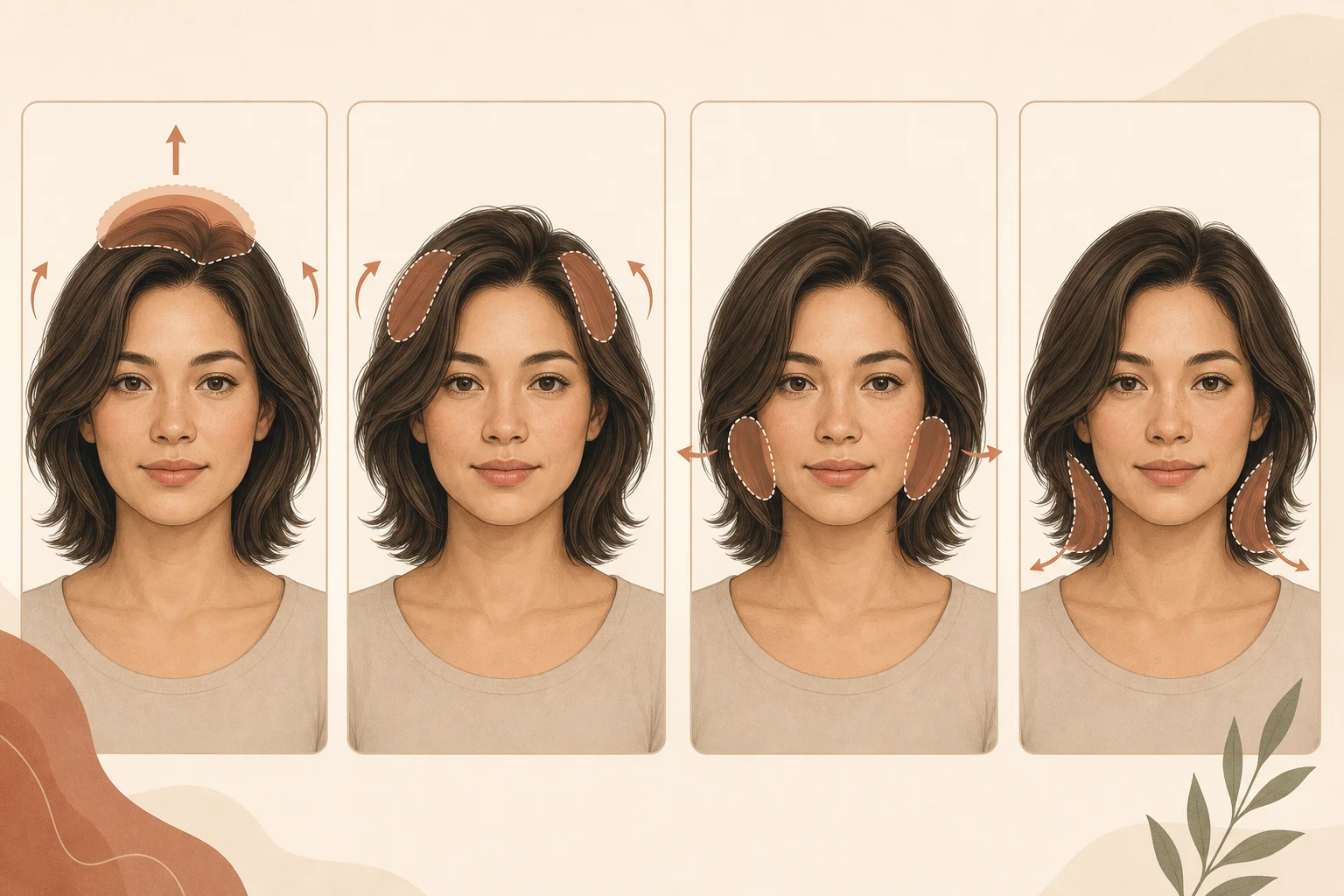
Keep bulk away from the cheek line. The cheek area is already visually strong on many round faces. Layers or curls that expand exactly there can make the face read wider.
Use diagonal movement. Side parts, side-swept fringe, asymmetry, and angled face-framing pieces create lines that break the circular impression.
Add height lightly. Crown lift helps, but it should not become a tall block. Natural root lift or textured top volume is usually better than heavy teasing.
Let length move below the face. Layers beginning at the collarbone, shoulder, or below the chin often work better than short face-framing pieces that stop at the cheeks.
For women: what to ask for
For long hair, ask for face-framing layers that begin below the cheekbones and move downward. If you want waves, keep them elongated rather than wide at the sides.
For medium hair, a collarbone lob with a side part is a strong starting point. Add soft layers below the chin and avoid a blunt line that lands at the roundest part of the face.
For short hair, ask for texture, lift, and asymmetry. A textured pixie or short crop can work well when the sides stay controlled and the top has enough length to style upward or diagonally.
For bangs, choose side-swept, angled, or curtain shapes that leave some forehead visible. Heavy blunt bangs often shorten the face and strengthen the compact impression.
For men: what to ask for
Round faces usually benefit from more structure on top and cleaner sides. Ask for two to three inches on top with texture, a low or mid taper, and enough lift to create vertical direction.
Avoid very short all-over cuts if they expose the round head shape without adding structure. Also avoid high fades paired with a flat top; the contrast can make the face look wider at the cheeks.
A side part, textured crop, modern quiff, or brushed-up style can work when the volume points upward or diagonally instead of outward. Keep the sides tidy as they grow, because side bulk can quickly add width.
How to talk to your stylist or barber
Use clear placement language:
- "I want layers that begin below my cheekbones, not right beside them."
- "Keep volume at the crown controlled and keep side bulk away from the widest part of my face."
- "I want diagonal movement through the fringe or part, not a heavy straight line."
- "For a short cut, keep texture on top and avoid a round shape around the sides."
If you bring a reference photo, check whether the model has the same cheek fullness and face length. A great haircut on an oval face may need different layer placement on a round face.
Common mistakes
- Thinking any long hair will add definition.
- Cutting layers at cheekbone level when the cheeks are already full.
- Choosing a blunt chin-length bob with no asymmetry.
- Adding side volume while trying to make the face look longer.
- Using heavy blunt bangs that cover the forehead.
- Asking for a longer-looking face without specifying layer placement.
Frequently Asked Questions
Can round faces wear short hair?
Yes. Short hair works when it creates structure through texture, lift, or asymmetry. Avoid short cuts that follow the head curve evenly on all sides.
Are bangs bad for round faces?
No. Side-swept bangs, curtain bangs, and angled fringe can work well. The risky version is a heavy blunt fringe that shortens the visible face.
What layer length is best?
For many round faces, layers that begin below the cheekbones, near the collarbone, or below the chin are safer than cheek-level layers. The exact point depends on hair length and texture.
Do curls make a round face look rounder?
Not automatically. Curls work when the widest curl volume is not concentrated beside the cheeks. Longer curl clumps, side parts, and shape control help.
How this connects to your Face Shape Profile
A round primary profile usually combines compact length, soft cheek fullness, and a gently curved jaw. Your report can show whether the face is strongly compact or has a slight oval tendency, which changes how much height and structure you need.
Build your haircut brief
Use your report to identify whether cheek fullness, compact length, or soft jawline is the strongest feature. Then turn it into one stylist note:
My profile is primarily round. I want controlled lift at the crown and longer diagonal framing that begins below the cheekbones. Please keep side bulk away from the widest cheek area and work with my natural texture.
Review the full round hairstyle guide, compare the broader face shape hairstyle principles, or create a report before your next cut.
Want hairstyle guidance for your face shape?
Start with your face-shape result, then explore length, layers, bangs, volume, and maintenance notes.
Open the hairstyle guide