Best Hairstyles for Oblong Face Shapes: Add Width Without More Height
Quick Answer
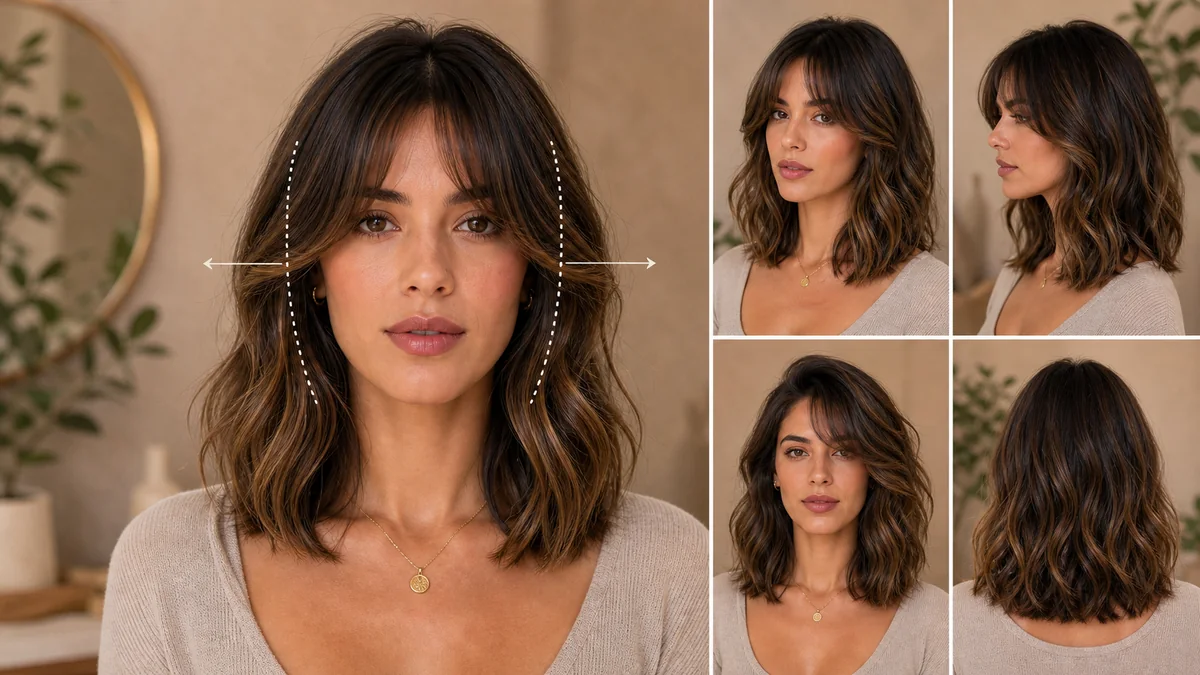
The best hairstyles for oblong face shapes add horizontal movement and avoid unnecessary height. Curtain bangs, textured fringe, shoulder or collarbone length, soft waves, side volume, layered lobs, and medium men's cuts with fuller sides are practical starting points.
An oblong face is clearly longer than wide, often with balanced forehead, cheekbone, and jaw widths. The haircut should interrupt the long vertical line with width, texture, or forehead framing. The goal is balance, not making the face look shorter by force.
What oblong faces need from hair
Oblong faces can look elegant and lean, but the wrong haircut can make the vertical line feel too continuous. Long straight hair with a center part can trace the length of the face. Tall crown volume can add even more height. Very short sides with a high top can create a narrow vertical column.
The useful strategy is to add sideways eye-stops: bangs across the forehead, waves at the cheek or jaw, side volume, or layers that break the fall of the hair.
If you are comparing oblong with oval, start with the oblong face shape guide. Oblong faces need more horizontal balance than most oval faces.
Best hairstyle directions for oblong faces
| Direction | Why it works | Avoid |
|---|---|---|
| Curtain bangs or fringe | Breaks the forehead-to-chin vertical scan | A high exposed forehead with tall crown volume |
| Shoulder or collarbone length | Adds a natural width point near the sides | Very long straight hair with no movement |
| Waves or curls | Create horizontal movement | Flat panels that hang close to the face |
| Side part | Interrupts a straight center line | Severe center part with narrow hair |
| Layered lob | Adds width without heavy length | Thin ends that make the face look narrower |
| Medium men's cut with fuller sides | Keeps the silhouette balanced | High fade plus tall top |
Oblong styling is less about hiding length and more about giving the eye places to move sideways.
Bangs, waves, and side volume rules
Bangs are useful because they create a horizontal break. Curtain bangs, textured fringe, or a soft brow-skimming shape can shorten the visual scan without making the face feel boxed in.
Side volume should be real but controlled. Waves at the cheek, jaw, or collarbone add width. Bulky round side volume can look dated, so aim for movement rather than puffiness.
Avoid stacking height on height. A high crown, tall quiff, or very lifted roots can make an oblong face look longer unless there is enough side width to balance it.
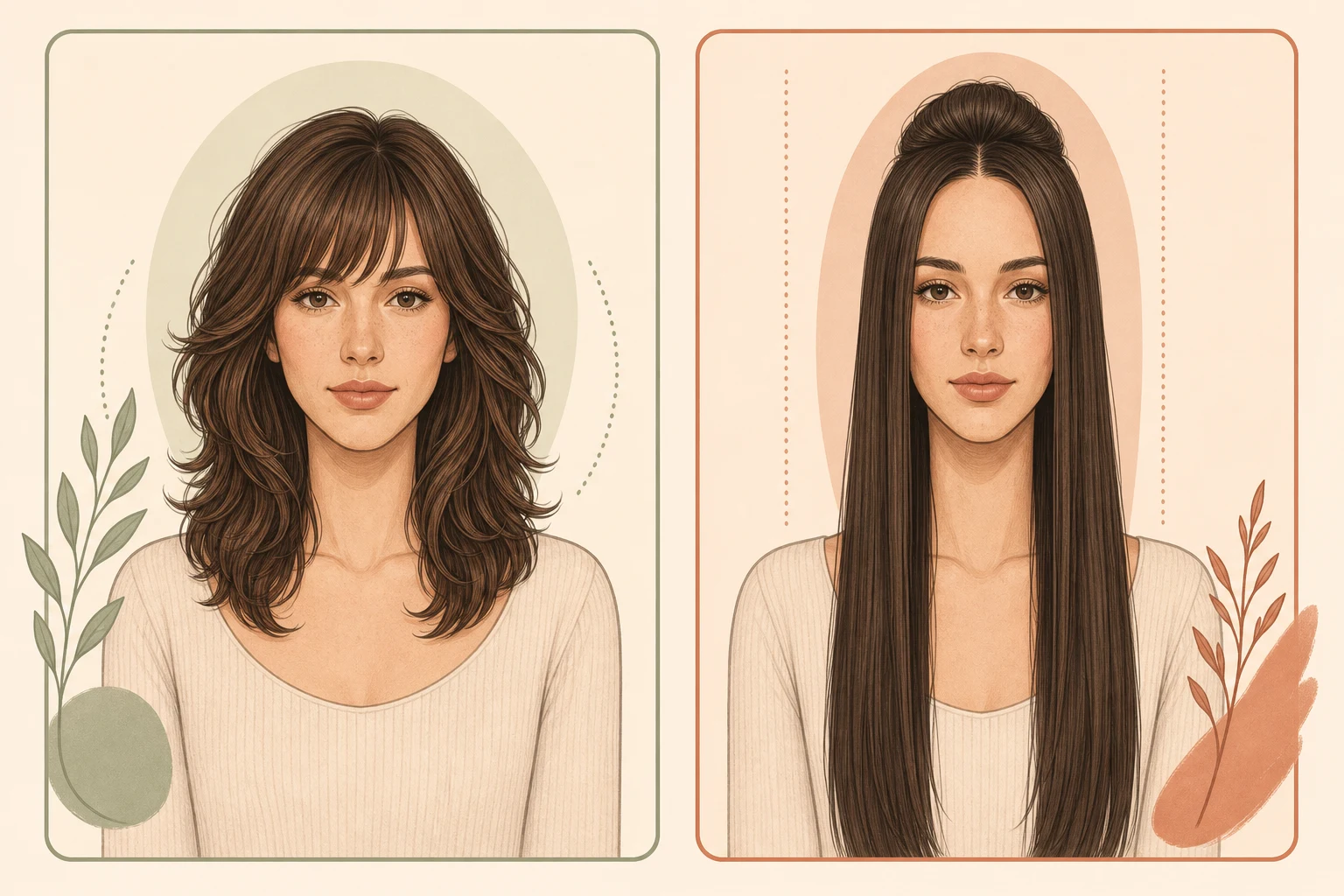
Long hair needs movement. Length can work when waves, layers, or a fringe interrupt the vertical line.
For women: what to ask for
For medium hair, ask for a shoulder or collarbone cut with layers that create movement at the sides. Add curtain bangs or a soft fringe if you want a stronger horizontal break.
For long hair, ask for waves, face-framing, and enough side movement so the hair does not fall in narrow panels. If your hair is fine, keep enough density at the ends to avoid a thin vertical line.
For curls, preserve enough length for shape but avoid letting the top grow tall while the sides collapse. Curl volume should expand outward as well as downward.
For men: what to ask for
Oblong faces often suit textured fringe, medium-length scissor cuts, side parts with moderate width, and low to mid tapers. Keep the top textured, not excessively tall.
Avoid high fades with long upright tops if you do not want to emphasize length. Ask for some side presence and a shape that moves sideways or forward rather than only upward.
Facial hair can help when it adds width or structure near the lower face. A very long narrow beard can extend the face further; shorter shaped facial hair is usually easier.
How to talk to your stylist or barber
Use width-based language:
- "I want movement at the sides, not extra height at the crown."
- "Use bangs or fringe to break up the vertical line."
- "Keep long hair from falling in two narrow panels."
- "For a men's cut, avoid a high fade with a tall top; keep some balanced width."
The phrase "make my face shorter" is less useful than "add width at the sides and avoid extra height."
Common mistakes
- Wearing very long straight hair with a center part and no layers.
- Adding tall crown volume without side balance.
- Choosing high fades or tall quiffs that lengthen the silhouette.
- Cutting bangs but leaving the rest of the hair narrow and flat.
- Removing too much density from the ends.
- Treating oblong and oval styling as the same problem.
Frequently Asked Questions
Do oblong faces need bangs?
Not always, but bangs are one of the easiest ways to add a horizontal break. If you do not want bangs, use waves, a side part, or side volume instead.
Can oblong faces wear long hair?
Yes. Long hair works when it has layers, waves, or fringe. Very long, straight, flat hair is the version most likely to emphasize length.
Are short cuts good for oblong faces?
They can be, especially when the sides are not too tight and the top is not too tall. Texture and moderate width matter more than shortness itself.
What if my hair is naturally curly?
Curls can help because they add width. Keep the shape balanced so the top does not become the highest and widest point while the sides collapse.
How this connects to your Face Shape Profile
An oblong primary profile combines visible vertical length with relatively balanced forehead, cheekbone, and jaw widths. Your report can show whether the jaw is soft or structured and how much side volume you actually need.
Build your haircut brief
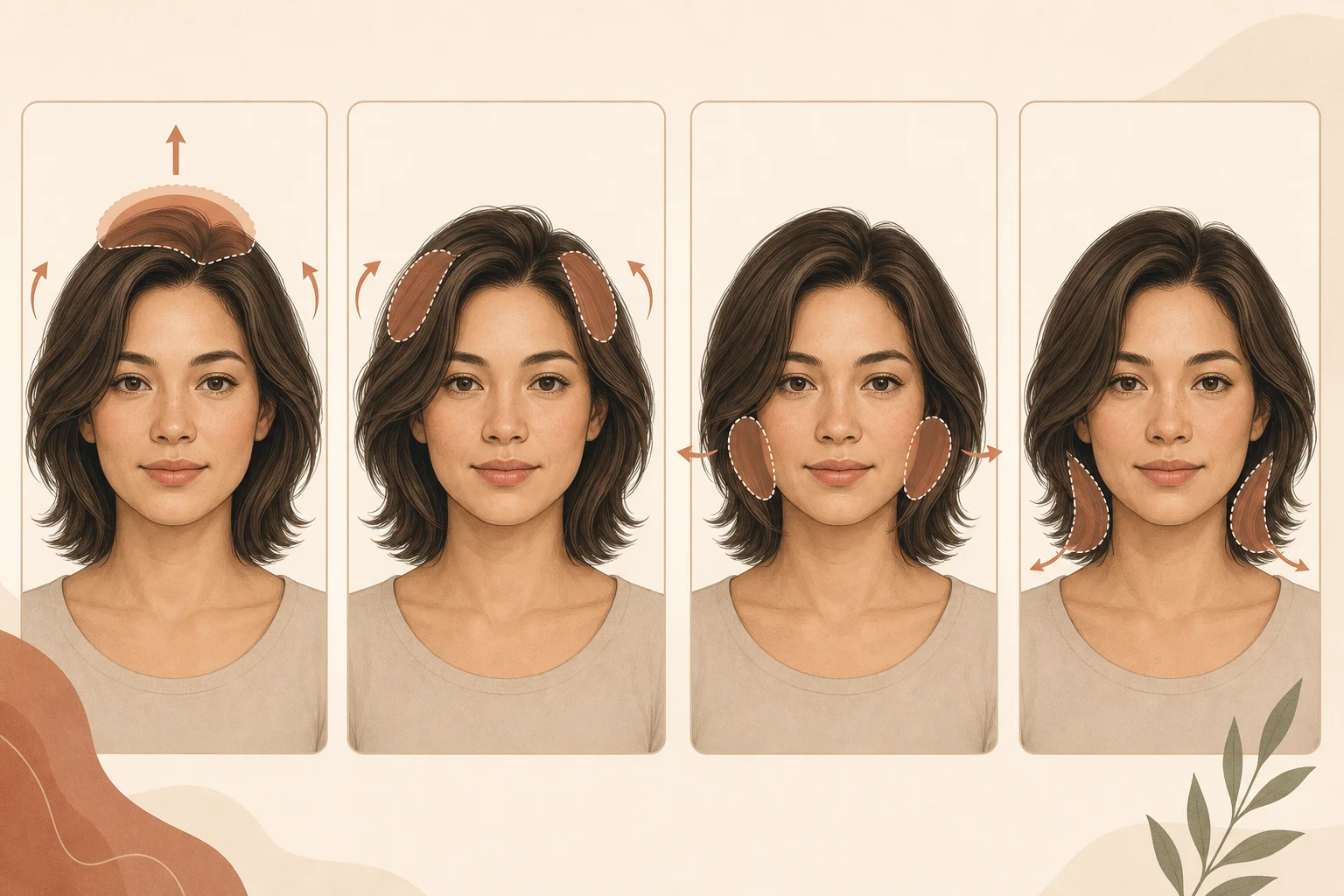
Use your report to identify whether vertical length, narrow side width, or crown height is the strongest issue. Then take one note to your stylist:
My profile is oblong with visible vertical length and balanced widths. I want controlled crown height, side movement through the cheek-to-jaw area, and layers or fringe that break up a continuous vertical line.
Review the full oblong hairstyle guide, compare the face shape hairstyle principles, or create a report before your appointment.
Want hairstyle guidance for your face shape?
Start with your face-shape result, then explore length, layers, bangs, volume, and maintenance notes.
Open the hairstyle guide