Best Hairstyles for Diamond Face Shapes: Balance Cheekbones
Quick Answer
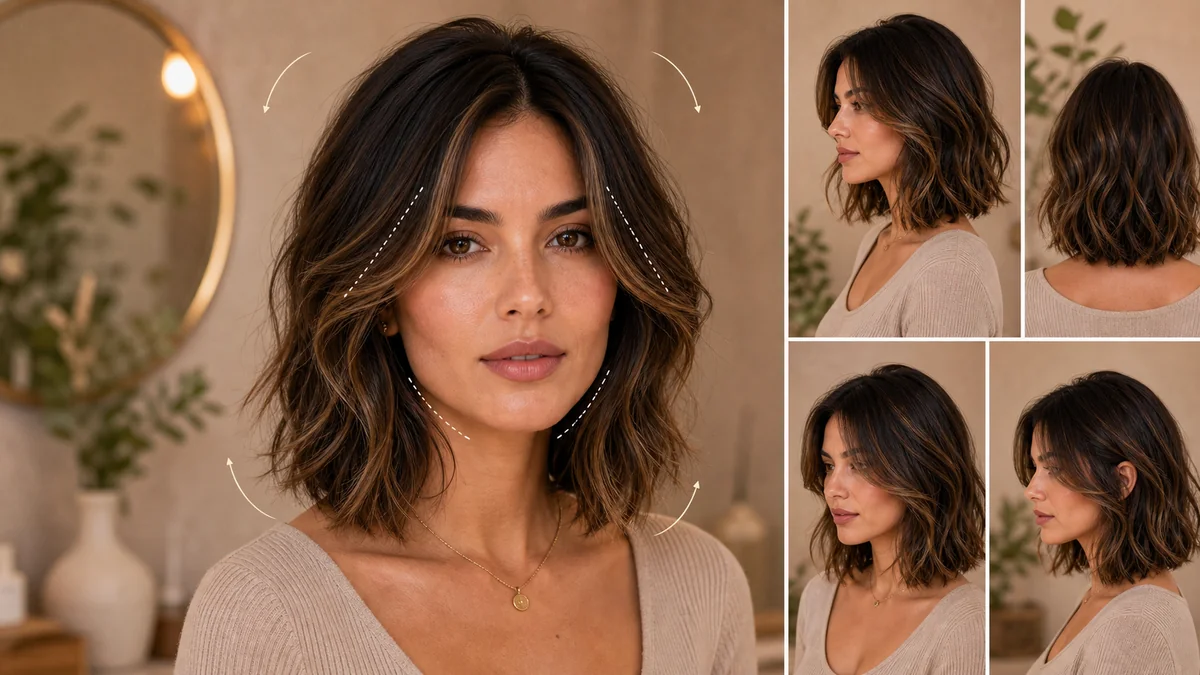
The best hairstyles for diamond face shapes add softness at the forehead and jaw while keeping the cheekbone area controlled. Curtain bangs, soft side parts, chin-length bobs, collarbone lobs, layers below the cheekbones, and textured fringe are strong starting points.
A diamond face is usually widest at the cheekbones, with a narrower forehead and narrower jaw. The haircut should not hide the cheekbones. It should give the upper and lower face enough presence that the cheekbones feel integrated rather than isolated.
What diamond faces need from hair
Diamond faces are often confused with heart and oval faces. The styling strategy changes depending on the widest point. Heart faces need less upper-face emphasis because the forehead is already wide. Oval faces often need balance preserved. Diamond faces need presence above and below the cheekbone peak.
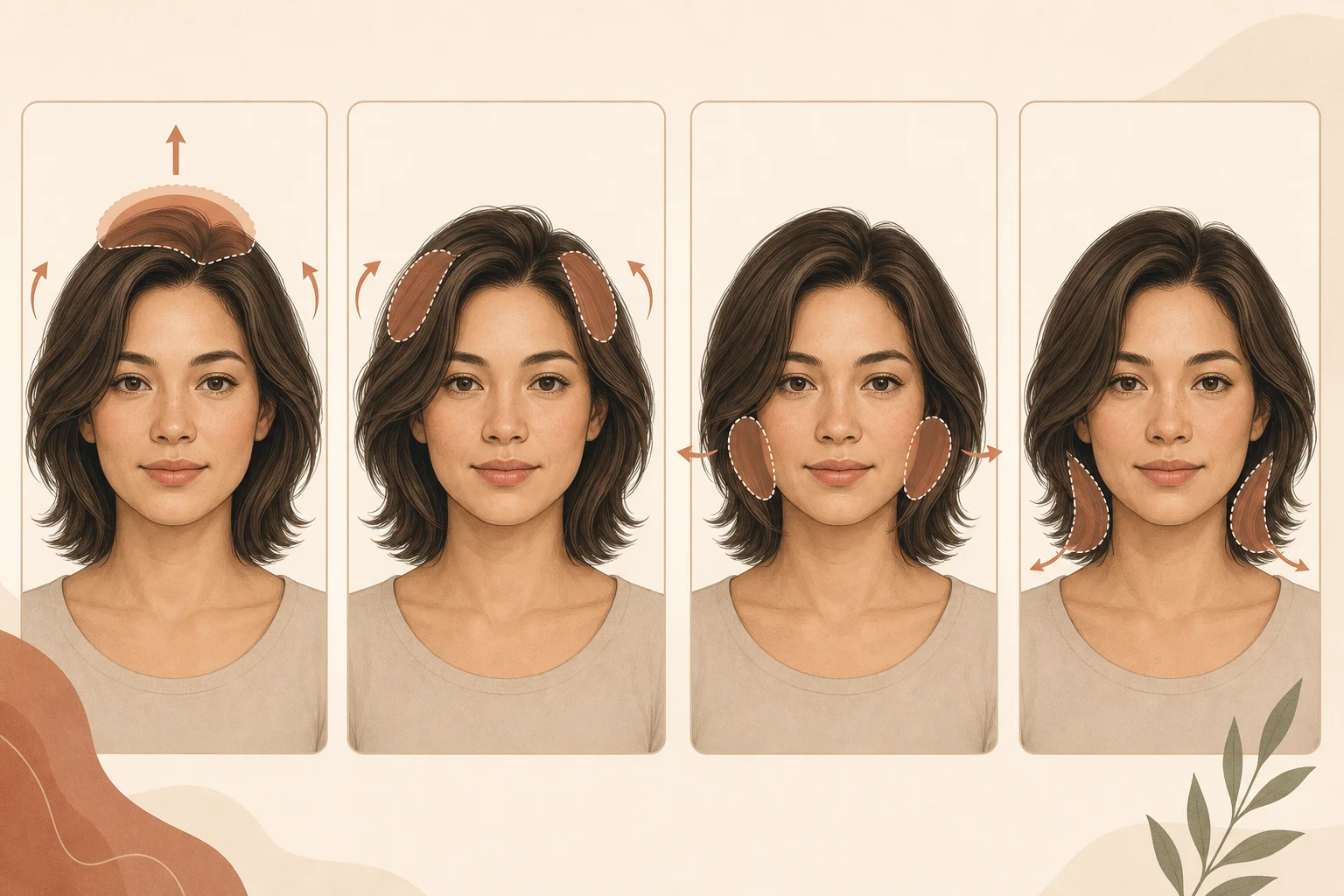
Think in three zones: forehead, cheekbones, and jaw. Zone two is already strong. The haircut should support zone one and zone three while avoiding extra width directly at zone two.
If you are still checking the shape, compare the diamond face shape guide before choosing a cut.
Best hairstyle directions for diamond faces
| Direction | Why it works | Avoid |
|---|---|---|
| Curtain bangs | Add soft width to a narrower forehead | Heavy bangs ending at the cheekbone peak |
| Soft side part | Breaks a narrow top line without exposing everything | Severe slicked-back styles |
| Chin bob with soft ends | Adds presence near a narrower jaw | Very thin ends that disappear below the chin |
| Collarbone lob | Lets movement sit below the cheekbones | Layers starting at the widest cheek point |
| Long layers below cheekbones | Draw attention downward | Short face-framing pieces that flare at the cheeks |
| Textured fringe for men | Softens the forehead and temples | Bulky temple volume |
The best diamond-face haircut often looks balanced because nothing is fighting the cheekbones. The forehead and jaw simply have enough visual support.
The three-zone placement rule
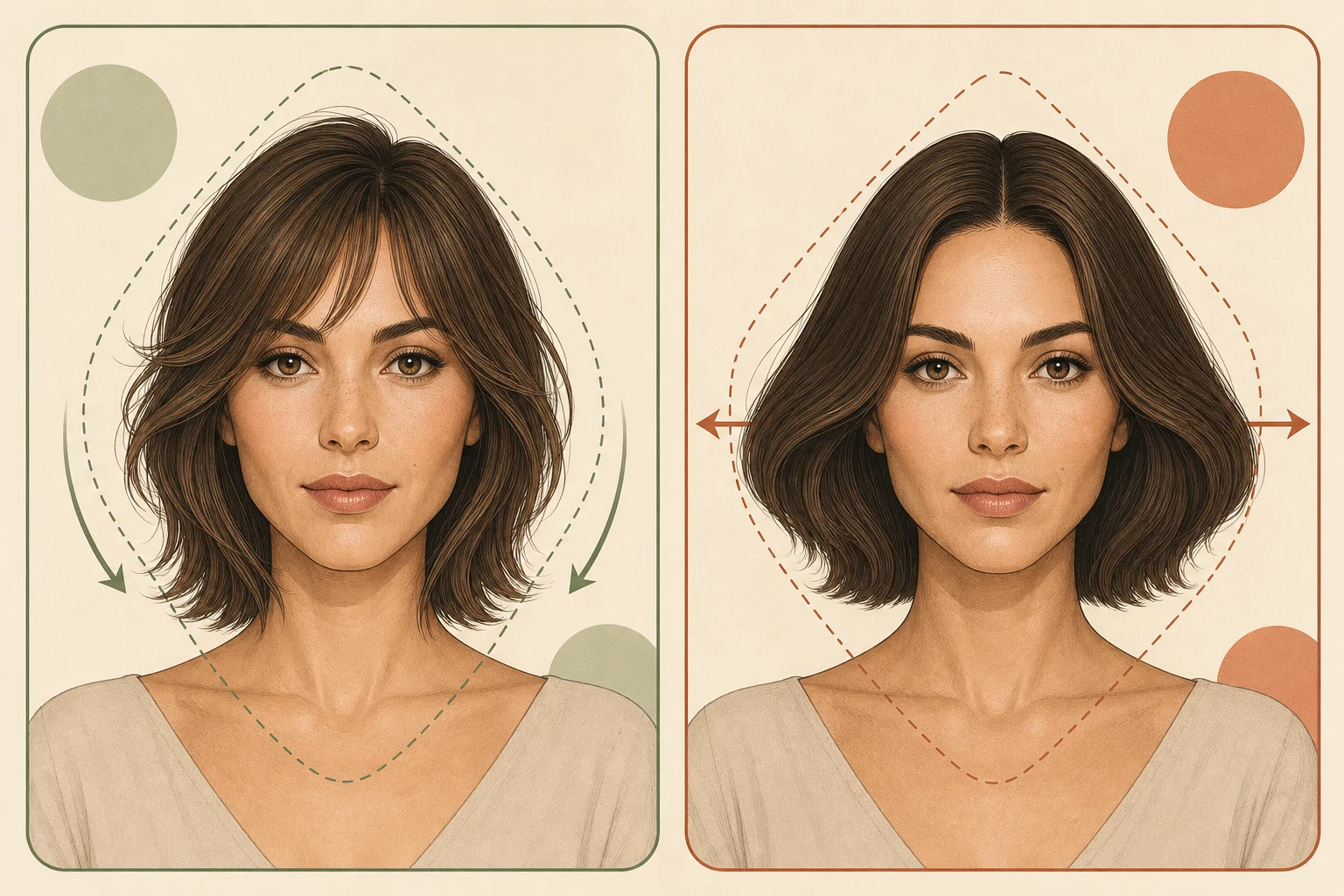
Forehead zone: Add light presence. Curtain bangs, soft fringe, or a relaxed side part can widen the upper face without creating a heavy block.
Cheekbone zone: Keep the volume controlled. Avoid layers, curls, or temple bulk that expand at the exact widest point. If your hair is curly, watch where the widest curl volume sits as it dries.
Jaw zone: Add movement or fullness. Soft ends, chin-area waves, or a slight outward bend near the jaw can balance the lower face.
When the top and bottom zones have some presence, the cheekbones read as a feature instead of a proportion problem.
For women: what to ask for
For medium hair, ask for curtain bangs or soft fringe plus a lob that places movement around the jaw or collarbone. Keep layers from beginning at the cheekbone peak.
For short hair, a chin bob with soft, non-stacked ends can work well. The end shape should add lower-face presence without becoming a heavy block.
For long hair, ask for face-framing below the cheekbones and enough density at the ends so the jaw area does not look too narrow. If your hair is very thick, remove weight carefully so the widest volume does not sit at the temples.
For men: what to ask for
Diamond faces usually work well with textured fringe, soft side parts, medium top length, and sides that are tapered but not bulky at the temples.
Avoid very tight sides with a stiff tall top if it exposes a narrow forehead and emphasizes cheek width. Also avoid letting the temple area grow out into the widest point of the haircut.
Facial hair can help when the lower face is narrow. A short beard or shaped stubble can add jaw presence; a pointed beard can make the chin look narrower.
How to talk to your stylist or barber
Use zone-based language:
- "I want softness at the forehead and jaw, not volume right at the cheekbones."
- "Start face-framing below my cheekbone peak."
- "Keep the temple area controlled as it grows out."
- "If we do bangs or fringe, keep them light enough to add width without heaviness."
These instructions help a stylist adapt the cut to your hair texture instead of copying a generic diamond-face list.
Common mistakes
- Adding layers that start directly at the cheekbones.
- Wearing slicked-back styles that expose a narrow forehead and strong cheek width.
- Letting temple bulk become the widest part of the haircut.
- Thinning the ends so much that the jaw area disappears.
- Treating diamond like heart without checking whether the forehead is actually wider.
- Hiding the cheekbones instead of balancing around them.
Frequently Asked Questions
Are curtain bangs necessary for diamond faces?
No. They are a useful option because they add forehead presence softly, but side-swept fringe, wispy bangs, or a soft side part can also work.
Can diamond faces wear short hair?
Yes. A short bob, textured crop, or fringe-based cut can work when the cheekbone area is not the widest part of the hair.
Should I avoid cheekbone-length layers?
Usually yes. Layers beginning at the cheekbone peak often add volume exactly where the face is already widest.
How do I tell diamond from heart?
Look at the widest point. Diamond faces are usually widest at the cheekbones. Heart faces usually read wider in the forehead or upper face.
How this connects to your Face Shape Profile
A diamond primary profile usually has cheekbones as the widest visible area with a narrower forehead and jaw. Your report helps separate true cheekbone-led width from a heart profile where the forehead remains wider.
Build your haircut brief
Use your report to identify whether the forehead, cheekbones, or chin taper needs the most support. Then take one note to your stylist:
My profile is diamond with prominent cheekbones and a narrower forehead and jaw. I want soft movement near the forehead and jaw, without the widest layer volume sitting directly at the cheekbones.
Review the full diamond hairstyle guide, compare the heart face shape guide, or create a report before your appointment.
Want hairstyle guidance for your face shape?
Start with your face-shape result, then explore length, layers, bangs, volume, and maintenance notes.
Open the hairstyle guide