Best Glasses for Square Face Shapes: Soften Strong Angles
Quick Answer
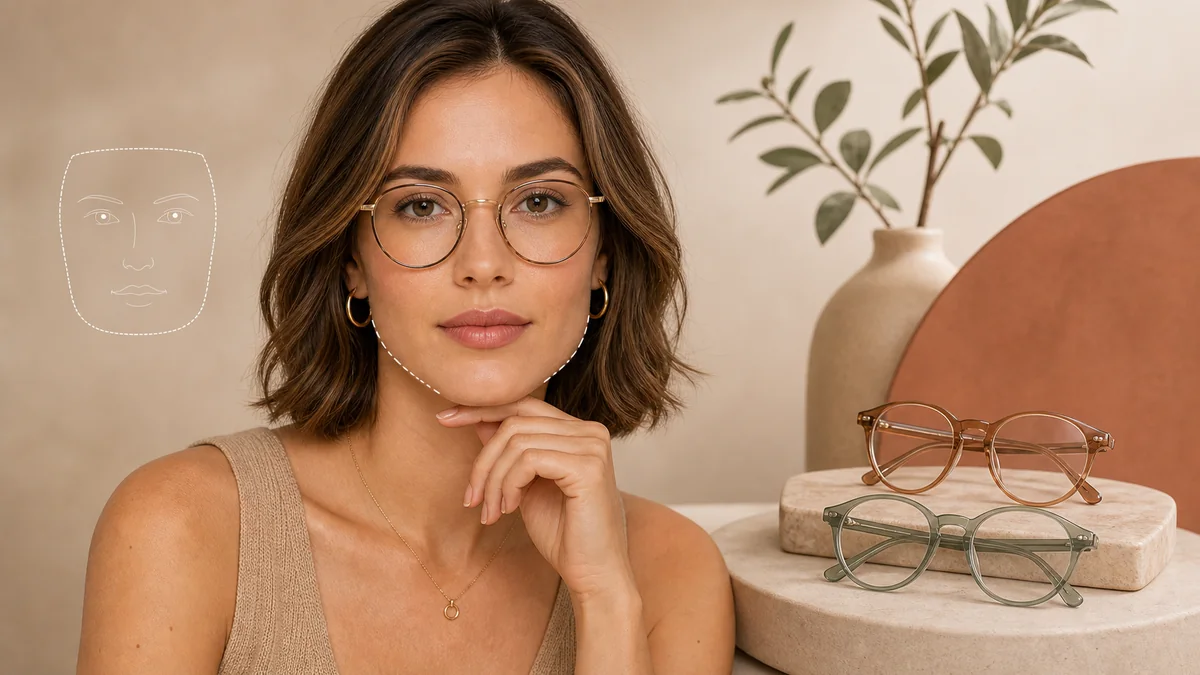
The best glasses for square face shapes usually introduce curve and reduce harsh visual weight. Round frames, oval frames, softly curved aviators, rounded rectangles, thin metal frames, and moderate tortoise or neutral colors are useful starting points.
A square face often has a defined jawline and similar width across the forehead, cheeks, and jaw. Glasses should soften the angles enough that the frame and jaw do not compete. The goal is not to hide the jaw. It is to avoid repeating the same hard geometry across the face.
What square faces need from glasses
Square faces already have structure. Frames that are perfectly boxy, very heavy, or sharply rectangular can double the angular effect. That can be intentional for a strong style, but it is not the softening direction most people are searching for.
Curves work because they contrast with corners. Lighter rim weight works because it keeps the frame from becoming a second heavy feature. Softer color contrast works because it lets the face remain visible.
If you are still comparing square with round or oblong, confirm the profile in the square face shape guide.
Best frame directions for square faces
| Frame direction | Why it works | Avoid |
|---|---|---|
| Round frames | Strongest contrast to angular lines | Tiny circles that look too small for the face |
| Oval frames | Softer curve with less dramatic contrast | Very shallow ovals that flatten the eye area |
| Soft aviators | Add curve and lens depth | Heavy brow bars or very wide aviators |
| Rounded rectangles | Keep structure while softening corners | Perfectly sharp rectangular frames |
| Thin metal frames | Reduce visible weight | Fragile sizing that disappears on a wider face |
| Tortoise or muted color | Lowers contrast | Heavy solid black if it feels too severe |
Frame shape has the biggest effect, but material and color decide how strong that effect feels.
Shape, material, and color checks
Shape: choose visible curve somewhere: outer edge, lower rim, bridge, or lens outline. Even a rectangular frame can work when the corners are rounded.
Material: thin metal usually feels lighter than thick acetate. Acetate can still work if the corners are softened and the frame is not oversized.
Color: black can look sharp and intentional, but it also carries more visual weight. Tortoise, brown, smoke, clear, champagne, and muted two-tone frames often soften the effect.
Width: stay close to face width. Frames that extend far beyond the jaw can make the whole face look wider and heavier.
Can square faces wear angular glasses?
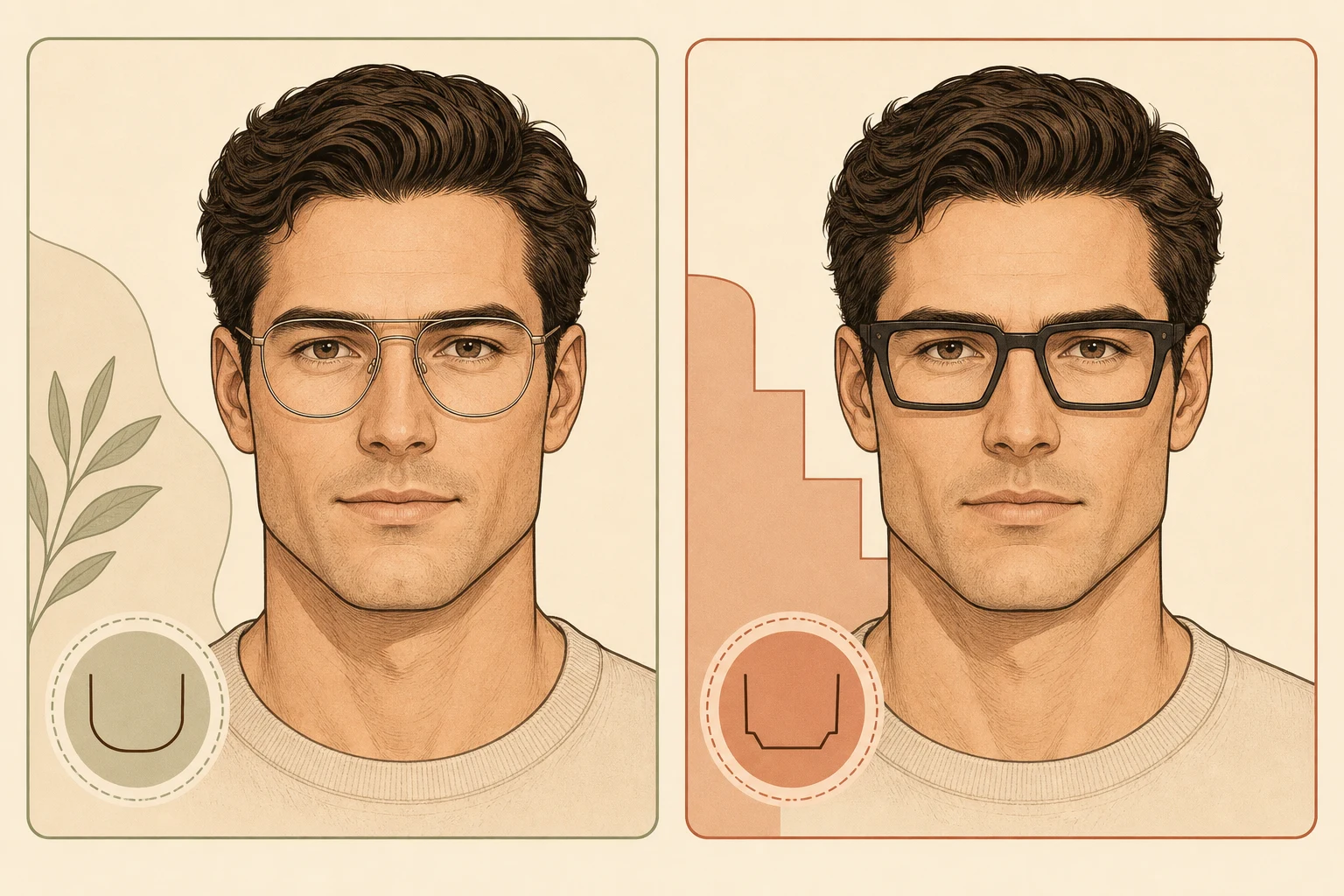
Yes, if the goal is to emphasize structure. The problem is not that angular frames are forbidden. The problem is repetition. A sharp jaw plus a sharp frame can look stiff if both carry the same weight.
If you like angular glasses, choose softened corners, lighter rims, or lower contrast. That keeps the style structured without turning the face into a set of parallel hard lines.
How to shop for a softer result
Compare one curved frame and one structured frame at similar width. This isolates the effect of corner shape. Then compare rim weight in the same shape: thin metal, medium acetate, and heavy acetate. Finally compare color contrast.
Ask the optician to confirm bridge position, lens height, and temple pressure. A soft-looking frame that slides down or pinches will not work in daily use.
Common mistakes
- Choosing perfectly square frames because they "match" the face.
- Defaulting to heavy solid black when a lower-contrast frame would soften better.
- Buying round frames that are too small for the face.
- Treating all angular frames as wrong instead of adjusting rim weight.
- Ignoring lens depth and bridge fit.
- Trying to hide the jaw rather than balance the frame around it.
Frequently Asked Questions
Are round glasses best for square faces?
They are one of the clearest softening options, but not the only one. Oval, softly curved aviator, and rounded rectangle frames can also work.
Can square faces wear thick frames?
Yes, when the corners are softened and the width is proportionate. Thick, sharp, high-contrast frames are the harder version.
Is black too harsh for a square face?
Not always. Black can look strong and deliberate. If the effect feels severe, try tortoise, brown, clear, smoke, or a thinner black frame.
What should I try first?
Start with an oval or rounded rectangle in medium width, then compare a round frame and a softened aviator.
How this connects to your Face Shape Profile
A square primary profile is defined by visible jaw structure and balanced widths. Your report can show whether the face is compact or longer, which affects lens depth and how much softening you may want.
Take a frame brief shopping
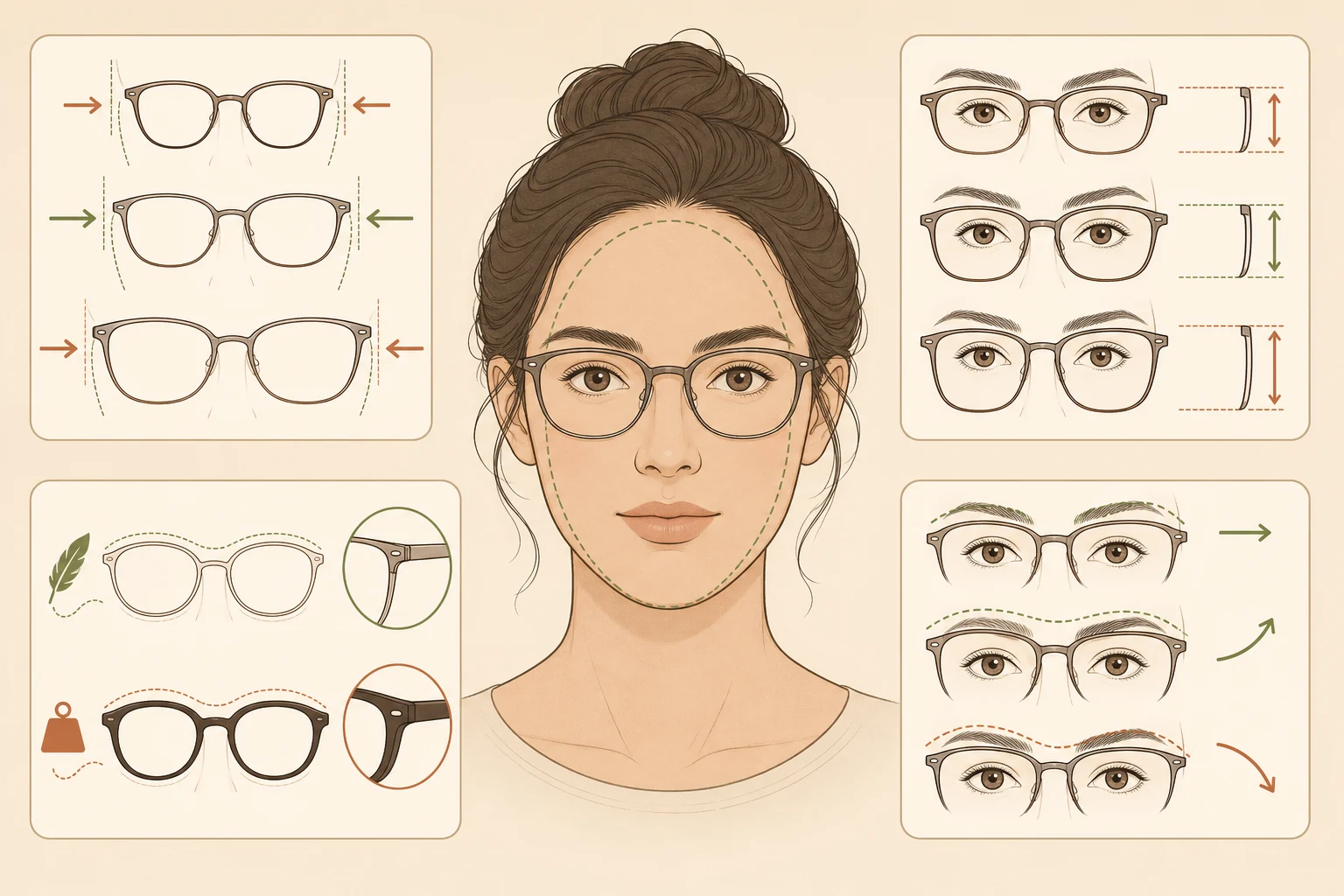
Use your report to compare corner softness, rim weight, lens depth, and color contrast:
My profile is primarily square. I want curves or softened corners, moderate rim weight, and a frame that balances my jaw without hiding it.
Review the full square glasses guide, compare the glasses decision principles, or create a report before shopping.
Want frame guidance for your face shape?
Start with your face-shape result, then compare frame width, depth, shape, and weight that fit your proportions.
Open the glasses guide