Best Glasses for Round Face Shapes: Add Definition Without Harsh Lines

Quick Answer
The best glasses for round face shapes usually add clean structure: softly rectangular frames, browline frames, geometric shapes, medium-depth lenses, and angular cat-eye variations. The frame should be close to cheekbone width or slightly wider, with enough lens depth to avoid looking shallow.
A round face often has a compact length-to-width balance, fuller cheeks, and a softly curved jaw. Glasses can add definition, but the goal is balance. Very harsh black rectangles, tiny round frames, or extremely sharp corners can overcorrect or make the face look fuller.
What round faces need from glasses
Round faces usually benefit from a frame that introduces a visible line the face does not naturally have. Corners, a defined upper edge, and moderate width give the eye structure to read.
The mistake is thinking more angle always means a better result. Frames that are too heavy can dominate soft features. Frames that are too small can make the surrounding cheek area look wider. The best choice adds shape without fighting the face.
If you are still comparing round with oval, start with the round face shape guide before buying frames.
Best frame directions for round faces
| Frame direction | Why it works | Avoid |
|---|---|---|
| Soft rectangles | Add corners and horizontal balance | Very narrow rectangles that squeeze the face |
| Browline frames | Create a clear upper edge | Heavy top bars that overpower the eyes |
| Geometric frames | Add modern structure without a basic box | Very sharp oversized geometry |
| Angular cat-eye | Adds lift and diagonal direction | Extreme outer corners with heavy rims |
| Medium-depth lenses | Adds vertical proportion | Shallow lenses that flatten the face |
| Structured round frames | Can work when the edge is clean | Tiny round frames with no width |
The best in-store comparison is not rectangle versus round. It is frame width, lens depth, rim weight, and corner definition together.
Fit checks that matter most
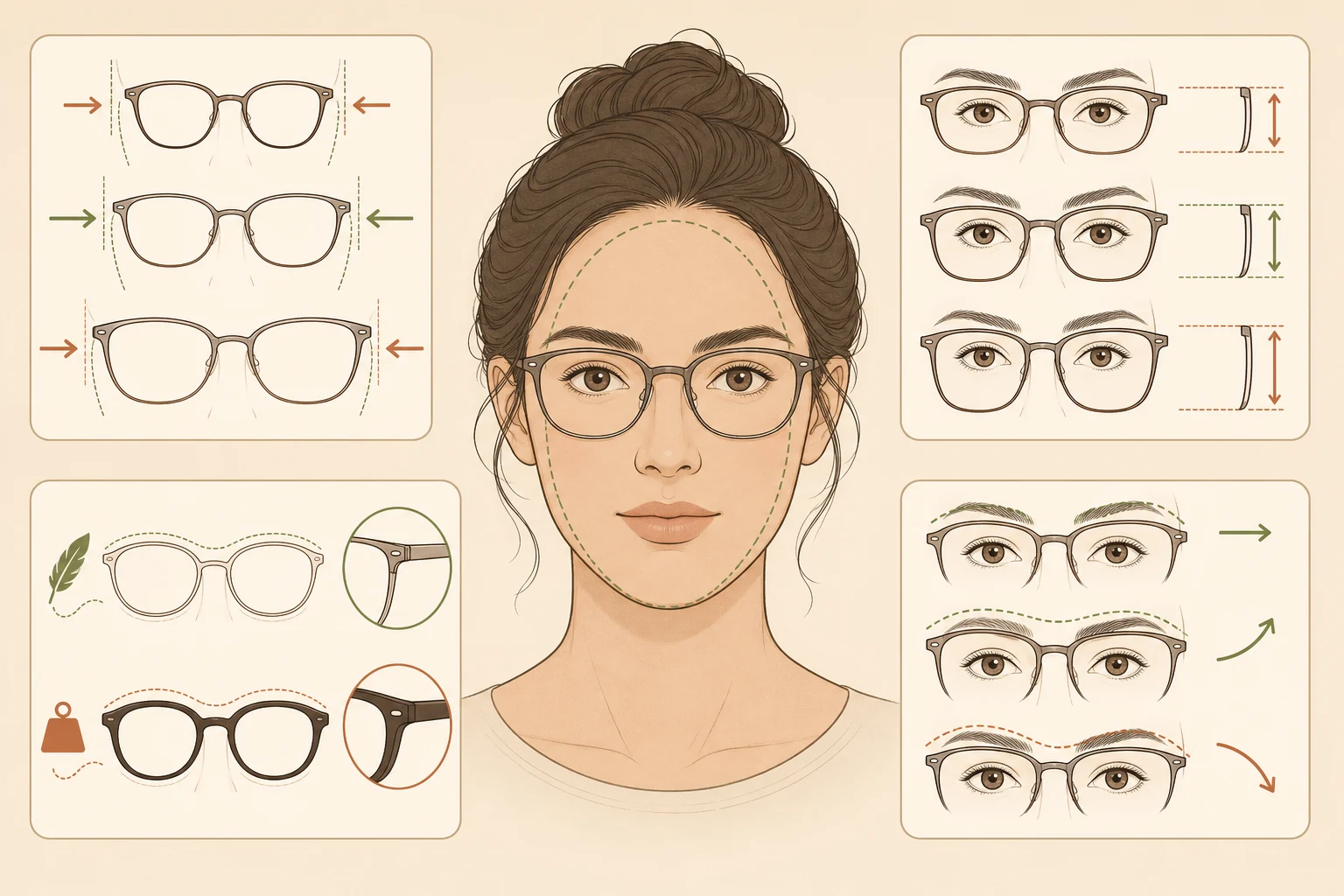
Frame width: the frame should sit near your cheekbone width. If it is much narrower, the cheeks can look fuller around it. If it is much wider, the frame can look costume-like.
Lens depth: medium depth is usually safer than very shallow lenses. A little vertical space helps lengthen the eye area.
Corner shape: visible corners add definition. They do not need to be severe. Rounded rectangles or softened geometric shapes often work better than razor-sharp edges.
Rim weight: moderate weight is a useful starting point. Heavy solid black acetate can be striking, but it may dominate delicate features.

Can round faces wear round glasses?
Yes, but the frame has to earn it. Round glasses can work when the frame is correctly sized, has a clean edge, and does not sit too small on the face. A round frame with clear structure can look intentional; a small soft round frame can repeat the face's curves and make the cheeks feel fuller.
If you like round frames, compare one round option with a softly rectangular option at the same width. The difference you are judging is not the category name. It is how much definition the frame adds.
How to shop without overcorrecting
Try three levels of structure:
- a soft rectangle or rounded square;
- a browline or geometric frame;
- a stronger angular option.
Step back from the mirror before choosing. Up close, bold frames can feel exciting; from normal distance, they may look heavier than intended. Also check bridge fit and temple pressure. A flattering shape still fails if it slides, pinches, or sits too high.
Common mistakes
- Choosing the heaviest black rectangle because "round needs angles."
- Buying frames that are too narrow for the cheek width.
- Using shallow lenses that make the face look shorter.
- Treating round frames as completely forbidden.
- Choosing extreme cat-eye corners when a softer angle would be enough.
- Ignoring fit after finding a good shape.
Frequently Asked Questions
What glasses look best on a round face?
Soft rectangles, browline frames, and moderate geometric shapes are reliable starting points because they add definition without excessive harshness.
Should round faces avoid round glasses?
Not always. Round frames are harder, but they can work when the size, rim definition, and overall styling add enough structure.
Are oversized glasses good for round faces?
They can be if width and lens depth are balanced. Oversized frames that are shallow or very heavy often feel mismatched.
What is the safest first pair?
A medium-width rounded rectangle or subtle geometric frame in tortoise, brown, translucent neutral, or soft black is a practical first comparison.
How this connects to your Face Shape Profile
A round primary profile usually combines compact length, soft cheek fullness, and a gently curved jaw. Your report can show whether an oval tendency adds more length, which may reduce the amount of angular correction you need.
Take a frame brief shopping
Use your report to check width, lens depth, corner shape, and rim weight:
My profile is primarily round. I want a frame that adds moderate definition, sits near cheekbone width, and avoids tiny lenses or overly harsh corners.
Review the full round glasses guide, compare the glasses decision principles, or create a report before shopping.
Want frame guidance for your face shape?
Start with your face-shape result, then compare frame width, depth, shape, and weight that fit your proportions.
Open the glasses guide