Best Glasses for Oval Face Shapes: Choose Frames That Keep Balance
Quick Answer
The best glasses for oval face shapes usually preserve natural balance: medium-width rectangles, soft geometrics, refined browline frames, classic round or oval frames, and relaxed aviators can all work. The deciding factors are width, lens depth, rim weight, and how the frame sits against your brows and cheeks.
Oval faces are flexible, but "anything works" is misleading. Frames that are too large can overwhelm balanced features. Frames that are too narrow can make the face look wider. Frames that are too heavy can pull attention away from the face.
What oval faces need from glasses
An oval face is usually slightly longer than wide, with balanced widths and a gently tapered jaw. Since the face already has proportion, glasses should enhance the face rather than correct it.
This gives you a wide frame range, but the frame still needs to match scale. A soft rectangle can add polish. A round frame can echo natural curves. A geometric frame can add interest. The right one is the frame whose size and weight feel intentional on your specific features.
If you are still comparing oval with round or oblong, confirm the profile in the oval face shape guide.
Best frame directions for oval faces
| Frame direction | Why it works | Avoid |
|---|---|---|
| Soft rectangles | Adds gentle structure without harshness | Very wide rectangles that dominate |
| Refined geometrics | Adds interest to balanced features | Oversized sculptural frames if they overpower |
| Light browline frames | Gives definition around the eyes | Heavy top bars that shorten the upper face |
| Round or oval frames | Echoes natural softness | Tiny frames that flatten proportion |
| Relaxed aviators | Adds lens depth and easy structure | Wide aviators with extreme temple flare |
| Thin or medium rims | Keeps the frame in scale | Thick rims that become the whole look |
Oval faces have more room to choose by personal style, but fit and scale still decide the final result.
Width, depth, and rim-weight checks
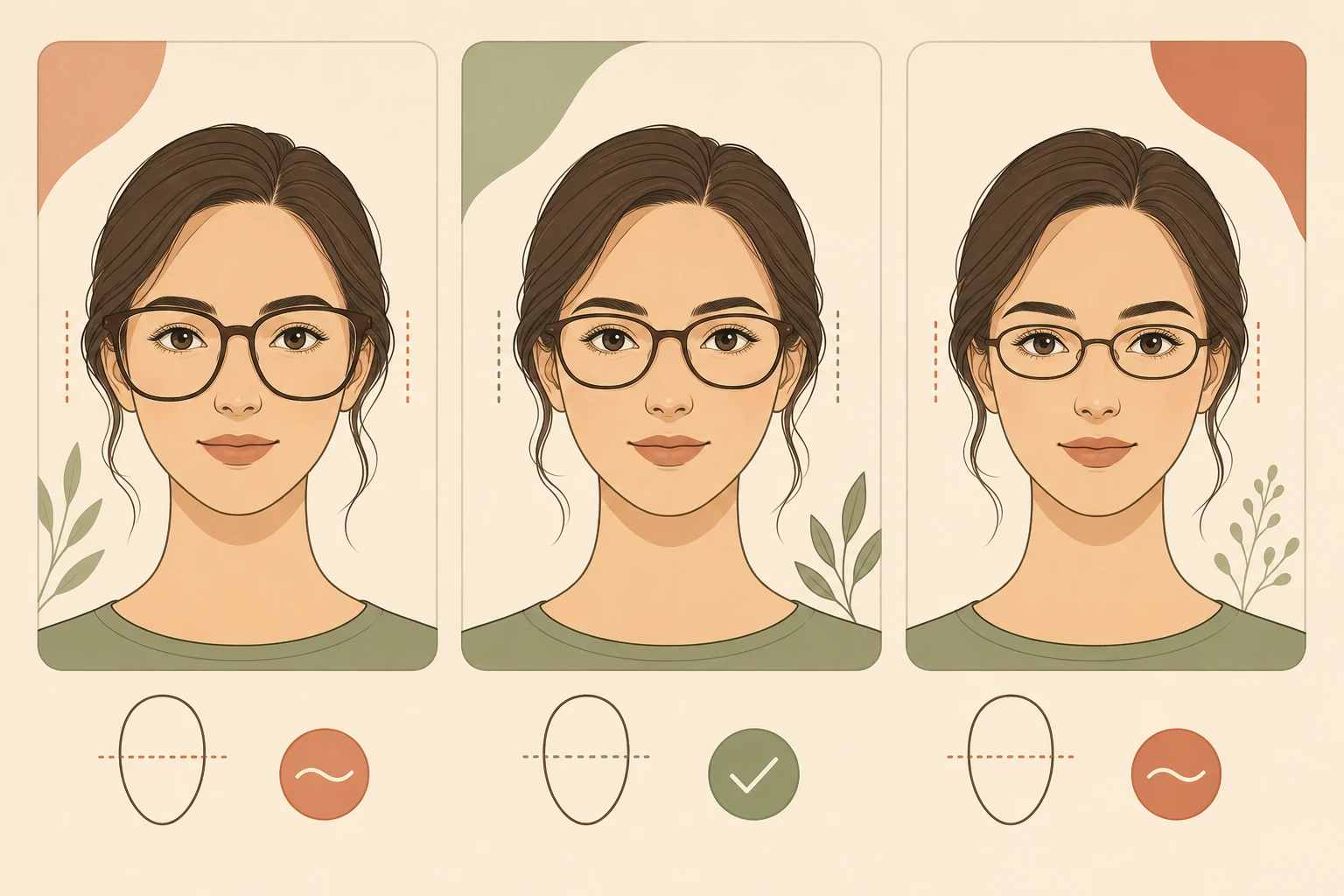
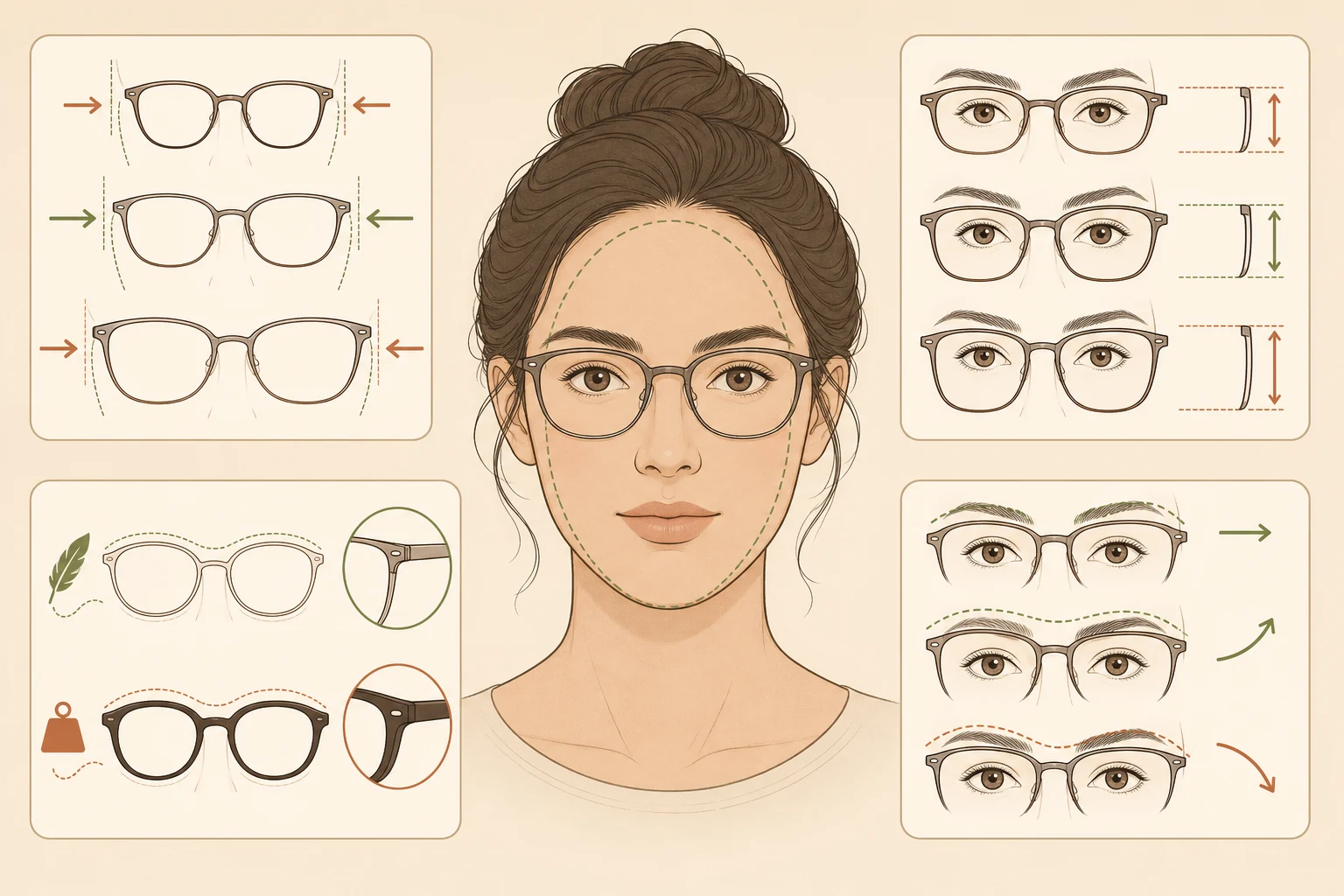
Width: stay close to cheekbone width or only slightly wider. If the frame extends far beyond the temples, the glasses may look larger than the face can carry.
Lens depth: medium depth is usually the easiest. Very shallow lenses can flatten the face; very tall lenses can crowd the cheeks.
Rim weight: choose lighter rims for a refined look and thicker rims for a stronger style statement. If the frame is the first thing people notice every time, the weight may be too high.
Brow position: the upper edge should sit comfortably near the natural brow. Too high can look surprised; too low can make the upper face feel compressed.
Can oval faces wear statement frames?
Yes. Oval faces often carry statement frames well because the face has enough natural balance. The question is how much of your style you want the glasses to carry.
If you choose oversized, sculptural, bright, or heavy frames, check them from normal conversation distance, not only close in a mirror. Make sure your eyes remain visible, the frame does not sit on the cheeks, and the bridge fit keeps the lenses centered.
How to shop without relying on "oval can wear anything"
Try the same shape in three weights: thin, medium, and bold. Then try the same width in two lens depths. This tells you whether your face prefers a refined frame, a strong frame, or a deeper frame.
If two frames both look good, choose based on use case. A light rectangle may be better for daily work. A bolder geometric frame may be better if you want glasses to be a visible style element.
Common mistakes
- Assuming every frame category automatically flatters oval faces.
- Choosing oversized frames without checking cheek clearance and eye position.
- Buying narrow frames that make the face look wider around them.
- Ignoring lens depth because the frame width seems right.
- Letting rim weight overpower softer facial features.
- Choosing by trend instead of scale.
Frequently Asked Questions
What glasses look best on oval faces?
Soft rectangles, refined geometrics, light browline frames, round or oval frames, and relaxed aviators are all good starting points when the size is right.
Can oval faces wear round glasses?
Yes. Round glasses can work well when the diameter is proportionate and the rim weight is not too heavy for the face.
Are oversized glasses good for oval faces?
They can be. Oversized frames work best when the edges are not overly heavy, the lens depth does not crowd the cheeks, and the bridge keeps the frame centered.
What is the safest first pair?
A medium-width soft rectangle or subtle geometric frame is a safe starting point because it adds structure while preserving balance.
How this connects to your Face Shape Profile
An oval primary profile usually combines balanced widths, a softly curved jaw, and moderately greater face length than width. Your report can show whether cheekbones, jaw taper, or extra length should influence frame scale.
Take a frame brief shopping
Use your report to compare width, lens depth, brow position, and rim weight:
My profile is primarily oval. I want frames that keep my natural balance, sit near cheekbone width, and avoid overwhelming my features with extreme size or weight.
Review the full oval glasses guide, compare the glasses decision principles, or create a report before shopping.
Want frame guidance for your face shape?
Start with your face-shape result, then compare frame width, depth, shape, and weight that fit your proportions.
Open the glasses guide