Best Glasses for Oblong Face Shapes: Use Width and Lens Depth
Quick Answer
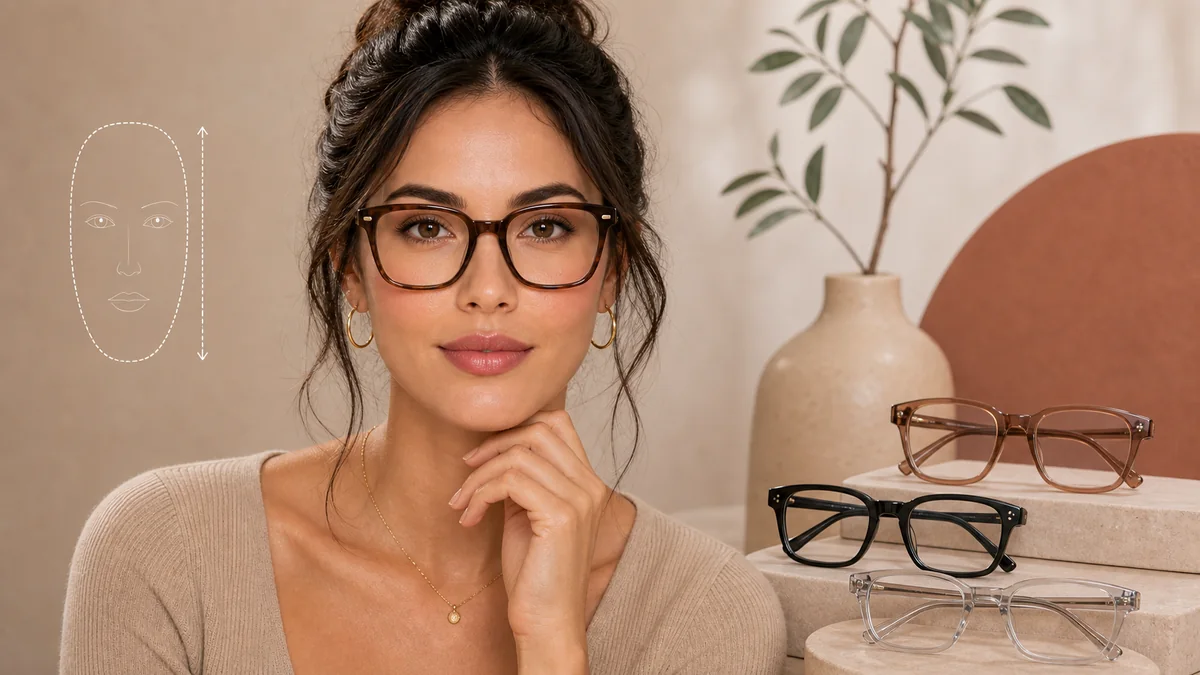
The best glasses for oblong face shapes add width and enough lens depth to balance visible face length. Wide rectangles, deeper square frames, round frames with adequate diameter, relaxed aviators, and browline frames with clear horizontal presence are useful starting points.
An oblong face is clearly longer than wide, often with balanced forehead, cheekbone, and jaw widths. The most common mistake is choosing frames that are wide but too shallow. Lens depth matters as much as width.
What oblong faces need from glasses
Oblong faces need horizontal reference points. A frame that sits too narrow or too shallow can make the face look even longer. A frame with width and depth gives the eye something substantial in the middle of the face.
"Oversized" can help only when it means wide enough and deep enough. Oversized does not mean any large frame. A long, shallow frame can still emphasize length.
If you are comparing oblong with oval, confirm the profile in the oblong face shape guide.
Best frame directions for oblong faces
| Frame direction | Why it works | Avoid |
|---|---|---|
| Wide rectangles | Adds horizontal structure | Wide but shallow rectangles |
| Deep square frames | Adds width and lens height | Narrow squares that look cramped |
| Round frames with depth | Softens length and adds coverage | Small round frames |
| Relaxed aviators | Provides lens depth and softer shape | Very narrow aviators |
| Browline frames | Adds a clear horizontal anchor | Thin frames that disappear |
| Medium-to-bold rims | Gives visible presence | Ultra-thin frames if they vanish on the face |
The best frame usually has enough width to balance length and enough lens height to avoid looking like a narrow band.
Width vs lens depth: the key decision
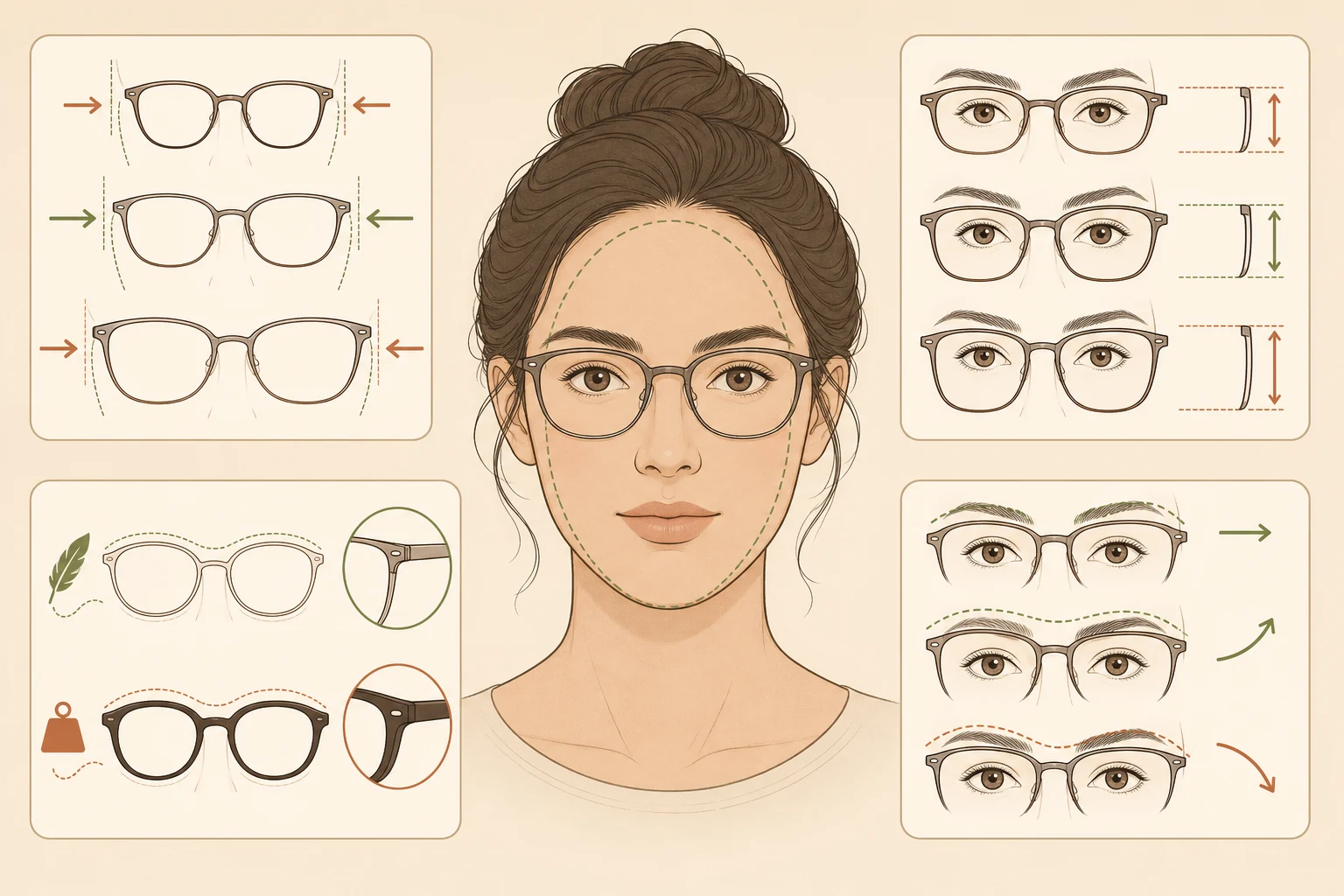
Width adds a horizontal anchor. A frame close to or slightly wider than cheekbone width often works well.
Lens depth fills the middle of the face. Deeper lenses break up the vertical distance between brow, cheek, and chin.
Bridge position changes where the lens sits. A bridge that places the frame too high can make even a deep frame look shallow.
Rim weight keeps the frame visible. Very thin wire frames can disappear, which reduces the balancing effect.
Are oversized glasses good for oblong faces?
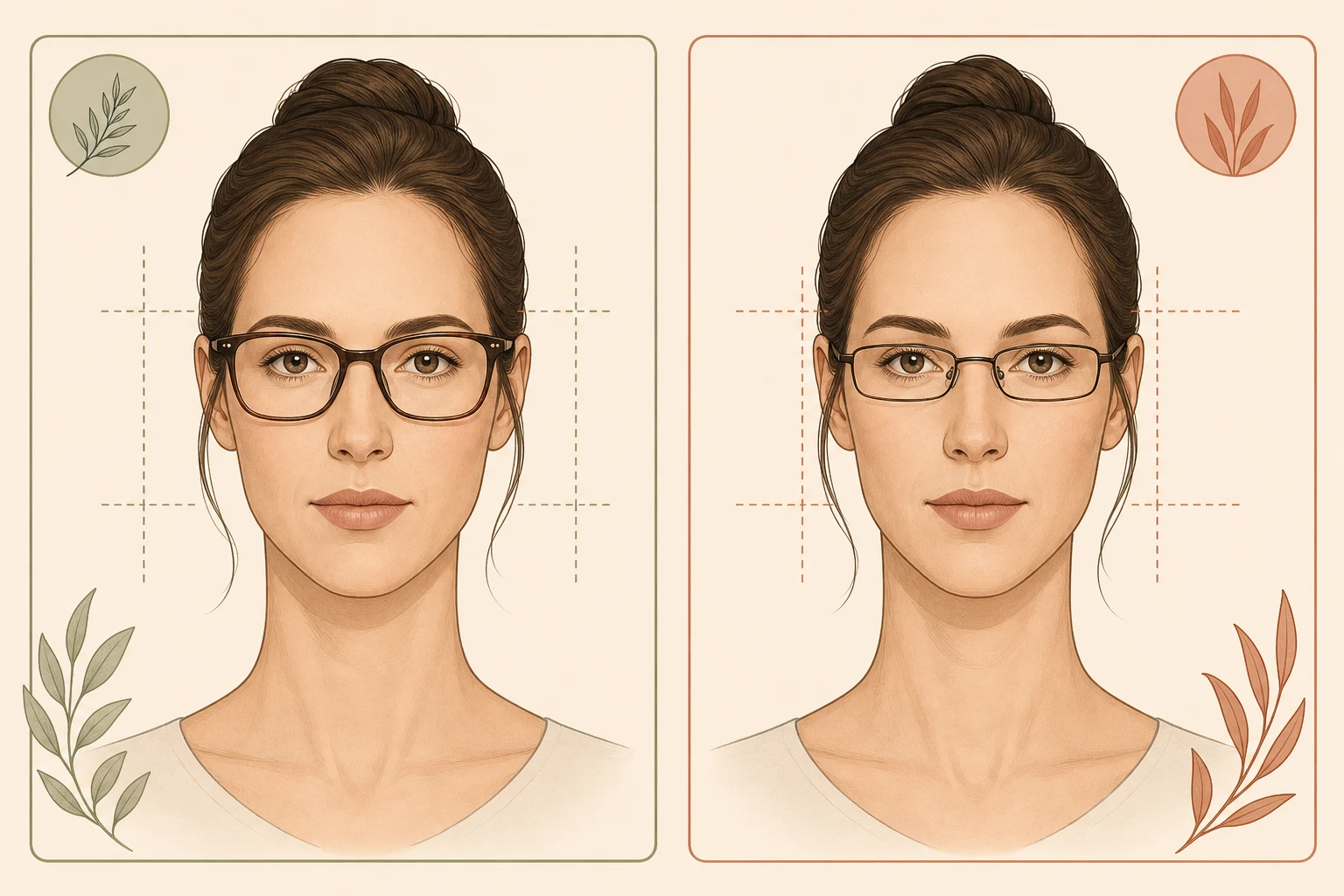
They can be, but only when the proportions are right. The useful version is wider and deeper, not just wider. A frame that is very wide but shallow creates a thin horizontal strip across a long face and may exaggerate length.
The best oversized option still needs cheek clearance, correct bridge fit, and temples that do not press. If the frame covers too much of the cheeks or slides down, the style benefit does not matter.
How to shop for oblong proportions
Try a wide rectangle, a deep square, and a relaxed aviator in similar widths. Compare how much vertical space the lens occupies. Then check whether the brow line sits near your natural brow and whether the lower edge crowds your cheeks when you smile.
Do not choose from the mirror alone. Take a straight front-facing photo from normal distance. Oblong-frame balance is easier to judge when you can see the full forehead-to-chin proportion.
Common mistakes
- Choosing wide frames without checking lens depth.
- Buying narrow or very small frames that emphasize face length.
- Choosing shallow rectangular frames because they look modern on the shelf.
- Wearing high, narrow frames that leave too much empty vertical space.
- Assuming every oversized frame works.
- Ignoring bridge fit and cheek clearance.
Frequently Asked Questions
What glasses look best on oblong faces?
Wide rectangles with enough depth, deep square frames, relaxed aviators, and round frames with adequate diameter are good starting points.
Should oblong faces wear oversized glasses?
Often yes, if the frames are both wide and deep. Oversized frames that are only wide and shallow usually do not solve the proportion issue.
Are small glasses bad for oblong faces?
They are usually harder to balance because they leave more visible face length above and below the lenses.
Is lens depth more important than width?
They work together. Width provides horizontal balance; depth fills the middle of the face. For oblong faces, checking only width is a common mistake.
How this connects to your Face Shape Profile
An oblong primary profile combines visible vertical length with balanced forehead, cheekbone, and jaw widths. Your report can show whether the jaw is soft or structured, which affects the best frame shape within the same width-depth range.
Take a frame brief shopping
Use your report to compare width, lens depth, bridge position, and rim visibility:
My profile is primarily oblong. I want frames with real horizontal presence and meaningful lens depth, not shallow narrow glasses that extend the vertical line.
Review the full oblong glasses guide, compare the glasses decision principles, or create a report before shopping.
Want frame guidance for your face shape?
Start with your face-shape result, then compare frame width, depth, shape, and weight that fit your proportions.
Open the glasses guide