Best Glasses for Diamond Face Shapes: Balance Cheekbones

Quick Answer
The best glasses for diamond face shapes balance prominent cheekbones with gentle upper-face presence. Restrained cat-eye frames, oval frames, light browline frames, soft geometrics, and thin metal frames are useful starting points.
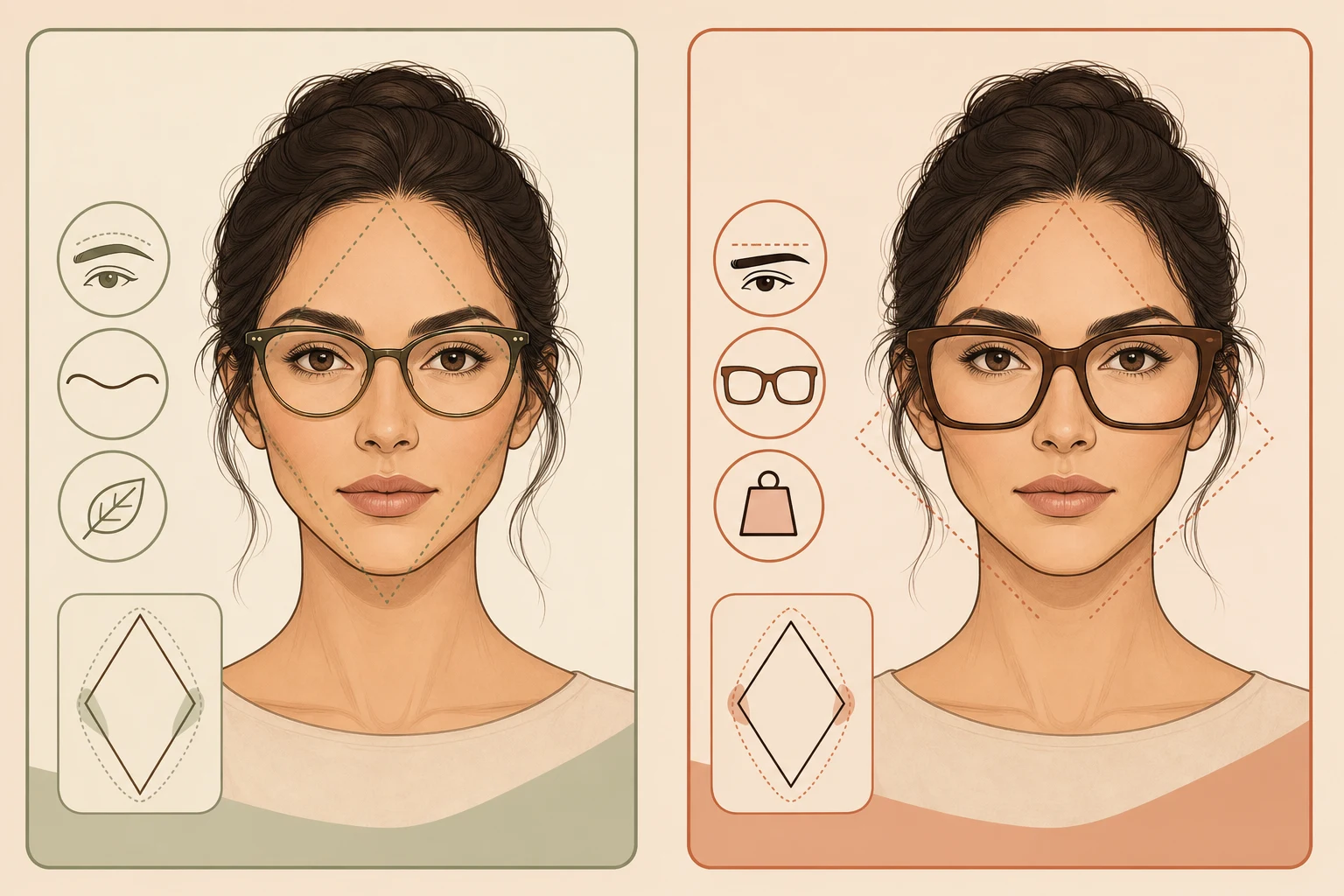
A diamond face is usually widest at the cheekbones, with a narrower forehead and narrower jaw. Frames should not stretch the cheekbone area wider. They should add controlled width or lift near the brow while keeping the lower rim soft.
What diamond faces need from glasses
Diamond and heart faces are often confused, but they need different frame strategies. A diamond face benefits from subtle upper-face support because the forehead is narrower than the cheekbones. A heart face usually needs less upper weight because the forehead is already wide.
That distinction is critical. A browline or cat-eye frame can help a diamond face when it widens the upper face gently. The same top-heavy frame can overwhelm a heart-shaped face.
If the widest point is unclear, compare the diamond face shape guide before shopping.
Best frame directions for diamond faces
| Frame direction | Why it works | Avoid |
|---|---|---|
| Restrained cat-eye | Adds brow lift and upper width | Sharp, very wide cat-eyes |
| Oval frames | Softens the cheek area | Very narrow ovals that disappear |
| Light browline frames | Supports a narrower forehead | Heavy top bars that feel bulky |
| Soft geometrics | Adds character without hard cheek lines | Wide rectangles that extend cheek width |
| Thin metal frames | Keeps cheekbone weight visible but light | Fragile frames that sit too small |
| Medium lens depth | Gives balance around the eyes | Shallow frames that make cheeks dominate |
The best frame often has some upper definition, a soft lower edge, and width close to the cheekbones rather than far past them.
Diamond vs heart: the buying mistake to avoid
Before choosing frames, check the widest point:
- Diamond: cheekbones are wider than forehead and jaw.
- Heart: forehead or upper face is wider than cheekbones and jaw.
This changes the frame direction. Diamond faces can often use gentle brow emphasis. Heart faces usually need the upper edge controlled and the lower frame anchored.
If a frame recommendation says "add width at the brow," it may be good for diamond and risky for heart. If it says "add bottom weight," it may be good for heart and less useful for diamond.
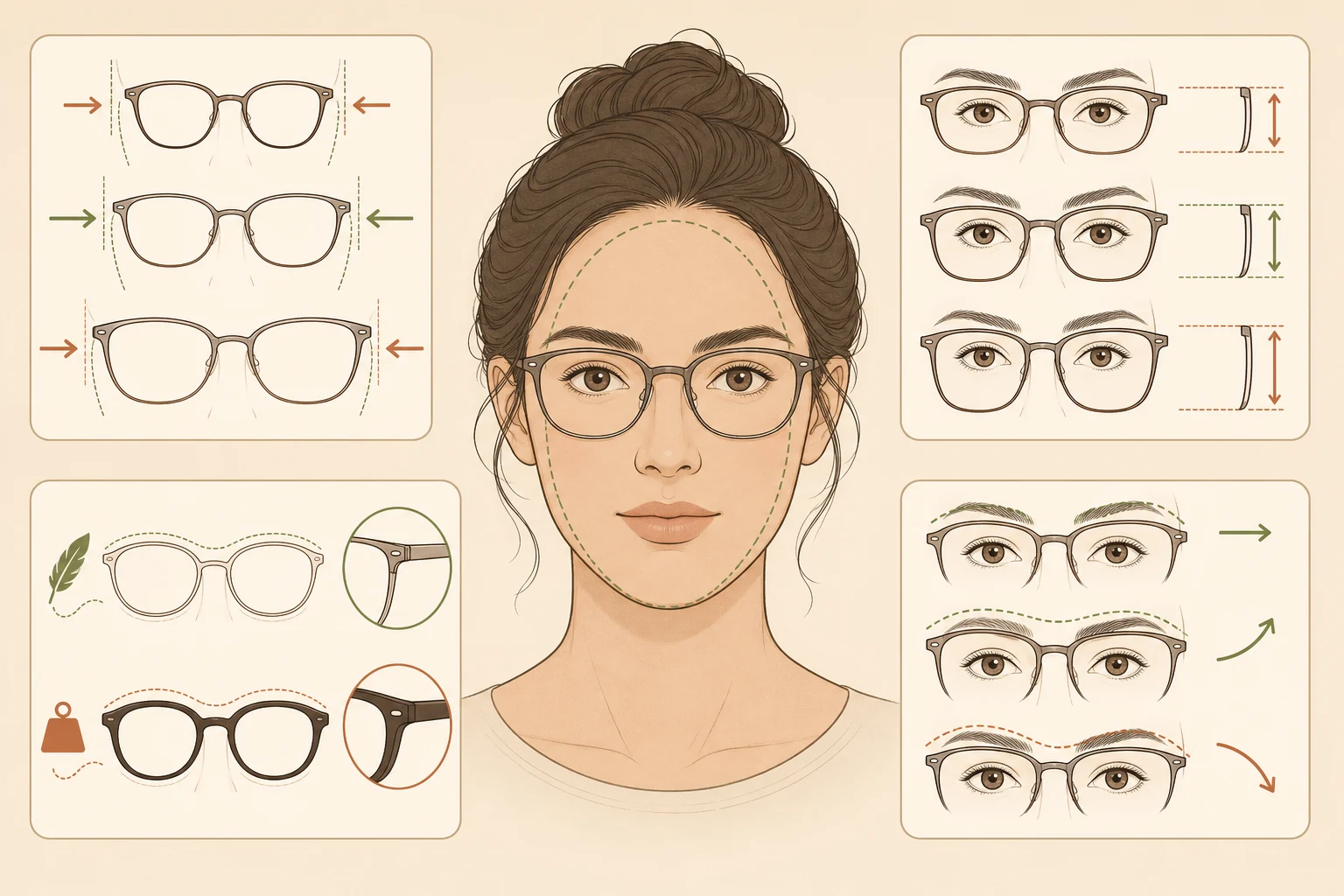
Width, lift, and rim-weight checks
Width: stay close to cheekbone width. A frame that extends far beyond the cheekbones can make the widest point look even wider.
Lift: a slight upward lift helps balance the upper face. Extreme outer corners can look theatrical and pull too much attention upward.
Upper rim: medium definition is useful. Very heavy brow bars can feel bulky, while nearly invisible upper rims may not add enough support.
Lower rim: soft lower edges sit more comfortably against cheekbones than sharp horizontal lines.
Common mistakes
- Following heart-face advice without confirming the widest point.
- Choosing very wide rectangular frames to "balance" cheekbones.
- Wearing heavy browline frames that add bulk instead of lift.
- Avoiding cat-eye frames entirely, even when a restrained version could work.
- Ignoring lower-rim shape and judging only the top edge.
- Buying frames that are too small for the cheekbone width.
Frequently Asked Questions
Are cat-eye glasses good for diamond faces?
Often yes, when the lift is restrained and the width stays near the cheekbones. Very wide or sharp cat-eyes are harder to balance.
Are oval glasses good for diamond faces?
Yes. Oval frames soften the cheek area and usually avoid adding harsh width.
Should diamond faces wear browline glasses?
Light or medium browline frames can work because they support a narrower forehead. Heavy brow bars need caution.
What is the safest first pair?
A medium-width oval, restrained cat-eye, or light browline frame is a strong first comparison.
How this connects to your Face Shape Profile
A diamond primary profile usually has cheekbones as the widest visible area with a narrower forehead and jaw. Your report can show whether the face is truly diamond or closer to heart or oval.
Take a frame brief shopping
Use your report to compare width, upper lift, brow weight, and lower-rim softness:
My profile is primarily diamond. I want frames that support a narrower brow area, stay near cheekbone width, and avoid adding harsh width at the cheek line.
Review the full diamond glasses guide, compare the heart face shape guide, or create a report before shopping.
Want frame guidance for your face shape?
Start with your face-shape result, then compare frame width, depth, shape, and weight that fit your proportions.
Open the glasses guide