Why Your Face Shape Result May Look Like More Than One Shape
Want to know your face shape?
Upload a clear front-facing photo to see your closest match and the visible reasoning.
Find your face shape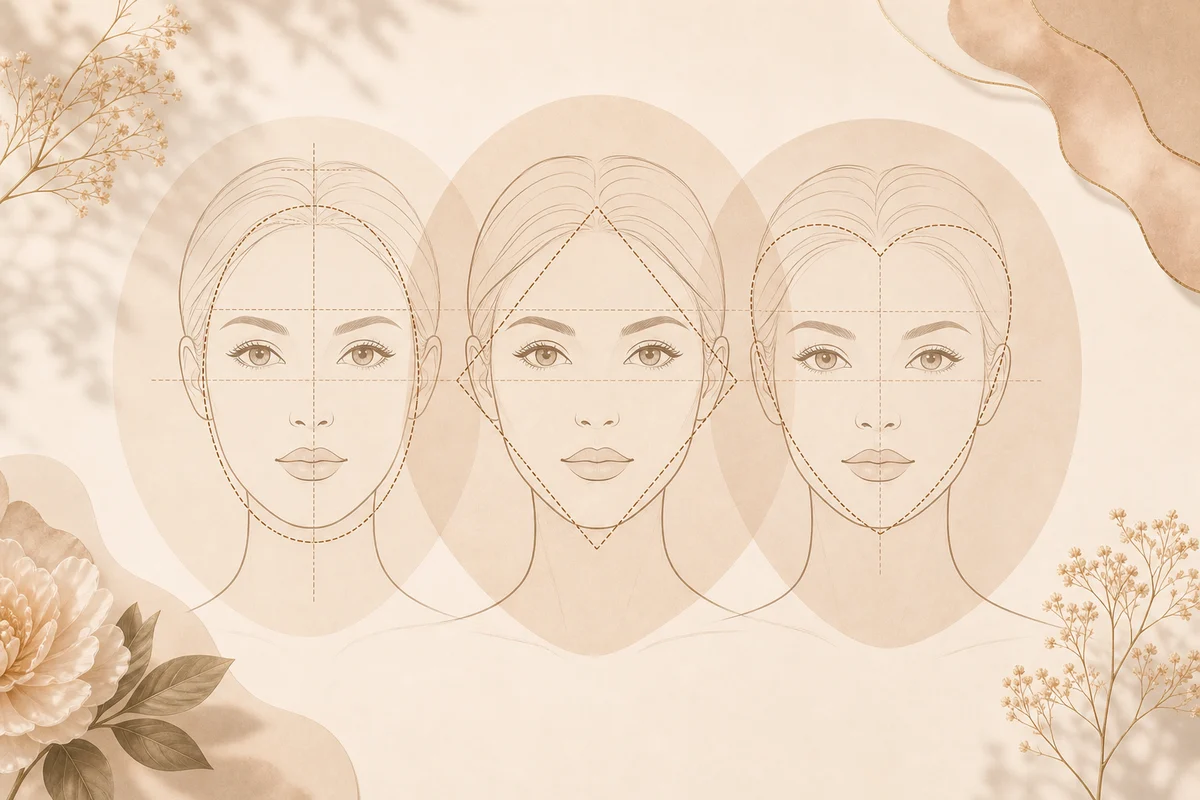
Many people expect face-shape analysis to return one clean label. Real faces are not always that simple. You may have an oval overall outline with diamond cheekbone signals, or a rounder face with heart-shaped upper-face cues.
That is why FaceFit is designed around closest match, similar signals, and practical next steps. If you have not checked your result yet, start with the Face Shape Detector.
Quick answer
Your result may look like more than one shape because face shape categories overlap. A closest match means one pattern is strongest. Also resembles means another shape shares enough visible signals to matter. Result certainty is a guide to how clear those signals are, not a claim of absolute precision.

Style reference: some faces share signals across multiple face-shape categories.
Main explanation
Oval and diamond can be close when the face is balanced but the cheekbones stand out. Round and heart can be close when the face is soft overall but the upper face is wider than the chin. Square and oblong can overlap when the jaw is defined and the face also reads longer.
This overlap is normal. The useful question is which signal matters most for style direction. A hairstyle or glasses choice often depends on cheekbone width, jawline, or face length more than the label alone.
Practical examples
If your result says oval but also resembles diamond, use oval as the main reference but pay attention to cheekbone width. If it says round with heart influence, avoid adding too much visual weight to the upper face. If certainty is lower, try a clearer front-facing photo before making decisions.
For the basics, read What Is My Face Shape. For photo quality, read How to Take a Good Photo.
What to avoid
Avoid reading a mixed result as failure. Avoid expecting fake precision from one photo. Avoid using percentages as if they are a clinical measurement. FaceFit should help you understand visible signals, not force a rigid label.
Related guides
Use the Face Shape Detector, compare all shapes in Face Shapes, or explore How Face Shape Signals Help Guide Style Recommendations.
Get a personalized result
Upload a clearer front-facing photo if your current result feels mixed or uncertain. FaceFit can show closest match, similar signals, and optional style guidance.
FAQ
Does a mixed result mean the analysis is wrong?
Not necessarily. Mixed signals are common because real faces can resemble more than one category.
What does also resembles mean?
It means another face shape shares visible signals with your closest match.
How can I improve result certainty?
Use a clear front-facing photo with good light, no face covering, and minimal angle distortion.
Want to know your face shape?
Upload a clear front-facing photo to see your closest match and the visible reasoning.
Find your face shape