Why Face Shape Matters When Choosing Glasses
Want personalized style recommendations?
Upload a clear front-facing photo to get your closest face-shape match and optional style guidance.
Find your face shape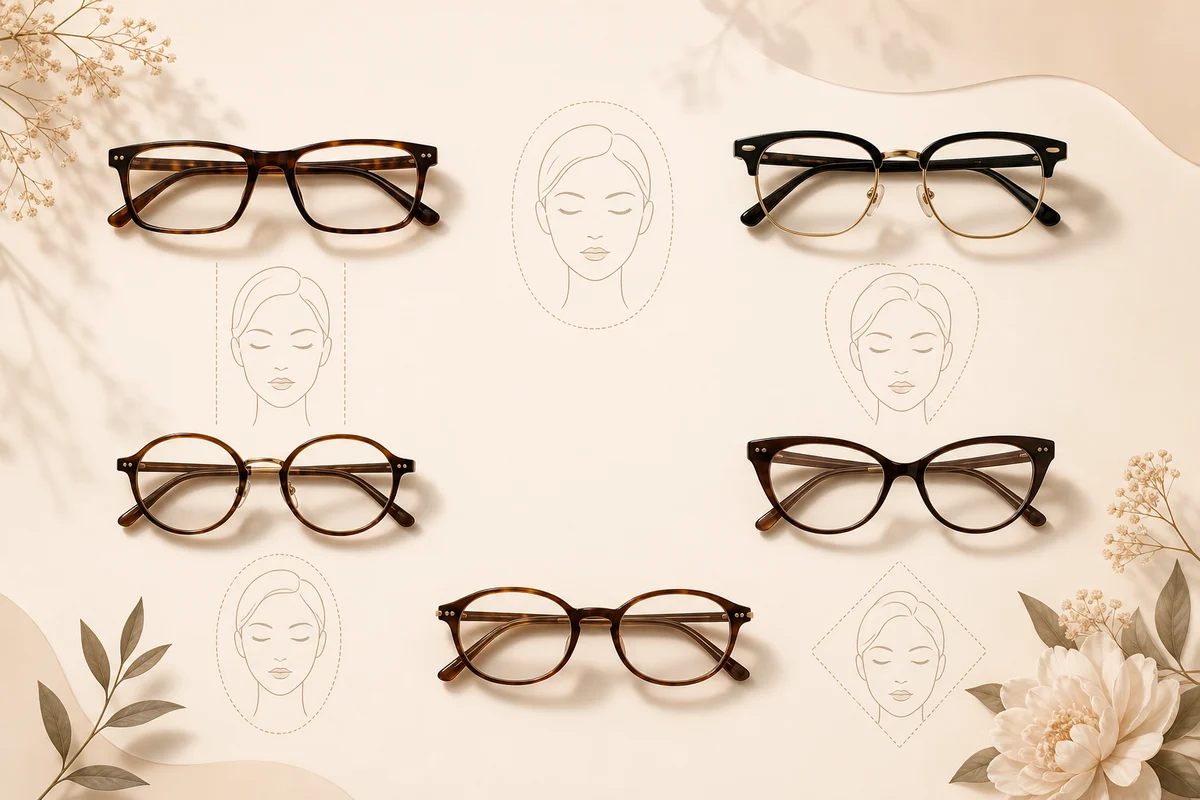
Glasses sit directly on the strongest visual lines of the face: brows, cheekbones, nose bridge, and upper cheeks. That is why face shape can change how a frame feels before color, brand, or trend even enters the decision.
This guide explains the logic behind frame balance. For personalized directions, start with the Face Shape Detector, then explore the dedicated glasses guide.
Quick answer
Face shape matters because frames can add structure, soften angles, widen a narrow area, or reduce the feeling of length. The key variables are frame shape, width, lens depth, bridge position, and visual weight. This does not mean one frame is always best for one face shape; it means your proportions give you a better starting point.

Style reference: frame shape, width, depth, and visual weight can change how balanced glasses feel on the face.
The frame signals that matter
Frame width affects whether glasses feel too narrow, balanced, or oversized. Lens depth changes how much vertical space the frame adds. Angled frames can create structure on softer outlines. Rounder frames can soften stronger jawlines. Browline and cat-eye shapes can lift attention toward the upper face.
These are style signals, not strict rules. A frame can work well when it supports the proportions already visible in your face.
Practical examples
A softer round outline often benefits from frames with more structure because the angles add definition. A square outline may look more balanced with slightly softer edges if the jawline already carries strong structure. A diamond-influenced face often needs attention to cheekbone width so the frame does not feel pinched or too heavy at the widest point.
If you already know your match, use the glasses module to compare frame directions. If you are unsure, upload a clear photo first.
What to avoid
Avoid choosing glasses only from a generic "best frame" list. Avoid frames that are too narrow for the widest part of your face. Avoid heavy frames if they pull attention to an area you are trying to balance. Avoid assuming a trendy frame will work the same on every face.
Related guides
- What Is My Face Shape — the foundational guide if you need the basics.
- Best glasses for oval faces — frame directions for balanced proportions.
- Best glasses for round faces — add structure and lengthen the look.
- Best glasses for square faces — soften strong jawlines.
- Best glasses for heart-shaped faces — balance a wider forehead.
- Best glasses for diamond faces — broaden forehead and jaw.
- Best glasses for oblong faces — add visual width and break vertical length.
- Glasses hub — frame guidance by proportion.
Get a personalized result
Upload one clear front-facing photo and FaceFit can show your closest face-shape match with optional glasses direction based on visible proportions.
FAQ
Does face shape decide the exact glasses I should buy?
No. Face shape gives a useful starting point. Fit, comfort, prescription needs, personal style, and frame measurements still matter.
Should round faces only wear rectangular frames?
Not necessarily. Structured frames often work well for rounder outlines, but size, depth, and visual weight can matter as much as the label.
When should I use the glasses page instead?
Use the glasses guide when you want practical frame directions after you understand your main face-shape signals.
Want personalized style recommendations?
Upload a clear front-facing photo to get your closest face-shape match and optional style guidance.
Find your face shape